

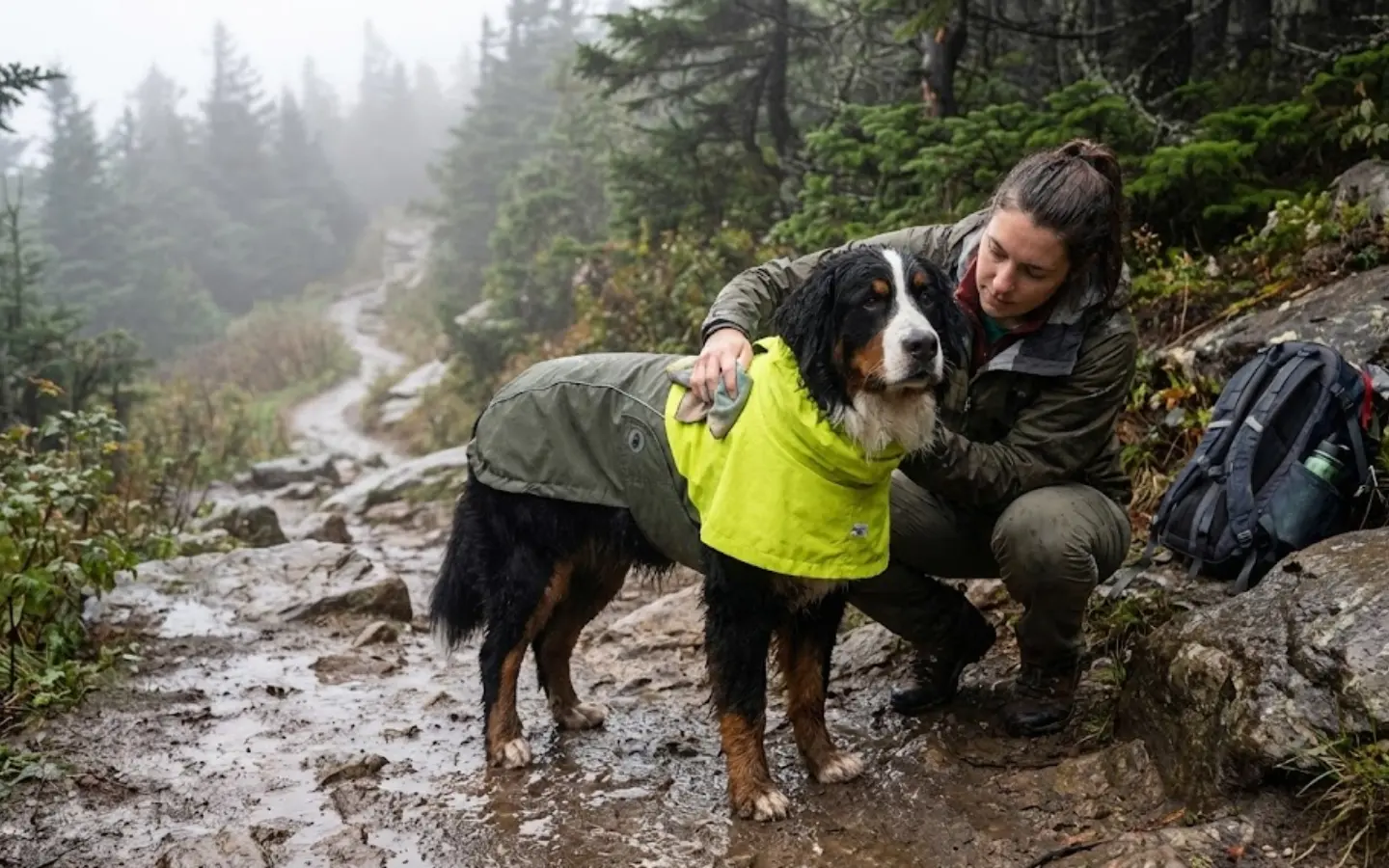
How to Determine the Right Raincoat Size for a Large Dog
Large dogs are not just bigger versions of small dogs. They have different proportions, different muscle structures, different neck-to-chest ratios, and different back lengths relative to their weight. A German Shepherd and a Golden Retriever at the same weight can need two completely different sizes. A Great Dane and a Labrador at thirty kilograms are shaped like completely different animals.
Most raincoat size charts cap out at “extra large” and throw in a vague weight range like twenty-five to forty kilograms. That range is useless. A twenty-five-kilogram Border Collie and a forty-kilogram Great Dane both fall into “extra large” on most charts, and one of them will drown in fabric while the other one cannot get the coat on at all.
If you have a large dog, you need to forget the weight chart entirely and measure the actual body. Here is how to do it right.
Why Standard Size Charts Fail for Large Dogs
The problem with most raincoat sizing is that it is built around medium-sized dogs. The patterns are cut for a dog with a moderate chest, a moderate back length, and an average neck. That works fine for a twenty-kilogram Cocker Spaniel. It falls apart for a thirty-five-kilogram German Shepherd.
Large dogs have disproportionate measurements. Their chest girth can be massively wide compared to their back length. Their necks can be thick enough to choke a small dog. Their legs can be so long that a standard coat drags on the ground even when the torso fits perfectly.
A thirty-kilogram Rottweiler might have a chest girth of seventy-five centimeters, a neck circumference of fifty centimeters, and a back length of forty-five centimeters. A thirty-kilogram Labrador might have a chest girth of seventy centimeters, a neck circumference of forty-two centimeters, and a back length of forty-eight centimeters. Same weight. Completely different numbers. The weight chart says they are the same size. They are not.
The only way to get it right is to measure all three points — chest, neck, and back length — and compare those numbers to the size chart instead of trusting the weight range.
Measuring a Large Dog the Right Way
Chest Girth: Start Here Every Time
Wrap the tape around the widest part of your dog’s ribcage, right behind the front legs. Your dog should be standing on all four legs, squarely, with their back straight. Do not measure while they are sitting. Do not measure while they are lying down. Standing only.
Keep the tape snug but not tight. Two fingers should fit between the tape and the skin. If you can only fit one finger, loosen it. If you can fit three, tighten it.
For large dogs with thick double coats — German Shepherds, Golden Retrievers, Huskies, Great Pyrenees — do not press the tape into the fur. Let it sit naturally on top. Then add about two to three centimeters of ease to your final number. That accounts for the fur bulk so the raincoat actually closes without compressing your dog’s breathing.
The chest girth is the measurement that determines whether the raincoat will go on at all. If it is too small, nothing else matters. The coat will not close. If it is too big, the coat will shift around and let water in from the sides. Get this number right first, then move on.
Neck Circumference: The Hidden Dealbreaker
Large dogs have thick necks. Rottweilers, Dobermans, Mastiffs, and German Shepherds can have neck circumferences that are wider than the entire chest of a small dog. A forty-kilogram Rottweiler might have a neck of fifty-two centimeters. A forty-kilogram Labrador might have a neck of forty-four centimeters. Same weight, eight centimeters of difference.
Wrap the tape around the base of the neck, right behind the ears, at the thickest point. Keep it snug — two fingers between the tape and the skin.
For large dogs with loose skin around the neck — Mastiffs, Shar Peis, Saint Bernards — smooth out the skin folds with one hand while you measure with the other. If you measure over the folds, your number will be way too big and you will end up with a raincoat that gaps open at the neck every time it rains.
The neck measurement is the one that catches most people off guard. They measure the chest, see that it fits an extra large, and stop there. But if the neck does not fit, the coat will not go over the head. For large dogs with hoods, the neck opening needs to be wide enough to slide over the head but snug enough to keep water out. That balance is critical.
Back Length: Where Long-Backed Breeds Cause Problems
Start the tape at the base of the neck, between the shoulder blades, and run it straight down the spine to where the tail meets the body. Stop at the tail base. Do not follow the tail.
Large dogs have some of the most variable back lengths in the dog world. A Great Dane can have a back length of sixty centimeters at thirty kilograms. A Rottweiler at the same weight might have a back length of forty-five centimeters. Same weight, fifteen centimeters of difference.
For large dogs, back length determines how much of the belly the raincoat covers. If the back length is too short, the coat ends right at the ribcage and the entire belly stays exposed. Large dogs have wide, heavy bellies that splash through every puddle they walk through. If the belly is not covered, the raincoat is basically useless.
Always match the back length first, then check that the chest and neck also fall within the same size range. If the back length says extra large but the chest says large, you need an extra large. All three numbers should point to the same size.
Large Dog Breeds That Break Standard Sizing
Deep-Chested Giants: Rottweilers, Dobermans, Mastiffs
These dogs have barrel chests that are significantly wider than their back length would suggest. Their chest girth can be five to ten centimeters wider than what you would expect based on their weight. A forty-kilogram Mastiff might have a chest girth of eighty-five centimeters. A forty-kilogram Border Collie has a chest girth of sixty-five centimeters.
For deep-chested large dogs, always prioritize the chest measurement. If the chest fits, the back length will probably be a little long, but you can use the adjustable cinches at the waist to pull the coat up. If you size based on back length, the chest will not close and the whole thing falls apart.
These dogs also have thick necks that are often the limiting factor. Measure the neck before you even look at the chest. If the neck does not fit, the coat is not going on.
Long-Backed Giants: Great Danes, Greyhounds, German Shepherds
These dogs have back lengths that are way longer than their weight suggests. A thirty-five-kilogram Great Dane can have a back length of sixty centimeters. A thirty-five-kilogram Labrador sits at forty-five centimeters. Same weight, fifteen centimeters of difference.
For long-backed large dogs, back length is the measurement that determines everything. If you size based on chest alone, you will end up with a coat that fits the torso but leaves the entire belly exposed. Every puddle they step into will splash water right onto their stomach.
Look for raincoats with a longer back panel. Some designs have extendable belly flaps that cover the underside without adding bulk to the legs. For long-backed large dogs, leg length is also a factor. Their legs are so long that a standard coat will drag on the ground. Look for elastic leg cuffs that keep the fabric from bunching up at the ankles.
Broad and Heavy: Saint Bernards, Newfoundlands, Bernese Mountain Dogs
These dogs are wide, heavy, and thick everywhere. Their chest girth is massive, their neck is thick, their back length is moderate, and their legs are heavy. They need raincoats with serious chest room, strong closures, and adjustable cinches at the neck, chest, and waist.
The neck on these dogs can be so thick that most raincoat neck openings are too small. A fifty-kilogram Saint Bernard might have a neck circumference of sixty centimeters. Most raincoats cap out at fifty-five centimeters for the neck opening. That means you need to look for raincoats with extra-wide neck holes or adjustable neck cinches that let you tighten the opening down after you get it over the head.
Raincoat Styles That Work for Large Dogs
Full-Body Suits With Heavy-Duty Closures
Large dogs need full-body coverage. Their chests are wide, their bellies are heavy, and their necks are thick. A vest-style coat will not protect enough of their body. A full four-leg suit with a hood is the best option for most large breeds.
Look for suits with heavy-duty closures. Snap buttons alone will not hold up on a forty-kilogram dog that shakes water off like a wet towel. You need velcro straps, drawstrings, or buckles at the chest and waist. The more adjustment points, the better.
Elastic leg cuffs are non-negotiable for large dogs. Their legs are long and heavy, and if the leg openings are too wide, the fabric drags on the ground. Your dog will step on it, trip over it, and rip the whole thing off.
Vest-Style Coats for Slim Large Dogs
If your large dog is lean — a Greyhound, a Whippet, a sighthound of any kind — a full-body suit will drown them in fabric. Their bodies are narrow, their legs are long, and a full suit makes them look like they are wearing a tent.
A vest-style raincoat that covers the torso and belly but leaves the legs free is a much better fit. Look for vests with a long back panel that extends past the ribcage. A short vest that stops at the chest leaves the belly exposed, which defeats the purpose for a large dog that splashes through every puddle it sees.
Ponchos for Dogs That Refuse Full Coverage
Some large dogs simply will not tolerate anything that squeezes their chest or covers their legs. If your dog falls into this category, a poncho-style raincoat might be the only thing they will wear. It drapes over the back and sides, ties around the neck or chest, and covers the torso without squeezing anything.
The downside is no leg protection and usually no hood. But for a large dog that panics in full-body suits, a poncho that keeps the core dry is better than a perfect raincoat that sits in the closet.
Mistakes People Make With Large Dogs
Trusting the Weight Range
This is the number one mistake. People see “extra large fits up to fifty kilograms” and assume their forty-five-kilogram German Shepherd will fit. But a forty-five-kilogram German Shepherd has a completely different body shape than a forty-five-kilogram Labrador. The German Shepherd needs a wider chest, a thicker neck opening, and a longer back length. Weight does not tell you any of that.
Measure every time. Write the numbers down. Compare them to the size chart, not the weight range.
Forgetting About Leg Length
Large dogs have long legs. A raincoat that fits the torso perfectly can still drag on the ground if the leg openings are too long. This is especially true for Great Danes, Greyhounds, and German Shepherds. Their legs can be so long that the coat bunches up at the ankles and trips them up.
Look for raincoats with elastic leg cuffs or adjustable leg straps. These keep the fabric from dragging while still allowing your dog to move freely.
Not Re-Measuring After Weight Changes
Large dogs gain and lose weight fast. A dog on a diet can drop five kilograms in a month. A dog with a joint issue might gain five kilograms in two months. A raincoat that fit perfectly last season might be too tight today, or too loose next month.
Re-measure every two to three months. Keep the numbers in your phone. It takes two minutes and saves you from buying the wrong size over and over again.
The One Rule That Saves Every Large Dog
If any one of your three measurements — neck, chest, or back length — sits right on the edge of a size range, go up. A raincoat that is slightly too big with adjustable cinches will still keep your large dog completely dry. A raincoat that is even one centimeter too small around the chest will not close, will shift when your dog moves, and will let water seep in from every side.
Large dogs are harder to fit than small dogs. Their proportions are more extreme, their necks are thicker, and their backs are longer. But if you measure the chest, neck, and back length correctly, compare those numbers to the size chart instead of the weight range, and pick a style with heavy-duty closures and elastic leg cuffs, you will find a raincoat that actually works. It just takes a little more effort than slapping an “extra large” in the cart and hoping for the best.