

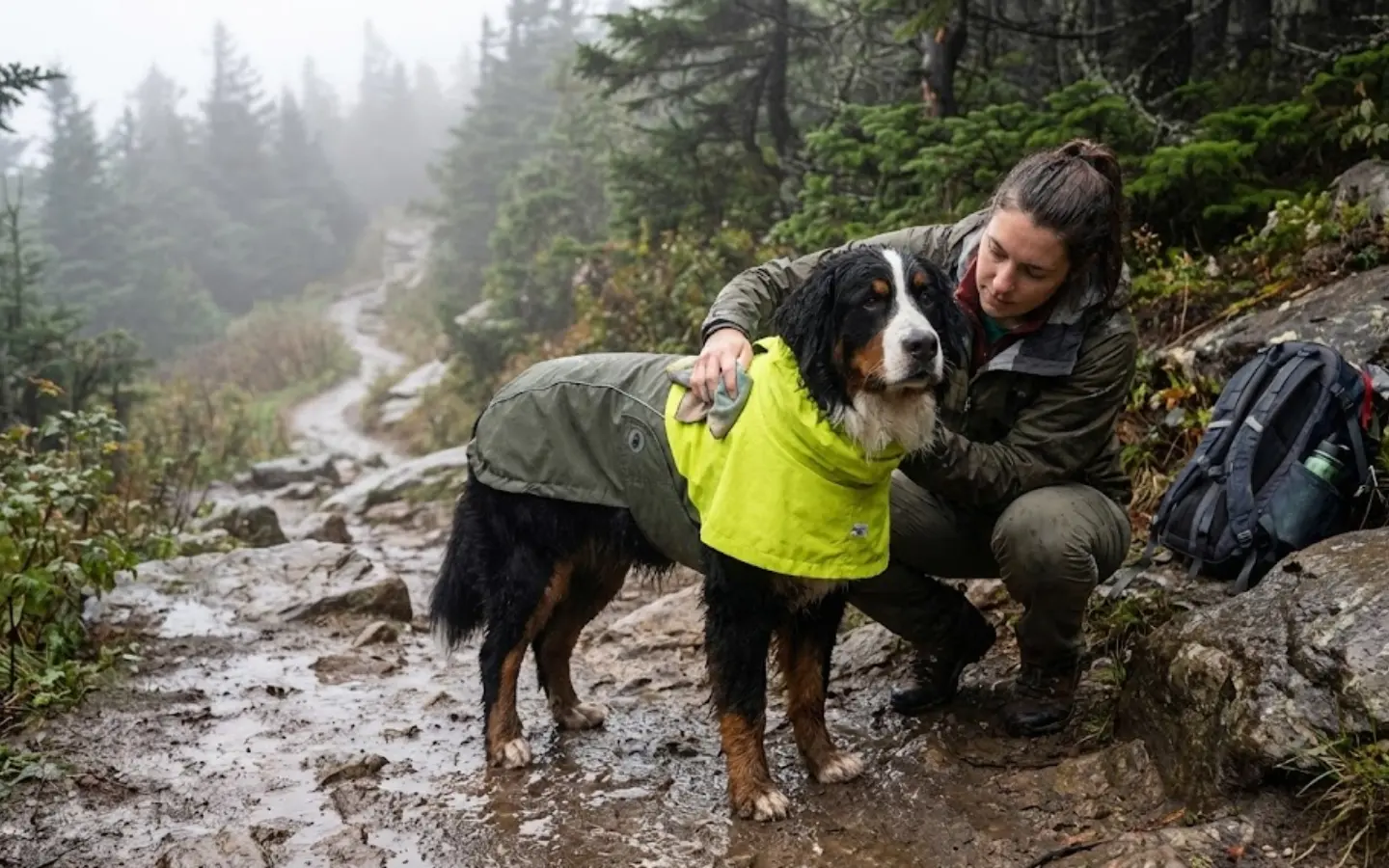
Nylon is a widely used material for dog raincoats because it offers a strong, lightweight foundation that can be treated or laminated to achieve different levels of water resistance and durability. Its synthetic fibers are naturally quick-drying and resistant to mildew, which makes it a practical choice for rainy day gear that needs to be stored after wet walks without developing odors or staying damp for too long.
Basic Nylon Weave Types and Their Properties
Plain weave nylon uses a simple over-and-under pattern that creates a smooth, flat surface, which is easy to coat with waterproof treatments and provides reliable protection against light to moderate rain. This weave is flexible and drapes softly over a dog’s back, so it does not restrict their movement or make loud rustling noises that could startle nervous dogs during windy weather. The tight, even structure of plain weave also helps prevent small tears from spreading quickly, which adds to the raincoat’s overall lifespan with regular use.
Ripstop nylon incorporates a grid of thicker reinforcement threads woven into the fabric at regular intervals, creating small squares that stop rips and tears from expanding. This makes it an excellent choice for active dogs that love to run through brush, scramble over rocks, or play in areas with sharp branches, as the fabric can handle occasional snags without failing. Despite the reinforcement, ripstop nylon remains very lightweight and packs down small, so it does not add bulk to your walking bag when the rain stops and you need to store the wet raincoat.
Taffeta nylon has a crisp, smooth hand feel and a slight sheen, with a tight weave that naturally resists wind and light moisture even before any waterproof treatment is applied. This type of nylon is often used in raincoats designed for style as well as function, because it holds its shape well and does not wrinkle easily, so the raincoat looks neat even after being folded in a backpack. The smooth surface also makes it easy to wipe clean with a damp cloth, so mud and dirt do not soak into the fabric during messy walks.
Common Waterproof Treatments Applied to Nylon
Polyurethane laminate is a thin, flexible layer bonded to the inside of the nylon fabric, creating a fully waterproof barrier that does not rely on the weave of the fabric itself to block moisture. This treatment is applied as a liquid coating that cures into a solid film, sealing the tiny gaps between the nylon threads so water cannot seep through. Laminated nylon remains soft and quiet, unlike older plastic-based coatings that could crack or make crinkling sounds with every movement, which helps dogs stay comfortable and relaxed during their walk.
Silicone coating is applied to the outer surface of the nylon, where it fills the gaps between fibers and causes water to bead up and roll off instead of soaking in. This treatment adds very little weight or stiffness to the fabric, so the raincoat retains its natural drape and flexibility, which is ideal for dogs that dislike stiff, restrictive gear. Silicone-coated nylon dries quickly because water does not penetrate the fibers, and the coating itself is resistant to UV damage, so the raincoat’s water resistance holds up well even after many hours of sun exposure between rainy seasons.
Durable water repellent finishes are sprayed or dipped onto the nylon after the fabric is woven, creating a chemical layer that makes the surface hydrophobic. DWR treatments are often used on lighter weight nylon raincoats designed for drizzle or short walks, because they shed water effectively without the need for a heavy laminate. Over time, this finish can wear off with frequent washing or abrasion, but it can usually be refreshed with a spray-on treatment to restore the water-beading effect without replacing the entire raincoat.
Performance Characteristics in Real-World Use
Nylon’s low moisture absorption rate means that even if the outer waterproof treatment wears off slightly, the fabric itself does not soak up large amounts of water and become heavy during a walk. This helps keep your dog comfortable, because a raincoat made from a water-absorbent material would get heavier as it gets wetter, pulling down on their back and making them tired sooner. The quick-drying nature of nylon also means you can rinse off mud after a walk, hang the raincoat up, and have it ready to use again in a few hours instead of waiting a full day for it to air dry.
The strength-to-weight ratio of nylon allows manufacturers to create raincoats that are both tough and lightweight, so even large-breed dogs can wear full-coverage styles without feeling weighed down. This is especially helpful for older dogs or those with joint issues, because a heavy raincoat could make it harder for them to move freely or enjoy their walk. The inherent strength of nylon fibers also resists pilling and fraying at the edges, which keeps the raincoat looking clean and functional through many seasons of use.
Nylon fabrics hold color well through dye sublimation or solution dyeing processes, which means the raincoat’s bright hues or reflective safety strips stay vibrant even after repeated exposure to rain, sun, and washing. This is useful for visibility during low-light rainy walks, as the reflective elements woven into the nylon will maintain their effectiveness over time, helping drivers and cyclists spot your dog more easily. The colorfast nature of nylon also prevents dye from bleeding onto your dog’s fur or your clothes when the raincoat gets wet, which is a common issue with some lower-quality materials.