

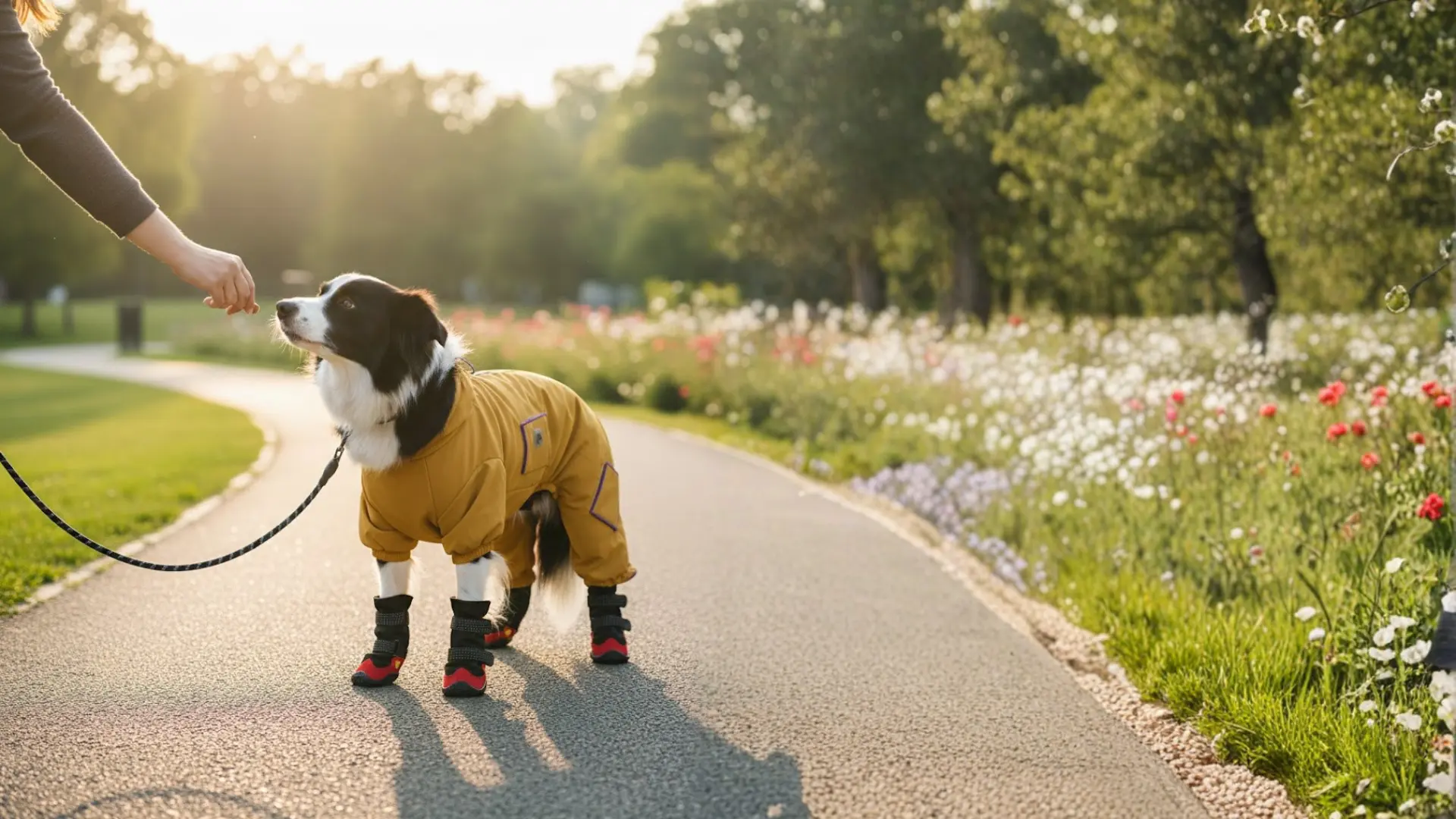
Puppy Raincoat Size Guide: How to Measure a Growing Dog and Still Get the Right Fit
Puppies grow fast. Like, really fast. A raincoat that fits your eight-week-old pup today will be useless in three weeks. That is the headache every new puppy owner runs into when it starts raining. You buy something cute, put it on your dog, and watch it either choke them or hang off their body like a deflated balloon.
The problem is not the raincoat. The problem is that puppies do not stay the same size long enough for you to figure out what works. You need a measurement method that accounts for growth, and you need to know exactly where to place the tape so the number you get is actually useful.
Why Puppy Sizing Is a Whole Different Ball Game
Adult dogs change shape slowly. A Labrador might gain a kilogram over six months. A puppy can gain a kilogram in a week. Their ribcage expands, their neck thickens, their back lengthens — all at different rates and not in any predictable order.
A twelve-week-old puppy and a sixteen-week-old puppy of the same breed can have completely different measurements. The twelve-week-old might be all legs and ribs. The sixteen-week-old might have filled out with muscle and fat. If you buy a raincoat based on measurements from the twelve-week mark, it will not fit by the time your dog hits sixteen weeks.
This means you cannot just measure once and be done. You need a system. And that system starts with knowing which measurements matter most for a growing body.
The Three Measurements You Need to Track
Chest Girth: The One That Changes Fastest
Wrap the tape around the widest part of your puppy’s ribcage, right behind the front legs. Your puppy should be standing on all four legs, not sitting. Keep the tape snug but not tight — two fingers should slide between the tape and the skin.
For puppies, the chest girth is the measurement that changes the fastest. Between eight and sixteen weeks, a medium-breed puppy’s chest can grow by three to five centimeters. That is a full size jump in most raincoat charts. If you measure the chest and pick a size based on today’s number, you will outgrow it before the month is over.
Here is what to do instead. Measure the chest, find the size that fits today, then buy one size up. The extra room gives your puppy space to grow into the coat over the next few weeks. Use the adjustable cinches at the chest and waist to tighten it down as they grow.
Back Length: Grows Steadily but Matters a Lot
Start the tape at the base of the neck, between the shoulder blades, and run it straight down the spine to where the tail meets the body. Stop at the tail base. Do not follow the tail.
Back length on puppies grows more steadily than chest girth. It does not jump by centimeters every week. But it still matters because a raincoat that is too short leaves the belly exposed, and puppies love to roll around in wet grass and mud. Their belly is the part that gets the wettest.
For puppies, buy for the back length you expect in four to six weeks, not the back length you have today. If your puppy’s current back length is 20 centimeters and they are growing about one centimeter per week, buy for a 24-centimeter back length. The coat will be a little long now, but it will fit perfectly in a month.
Neck Circumference: The Trickiest One
Puppies have necks that look huge on their bodies. Especially big-breed puppies. A twelve-week-old Great Dane puppy might have a neck circumference of 25 centimeters while their chest is only 35 centimeters. The neck looks comically oversized, and that throws off every size chart you look at.
Wrap the tape around the base of the neck, right behind the ears, at the thickest point. Keep it snug — two fingers between the tape and the skin.
Do not panic about the neck number. Puppy necks grow out of proportion fast. A neck that looks too big today will look normal in a few weeks. When sizing, prioritize chest girth and back length. The neck can usually be adjusted with a cinch or velcro strap. If the neck opening is way too big, water will pour in, but most puppy raincoats have adjustable neck closures that let you tighten it down as the puppy grows.
How to Buy for Growth Without Wasting Money
Measure Every Two Weeks Until Six Months
Set a reminder on your phone. Every two weeks, grab the tape and measure chest, back length, and neck. Write the numbers down in a note or a spreadsheet. You will start to see a pattern — how fast your puppy is growing in each area. That pattern tells you exactly how much room to leave in the raincoat.
For small breeds that finish growing around six months, you only need to track measurements for about three months. For large and giant breeds that keep growing until eighteen months or longer, you will be measuring for a while. But the method stays the same.
Buy One Size Up, Not Two
The instinct is to buy two sizes up so the raincoat lasts longer. Do not do that. A raincoat that is two sizes too big will not stay on your puppy at all. It will slide around, shift when they run, and let water in from every side. Your puppy will hate it and refuse to wear it.
One size up is the sweet spot. It gives you about two to four centimeters of extra room in the chest and back length, which is enough for a few weeks of growth. Use the adjustable features to tighten it down as your puppy fills out.
Pick Raincoats With Maximum Adjustability
Not all puppy raincoats are built the same. Some have a single velcro closure at the chest. Others have cinches at the neck, chest, and waist, plus elastic cuffs at the legs. For a growing puppy, you want every adjustable feature you can get.
The more adjustment points, the longer the raincoat will actually fit. A coat with three cinch points can stretch across two or even three size ranges as your puppy grows. A coat with one velcro strap will only last a few weeks before it becomes useless.
Look for elastic leg cuffs. Puppies have thin legs that grow fast, and if the leg openings are too wide, the fabric drags on the ground. Your puppy will trip over it, chew it off, and refuse to wear the thing ever again.
Breeds That Grow Differently and What That Means for Sizing
Small Breeds: Fast Growth, Short Window
Chihuahuas, Yorkshire Terriers, Pomeranians, and Toy Poodles grow the fastest relative to their size. They go from tiny to full-sized in about four to five months. That means you have a very short window to get the raincoat right.
For small breed puppies, measure every two weeks and buy one size up from the current measurement. The raincoat will probably only last two to three months before you need the next size. Accept that. It is cheaper than buying three coats that do not fit.
Medium Breeds: Steady Growth, Moderate Window
Beagles, Cocker Spaniels, Border Collies, and Australian Shepherds grow steadily from eight weeks to about eight months. Their chest and back length increase at a predictable rate, which makes sizing easier.
For medium breed puppies, measure every three weeks. Buy one size up from the current measurement. The raincoat should last about six to eight weeks before you need to size up again.
Large and Giant Breeds: Slow Start, Long Game
Great Danes, German Shepherds, Golden Retrievers, and Labradors take a long time to fill out. They look like giant puppies for months. Their chest stays narrow, their back length stays short, and their legs look way too long for their bodies.
For large breed puppies, the back length is the measurement that will surprise you. A four-month-old Great Dane puppy might have a back length of 30 centimeters, but at twelve months it will be 55 centimeters. That is a massive jump.
Buy for the back length you expect in two to three months, not today’s back length. The chest will catch up eventually. The neck will thicken on its own. But the back length is the one that lags behind, and if you get it wrong, the raincoat will not cover the belly no matter how much you adjust the cinches.
Training a Puppy to Wear a Raincoat While They Are Still Growing
Puppies are easier to train than adult dogs, but they are also more easily scared. A raincoat that fits perfectly can still freak out a twelve-week-old puppy if you put it on wrong.
Start indoors. Let the puppy sniff the raincoat. Toss a treat on top of it. Let them walk around it. Do not force it on them. Over a few days, let them get used to the smell and the feel of the fabric.
When you do put it on, keep the first session to two minutes. Reward heavily with treats and praise. Take it off. Do it again the next day for three minutes. Build up slowly.
If the raincoat is a little big because you bought one size up for growth, that is actually fine for training. A slightly loose coat is less restricting and easier for a puppy to move in. Use the cinches to tighten it gradually as they grow and get more comfortable wearing it.
By the time your puppy stops growing, they will be used to the raincoat and it will fit perfectly. You just have to be patient with the process and keep measuring along the way.