

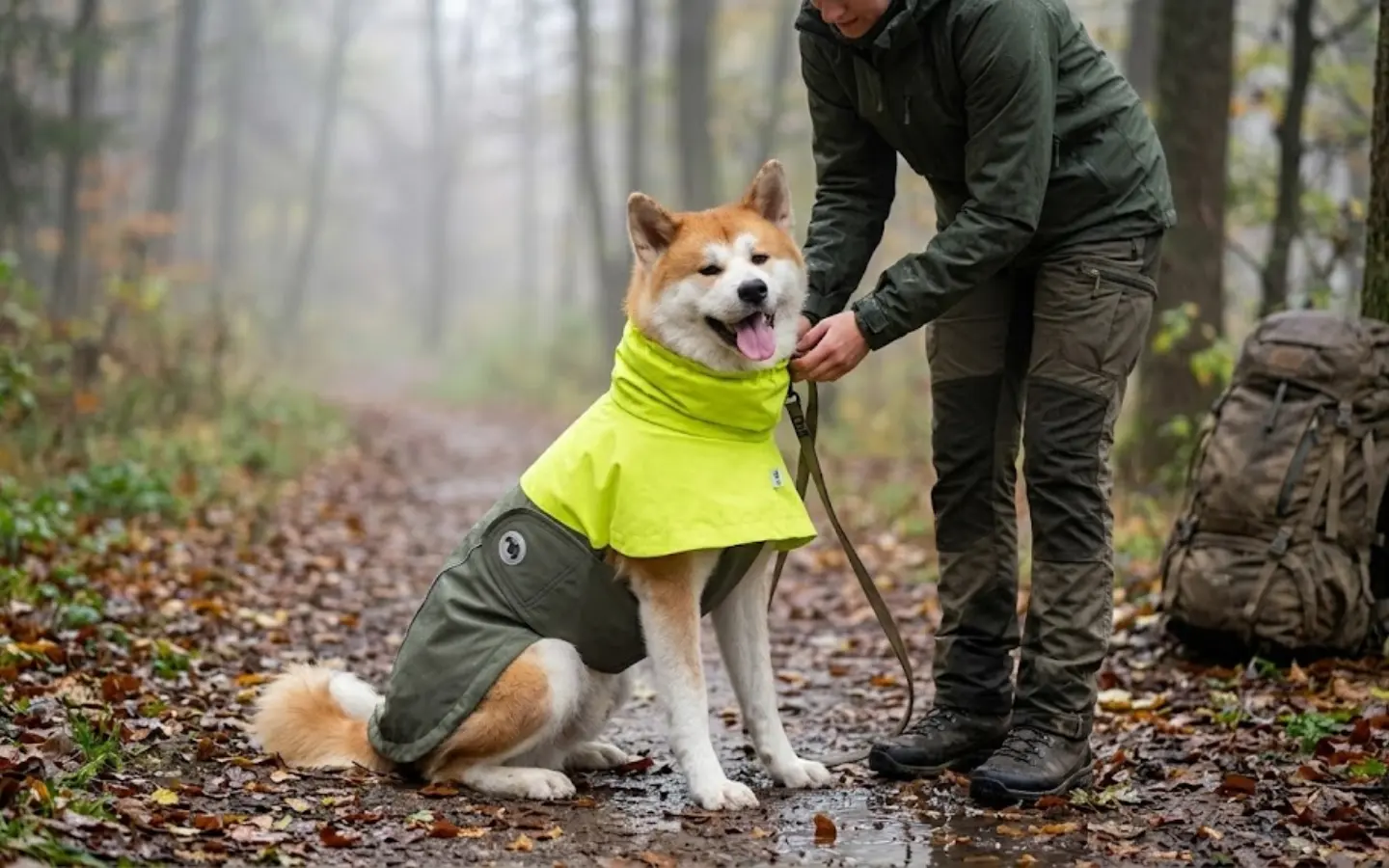
Breathable dog raincoat materials let sweat vapor escape from inside the coat while still blocking outside rain, which keeps your dog comfortable and dry during active walks or in humid weather. These fabrics use special constructions or treatments to balance waterproofing with airflow, preventing that sticky, clammy feeling that can make dogs reluctant to wear their gear.
Micro-Porous Membranes and Laminates
Expanded polytetrafluoroethylene membranes are engineered with billions of microscopic pores per square inch, each one large enough to allow water vapor from your dog’s body to pass through, but too small to let liquid water droplets from rain seep in. This material is often laminated between an outer fabric layer and a soft inner lining, creating a sandwich that protects the delicate membrane from dirt and abrasion while still letting it breathe. The result is a raincoat that feels noticeably less stuffy inside, even during long walks or runs where your dog is generating steady body heat.
Some laminates use a polyurethane matrix with pores that function in a similar way, allowing moisture vapor to escape while repelling liquid water from the outside. These laminates tend to be more flexible and less crinkly than traditional waterproof coatings, so the raincoat moves quietly and naturally with your dog’s body. The breathability helps reduce condensation buildup inside the coat, which is especially useful in damp, cool conditions where trapped sweat could make your dog feel chilled after they slow down.
For enhanced airflow, look for laminates paired with mesh-lined vent panels under the belly or along the sides of the raincoat. These mesh sections add extra ventilation in areas where heat tends to build up, without compromising waterproof coverage on the back and shoulders where rain hits directly. The mesh is usually made from a quick-dry polyester that wicks moisture away from your dog’s skin, helping them stay comfortable even during high-energy activities.
Tightly Woven Fabrics with Moisture Management
Ripstop nylon treated with a durable water repellent finish creates a fabric that is both water-resistant and breathable through its physical construction. The tight, grid-based weave blocks wind and light rain, while still allowing air to circulate through the tiny gaps between threads. The DWR finish causes water to bead up on the surface, so most moisture rolls off instead of being absorbed, which keeps the fabric from becoming saturated and heavy. This combination works well for dogs that are active in changeable weather, because the fabric dries quickly and does not trap heat like thicker, non-breathable materials.
Microfiber polyester uses an extremely dense weave to achieve similar effects, with the added benefit of feeling soft and quiet against your dog’s fur. The tight weave naturally resists water penetration while still permitting some airflow, and when combined with a hydrophobic treatment, it becomes effective at shedding light to moderate rain. This material is often used in raincoats designed for warmer climates or high-humidity areas, because it provides protection without causing overheating during walks.
Some fabrics incorporate moisture-wicking linings made from technical polyester or nylon blends that pull sweat away from your dog’s skin and spread it across a larger surface area to evaporate more quickly. These linings work in tandem with the breathable outer shell to move vapor from the inside to the outside, keeping the inner layer dry and comfortable. This is particularly helpful for dogs with thick coats, as it prevents dampness from getting trapped close to their skin where it could cause irritation or chill.
Construction Features That Improve Breathability
Seam placement and design can influence how well air moves through a raincoat. Strategically located seam-free zones under the belly or along the sides reduce the number of layers your dog’s body heat has to penetrate, allowing warmer air to escape more easily. Welded seams, where fabric layers are fused with heat instead of sewn with thread, create flat, smooth joins that do not block airflow like bulky stitched seams can, and they also eliminate needle holes where water could potentially leak in.
Vented designs incorporate physical openings covered with breathable mesh panels in areas that are less exposed to direct rain, such as the underside of the belly or the lower sides near the back legs. These vents allow hot air to exit while the mesh blocks most water from entering, creating a cooling chimney effect that reduces overall heat buildup. Some raincoats have adjustable vents that can be opened or closed with snaps or zippers, giving you control over airflow based on the intensity of the rain and your dog’s activity level.
The cut and fit of the raincoat itself affect breathability. A design that follows your dog’s natural body lines without being overly tight allows air to circulate between the raincoat and your dog’s fur, preventing a sealed, non-breathable environment. Slightly raised sections along the back or tailored darts along the sides can create small air channels that encourage ventilation, even without dedicated vent panels. A well-fitted raincoat also minimizes excess fabric that could flap and trap hot air against your dog’s body, further improving comfort during movement.