

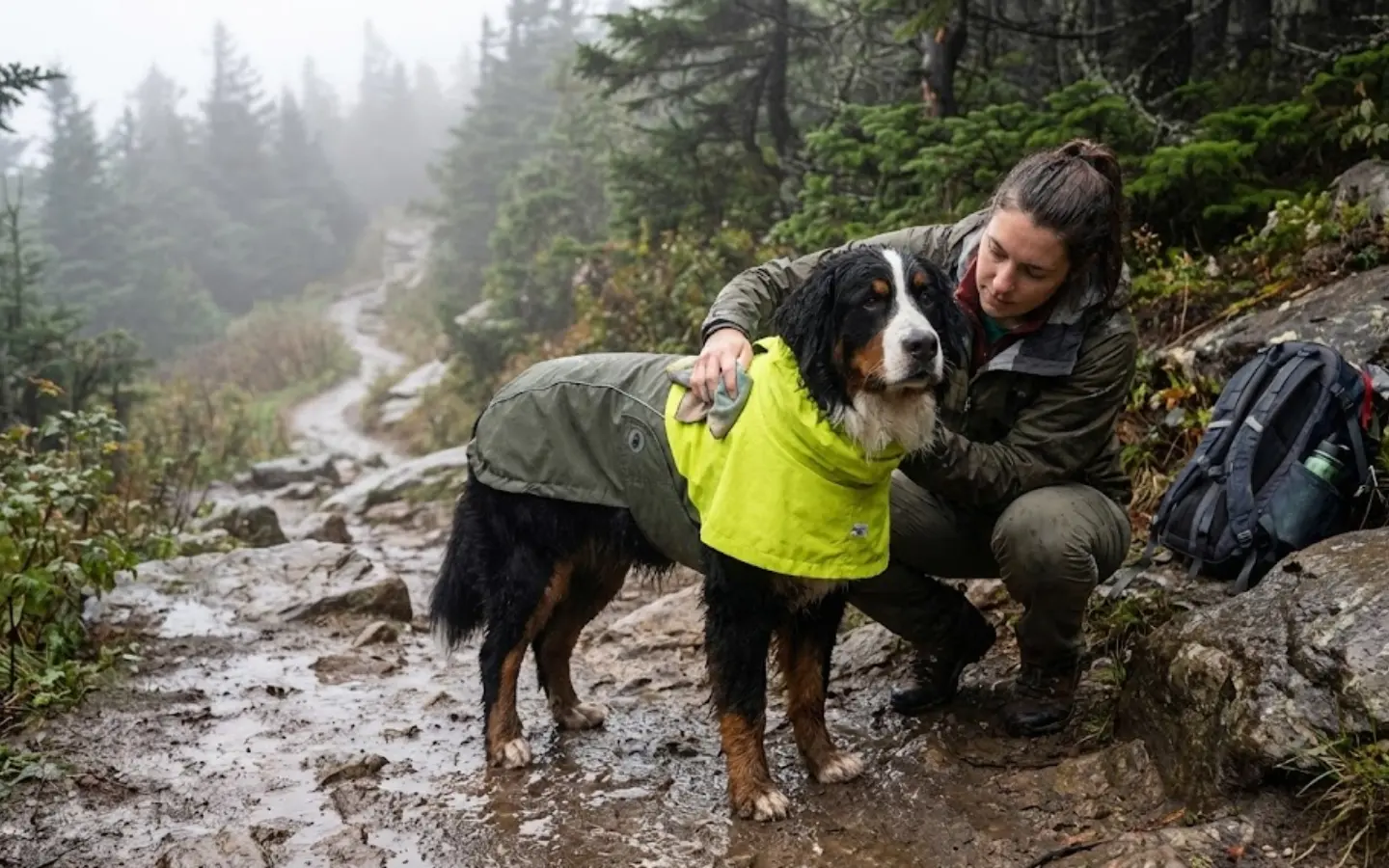
Soft dog raincoat materials prioritize comfort and flexibility, ensuring your dog stays dry without feeling restricted or irritated by stiff, scratchy fabric. These materials bend and move with your dog’s body, reduce noise during walks, and feel gentle against their skin, making the raincoat easier to put on and more comfortable to wear for extended periods.
Flexible Laminated and Coated Fabrics
Polyurethane laminated to a lightweight, soft-shell polyester creates a fully waterproof layer that feels smooth and pliable, not rigid or crinkly. The laminate is applied to the inside of the fabric, so the outer surface retains a soft, almost fabric-like texture that does not make loud rustling sounds when your dog moves. This flexibility allows the raincoat to drape naturally over your dog’s back and shoulders, moving with them as they walk, run, or lie down without creating stiff folds that could dig into their skin.
Some laminates use a thinner, more elastic polyurethane formulation that adds stretch to the fabric, giving the raincoat a slight give when your dog stretches, twists, or jumps. This elastic quality is especially helpful for deep-chested breeds or dogs with a broad range of motion, as it prevents the raincoat from pulling tight across their chest or back during activity. The inner surface of these laminates is often brushed or treated to feel extra soft against your dog’s fur, reducing the chance of chafing even during long, wet walks.
For a softer hand feel, look for laminates bonded to microfiber polyester or brushed nylon, which have a naturally gentle, fleece-like texture. These base fabrics are woven to be inherently soft, and the waterproof laminate adds protection without compromising that comfort. The resulting material is quiet, flexible, and often lighter than standard waterproof fabrics, making it a good choice for dogs that are sensitive to the sound or feel of traditional raincoat materials.
Treated Fabrics with Inherent Softness
Silicone-coated nylon is treated with a flexible silicone layer that repels water while allowing the fabric to remain soft and supple. Unlike stiffer PVC coatings, silicone does not crack or harden over time, so the raincoat stays pliable season after season. The coating is applied in a way that lets the underlying nylon retain its natural drape, so the raincoat moves fluidly with your dog’s body instead of hanging in stiff, awkward folds. This material is also quick-drying, which helps maintain its soft texture even after getting wet.
Polyester with a durable water repellent finish offers a soft, fabric-like feel because the water resistance comes from a chemical treatment rather than a thick, plastic-like coating. The DWR finish causes water to bead up on the surface, but the polyester itself remains breathable and flexible, with a texture similar to a lightweight windbreaker. This material is often used in raincoats designed for everyday neighborhood walks, as it provides adequate protection for short outings while feeling comfortable enough for dogs to wear without fuss.
Brushed tricot or jersey linings attached to a waterproof outer layer create a raincoat that feels soft both inside and out. The outer fabric provides the waterproof protection, while the brushed inner lining feels gentle against your dog’s skin and reduces friction that can lead to irritation. Some designs use a moisture-wicking brushed polyester lining that pulls slight dampness away from your dog’s fur, keeping them comfortable even if they work up a little sweat under the raincoat during an active walk.
Design Elements That Enhance Softness and Comfort
Seam construction plays a significant role in overall comfort. Flatlock seams, where the fabric edges are joined with a flat, smooth stitch, lie flush against your dog’s skin and do not create raised ridges that could rub during movement. Some raincoats use bonded or welded seams that eliminate stitching altogether, resulting in a completely smooth interior with no hard threads or bulky seam allowances. These seam treatments are especially important along the neckline, under the belly, and around the leg openings, where sensitive skin is most likely to be irritated.
Edges and closures should be finished with soft, flexible materials to prevent scratching or poking. Neck and leg openings bound with soft elastic or folded fabric tape feel gentler against your dog’s skin than raw edges or stiff plastic trim. Snaps and buckles should be covered with a layer of fabric or have smooth, rounded edges that do not dig in when your dog lies down or rolls over. Zippers, if used, should have a fabric flap behind them to shield your dog’s fur from the teeth, and the pull tab should be small and smooth to avoid catching on their collar or harness.
The overall cut and pattern of the raincoat influence how the soft material behaves on your dog’s body. A tailored fit that follows your dog’s natural contours prevents excess fabric from bunching up and creating uncomfortable pressure points. Strategic darting or shaping along the back and sides allows the soft material to conform to your dog’s shape without sagging or pulling, ensuring the raincoat feels like a comfortable layer rather than a bulky shell. For dogs with particularly sensitive skin, raglan-style sleeves or set-in sleeves that do not have a seam running directly over the shoulder joint can further reduce the risk of irritation during movement.