

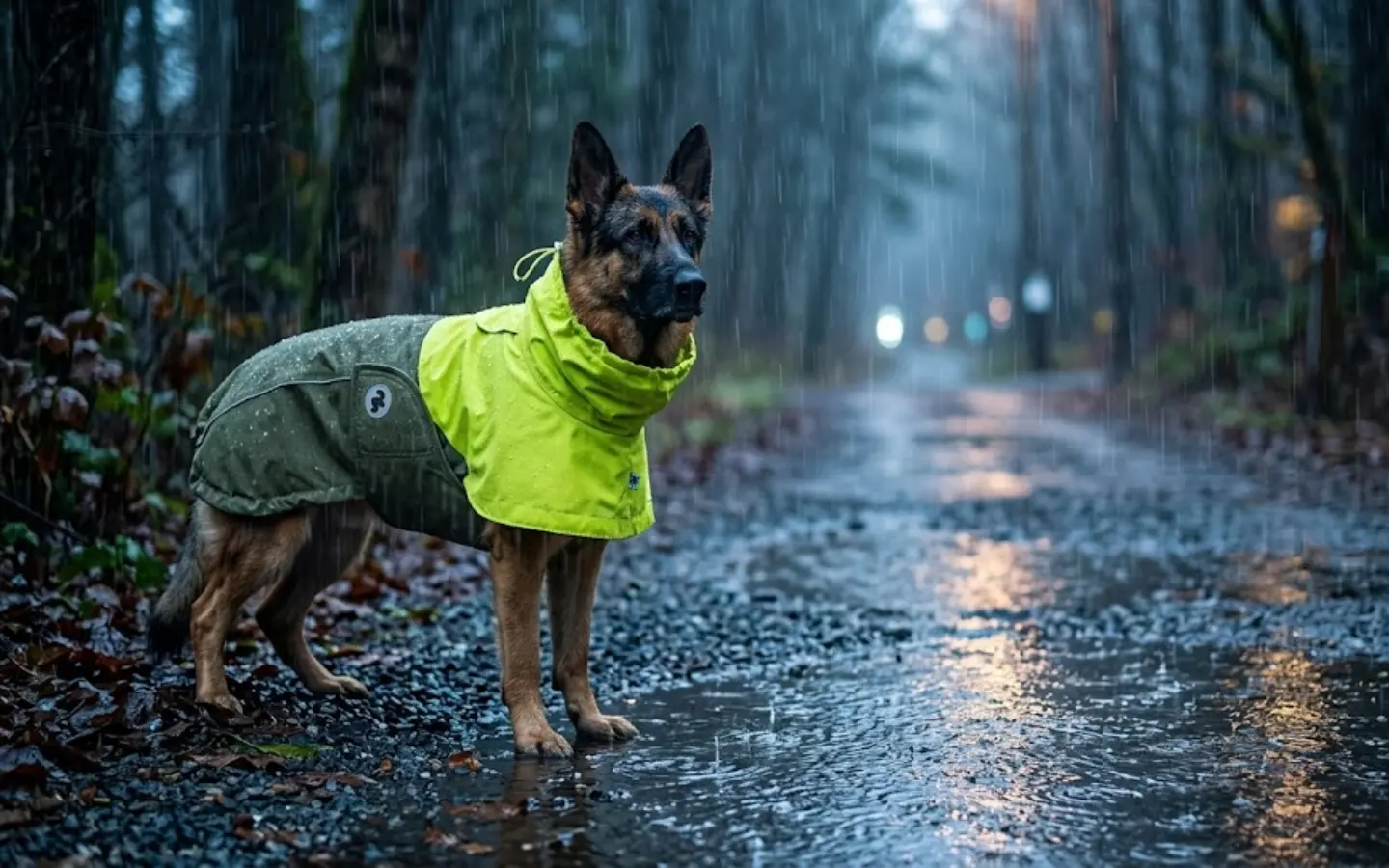
If you have picked up a dog raincoat that turns out to be too small for your furry friend, there is no need to rush to throw it away or buy a new one right away. Many simple, practical adjustments can help you make the most of the existing garment, while keeping your dog comfortable and dry even on rainy walks.
Quick no-sew adjustments for immediate fit
- Loosen all existing adjustable straps around the neck, chest and belly as far as they can go. Most dog raincoats come with extra slack hidden in these fasteners that you might not have noticed during the first try-on.
- Add small, flexible fabric loops to the existing snap or buckle points to extend the total length of the chest and belly bands. You can use soft, stretchy fabric scraps that will not rub against your dog’s skin during movement.
- Cut tiny, neat slits along the edge of the leg openings if the fabric feels tight around your dog’s upper legs. These small cuts will give extra room without causing the whole opening to tear further during regular use.
Gentle fabric stretching techniques for natural expansion
- Dampen the entire raincoat slightly with lukewarm water, then lay it flat on a clean, dry towel. Gently pull the fabric outward along the seams of the back panel, chest area and leg openings, working in small increments instead of forcing one big stretch.
- Leave the stretched raincoat in a well-ventilated area to air dry slowly. Place a few light, evenly distributed weights along the edges you just stretched to help the fabric hold its new, expanded shape as it dries.
- If the neck opening feels too tight, slip a soft, rolled-up towel inside the collar while the fabric is still damp. This will stretch the neckline just enough to fit over your dog’s head without feeling restrictive.
Safe DIY modifications for long-term use
- Sew a soft, matching fabric panel into the underside of the raincoat to add extra width across the chest and belly. Pick a lightweight, water-resistant material that matches the original coat’s texture so the new section does not feel out of place.
- Replace the short, fixed leg bands with longer, adjustable fabric straps that wrap loosely around your dog’s legs. This removes the tight pressure points that often make small raincoats uncomfortable for dogs with thicker legs.
- Add a small, extended fabric flap at the back of the neck opening to stop the collar from pulling too tight when your dog runs or bends down to sniff the ground. This simple change makes a huge difference in overall comfort for active dogs.
Many of these small changes take less than an hour to complete, and they let you adjust a slightly too small raincoat to fit your dog’s unique body shape perfectly. You can test one adjustment at a time and check how your dog moves in the coat after each step, to make sure the final fit feels natural and does not limit their usual playful behavior on wet, rainy days.
Leave a Reply Cancel reply
You must be logged in to post a comment.