

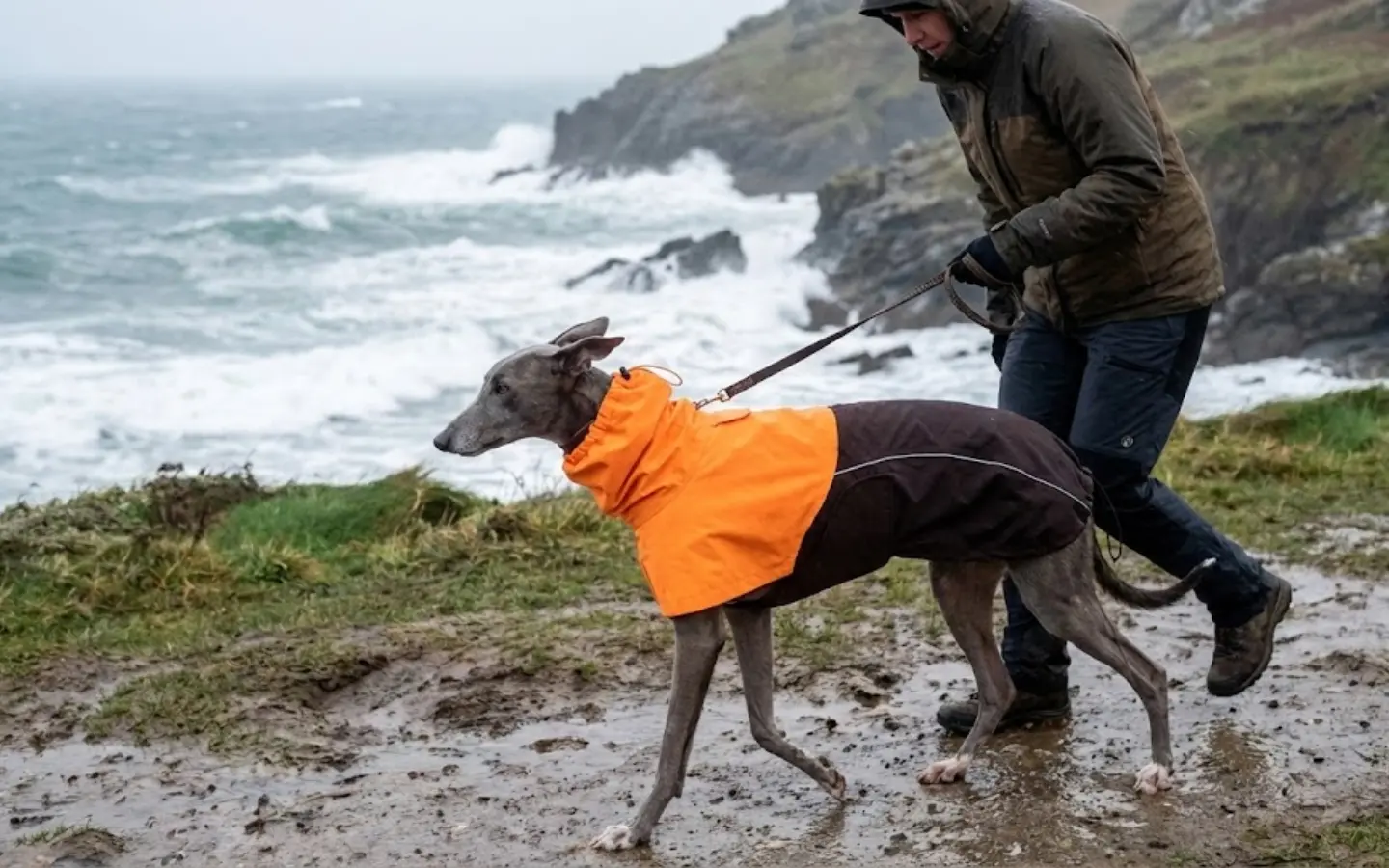
Key Points for Selecting Raincoats for Large Dogs
Proper Size and Fit
Accurate Body Measurements
When choosing a raincoat for a large dog, getting the right size starts with taking precise body measurements. Measure the length from the base of the neck to the base of the tail, as this will determine the overall length of the raincoat. A raincoat that’s too short won’t provide adequate coverage for the dog’s back, leaving it vulnerable to getting wet. For example, a Great Dane has an extremely long body, so a raincoat that falls several inches short of the tail base won’t serve its purpose.
Also, measure the chest girth just behind the front legs. This is crucial because a well – fitting raincoat should fit snugly around the chest without being too tight. A tight fit can restrict the dog’s breathing and movement, while a loose one may allow water to seep in. The neck circumference should also be measured to ensure the raincoat’s opening can comfortably fit over the dog’s head without choking or being too loose.
Adjustable Features
Large dogs come in various body shapes, even within the same breed. Look for raincoats with adjustable features such as straps around the neck, chest, and belly. These straps allow you to customize the fit according to your dog’s specific body proportions. For instance, if your large dog has a broad chest but a relatively narrow waist, adjustable belly straps can help achieve a more tailored fit, preventing the raincoat from sliding around during movement.
Some raincoats also have adjustable leg openings. This is beneficial as it ensures a proper fit around the dog’s legs, preventing water from entering through the gaps. It also allows for a full range of motion, especially important for active large dogs that love to run and jump.
High – Quality Materials
Waterproofing Capability
The primary function of a raincoat is to keep the dog dry, so waterproofing is of utmost importance. Look for materials that are inherently waterproof or have been treated with a high – quality waterproof coating. These materials should be able to repel water effectively, preventing it from soaking through to the dog’s fur. For example, some synthetic fabrics are designed to be completely water – resistant, creating a barrier against rain.
In addition to the main body material, pay attention to the seams of the raincoat. Sealed seams are essential as they prevent water from leaking in through the tiny holes created during the stitching process. A raincoat with poorly sealed seams will be less effective in keeping your large dog dry, especially during heavy rain.
Durability and Strength
Large dogs are generally more powerful and active than smaller breeds. Their raincoats need to be able to withstand rough play, running through bushes, and jumping over obstacles. Choose materials that are durable and strong, such as thick nylon or polyester blends. These materials are less likely to tear or get damaged easily.
The fastenings on the raincoat, such as buckles or Velcro straps, should also be of high quality. Sturdy fastenings will ensure that the raincoat stays securely in place during the dog’s activities, reducing the risk of it coming loose and exposing the dog to the rain.
Breathability
While waterproofing is crucial, breathability is equally important. A non – breathable raincoat can cause the dog to overheat, especially during physical activity. Look for materials that allow air to circulate, such as those with small pores or mesh inserts in certain areas. This helps to regulate the dog’s body temperature, keeping it comfortable even in wet weather.
For example, a raincoat with mesh panels under the arms or on the sides can provide better ventilation, allowing heat to escape and fresh air to enter. This is particularly beneficial for large dogs that are prone to getting warm quickly due to their size and activity level.
Functional Design Elements
Full – Body Coverage
A good raincoat for a large dog should provide full – body coverage. It should cover the back, chest, belly, and at least part of the legs. Some raincoats may also have flaps that extend down to cover the dog’s hindquarters more effectively. Full – body coverage ensures that the dog is protected from the rain from all angles, reducing the chances of getting wet.
For large dogs with long fur, full – body coverage is especially important as it helps to prevent the fur from getting matted and wet, which can be difficult to dry and may lead to skin problems. A raincoat that covers the entire body can also keep the dog warmer in colder and wet weather.
Reflective Elements
If you often walk your large dog in low – light conditions, such as early in the morning or late at night, reflective elements on the raincoat are a must. Reflective strips or patches on the raincoat make your dog more visible to drivers and other pedestrians, reducing the risk of accidents.
Place the reflective elements strategically around the body, such as on the back, sides, and legs. This ensures that your dog is visible from different angles, enhancing its safety during walks in the rain. Some raincoats may even have glow – in – the – dark features, which can provide additional visibility in extremely dark environments.
Easy to Put On and Take Off
Large dogs can be less cooperative when it comes to getting dressed, so a raincoat that is easy to put on and take off is essential. Look for raincoats with simple and quick – to – use fastenings, such as large snap buttons or wide Velcro straps. These fastenings can be easily operated even if the dog is moving around.
Some raincoats may have a split – front design, which allows you to open the raincoat wide and slide it over the dog’s head and front legs without having to struggle with tight spaces. This makes the dressing process much smoother and less stressful for both you and your large dog.