

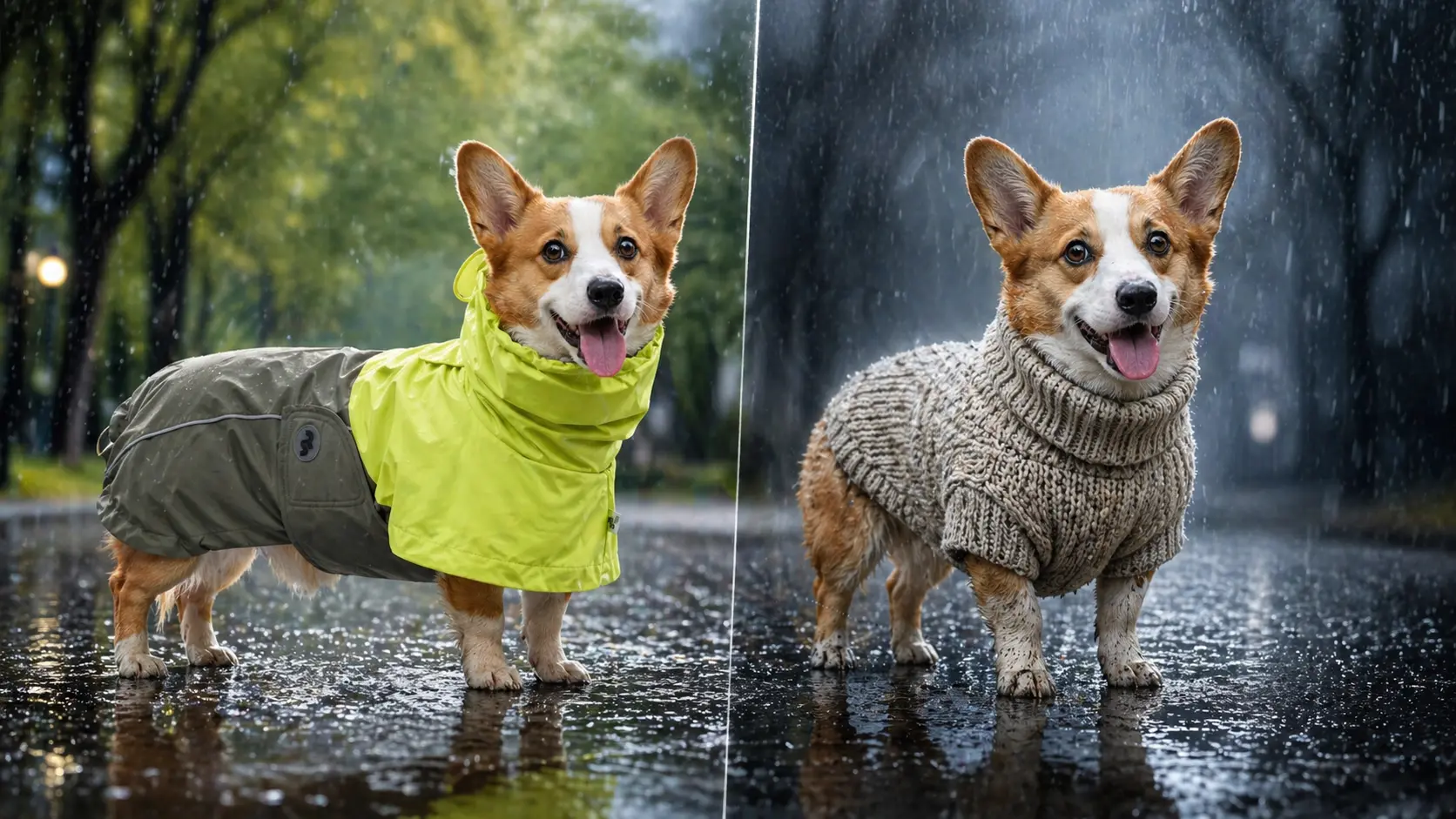
A hooded dog raincoat adds an extra layer of coverage for your dog’s head and ears, which means the sizing process needs to account for more than just standard back and chest measurements to make sure the hood sits securely without blocking their vision or slipping down over their face. Getting these extra dimensions right makes the difference between a hood that stays in place through windy, rainy walks and one that your dog keeps shaking off mid-trot.
Core Base Measurements for Hooded Styles
Start with the full back length, running a soft flexible tape from the very tip of the base of your dog’s skull, right where the hood’s back edge will rest, all the way down to the base of their tail. Unlike a regular raincoat that measures from the neck collar line, this extended starting point ensures the hood’s base connects seamlessly to the main back panel, with no awkward gap or tight seam that rubs against the back of their head. Do not pull the tape tight against their fur, especially for long-eared or thick-coated breeds, to avoid making the total length too short.
Next, measure the widest part of their chest, wrapping the tape around the deepest point of their ribcage a few inches behind their front legs. Hooded raincoats often have a slightly more structured upper panel to support the weight of the hood, so you need to leave 1 to 2 inches of extra slack between the tape and their skin to keep the fabric from pulling tight across their shoulders when they tilt their head up to look around. Double check that your dog is standing straight on all four paws, not slouching, to get an accurate, relaxed measurement.
Then measure the neck circumference at the thickest point, right below their jawline. This measurement sets the opening where the hood connects to the main raincoat body, so it needs to be loose enough that your dog can turn their head fully side to side without the fabric digging into their throat, but tight enough that the hood does not slide backward off their head when they shake water off their fur. For dogs with thick, fluffy neck fur, avoid pressing the tape flat against their skin, or the opening will end up far too small once their coat is tucked under the raincoat.
Head and Hood Specific Measurements
Measure the full circumference of your dog’s head, wrapping the tape around the widest part of their skull, right above their eyes and around the base of their ears. This is the most critical unique measurement for a hooded raincoat, because it determines how well the hood wraps around their head without pressing against their eyes or covering their ears. Leave just enough slack to slip one finger between the tape and their fur, so the hood stays snug even when they lower their head to sniff the ground, but never feels tight enough to irritate their skin.
Next, measure the distance from the base of their skull down to the tip of their nose. This number sets the maximum forward length of the hood, so you can make sure the fabric does not extend too far over their muzzle and block their vision or cover their nostrils. For short-snouted breeds, this measurement will be much shorter, so the hood can be cut to sit back away from their face to avoid restricting their breathing. For long-snouted breeds, the hood can extend a little further forward to shield their face from driving rain without covering their eyes.
Then measure the length of their ear, from the base where it connects to their head down to the tip of the ear flap. This tells you how much extra space the hood needs inside to fit their ears comfortably, so the fabric does not fold their ears down against their head or press against the sensitive ear edges. For breeds with long, floppy ears, the hood needs extra depth to fully cover the ears and keep them dry, while breeds with short, upright ears only need a small amount of extra room to avoid squishing their ears flat.
Fit Validation for Hooded Raincoats
After you confirm all the measurements, put the raincoat on your dog and let them stand still for a minute to check the initial hood position. The hood should sit naturally on top of their head, with the front edge resting just above their eyes, not slipping down over their forehead or sliding backward off their skull. Gently nudge their head side to side to make sure the hood moves with their head, not stays stuck in one spot and twists the main raincoat panel out of alignment.
Let your dog walk around the house for 15 minutes to test how the hood holds up to movement. Watch to see if they can trot, turn their head to sniff the floor, and shake their body without the hood shifting out of place. If they keep stopping to scratch at the hood or rub their head against the wall, the fit is too tight around their head, and you need to add a little extra slack around the hood opening to make it more comfortable.
Take them for a short dry walk outside to test the hood in light wind. The hood should not blow backward off their head, and the edges around their face should not flap around and distract them while they walk. If the hood stays securely in place, does not block their vision, and does not rub any sensitive spots on their head or neck, the sizing works perfectly for all your rainy day walks.