

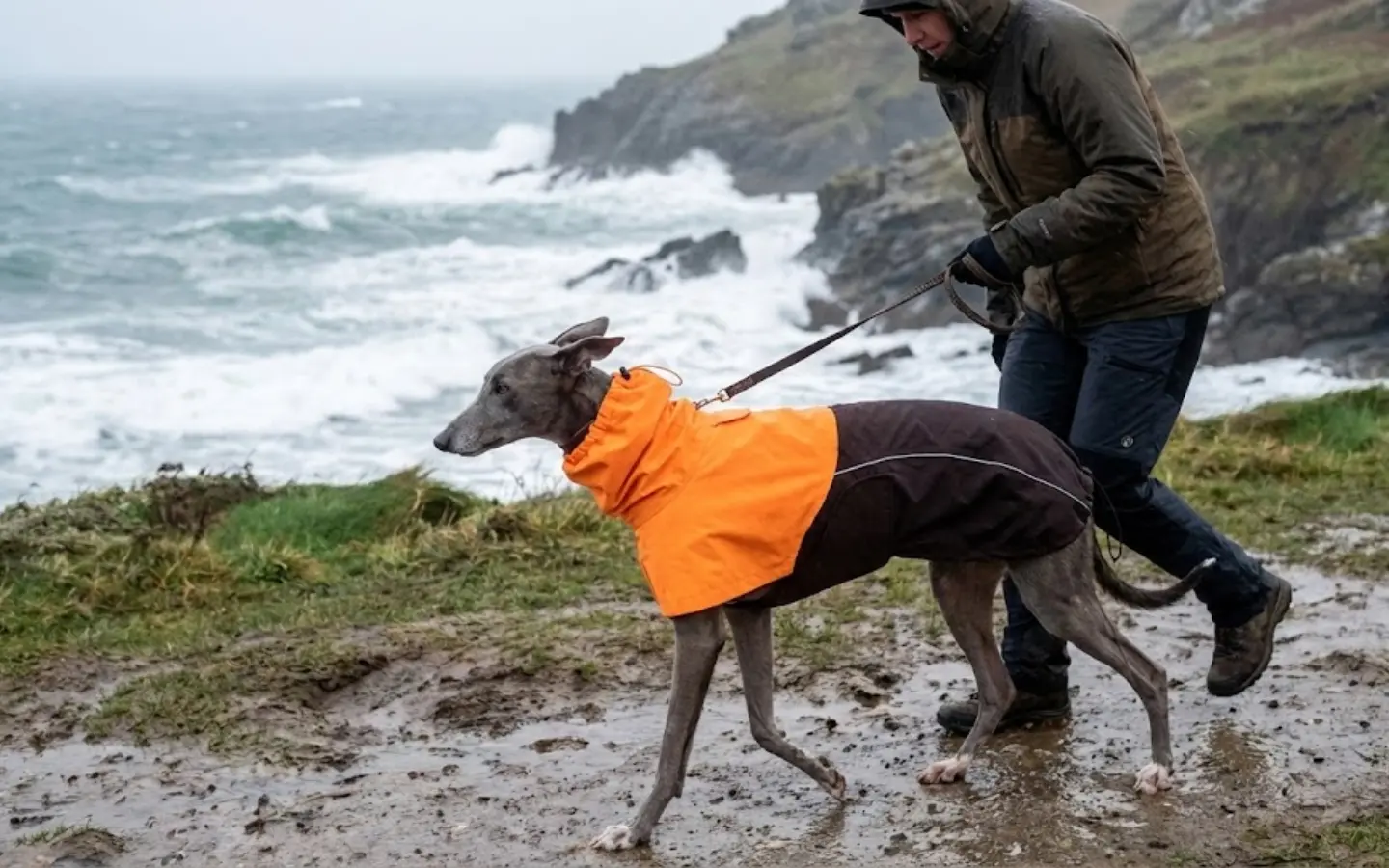
When you are comparing materials for a dog raincoat, each fabric type brings its own set of strengths and trade-offs in waterproof performance, weight, durability, and ease of care. Understanding these differences helps you pick the material that matches your dog’s typical walking conditions, activity level, and sensitivity to certain textures or sounds.
Outer Layer Waterproofing and Durability
Polyurethane laminated fabrics create a fully waterproof barrier by bonding a thin polyurethane film to the inside of a lightweight outer fabric, usually polyester or nylon. This material is highly effective at stopping rain from soaking through, even during long, heavy downpours, and it stays flexible in cold weather so it does not stiffen up and restrict your dog’s movement. The inner surface feels smooth against your dog’s skin, which reduces the risk of chafing during extended wear, but the laminate can wear down over time if the raincoat is frequently scrubbed against rough surfaces like concrete or tree bark.
PVC-coated polyester uses a thicker, more rigid waterproof coating applied to the outer surface of the fabric, creating a tough, puncture-resistant shell that stands up to abrasive conditions like hiking through brush or scrambling over rocky trails. This material blocks water completely and wipes clean easily with a damp cloth, but it is heavier and less breathable than laminated options, which can make some dogs feel hot and confined during active walks. The coating can also develop small cracks over many seasons of folding and storage, especially if the raincoat is stored in very cold or very dry conditions.
Silicone-coated nylon is treated with a flexible, water-repellent silicone layer that makes water bead up and roll off the surface instead of soaking into the fabric. This material is lightweight and dries quickly after getting wet, which is useful for dogs that shake off excess water frequently during walks. The silicone adds a subtle stretch to the fabric, allowing the raincoat to move with your dog’s body without pulling tight, but the coating can attract dirt and dust more easily than smoother laminates, requiring more frequent cleaning to maintain its water-shedding ability.
Breathability and Comfort Features
Waterproof breathable membranes, often made from expanded polytetrafluoroethylene or similar microporous materials, are sandwiched between an outer fabric and an inner lining to let sweat vapor escape while blocking outside moisture. This material works well for high-energy dogs that generate a lot of body heat during runs or long hikes, because it stops them from overheating and getting damp from their own sweat under the raincoat. The membrane is delicate and can lose effectiveness if the inner lining gets clogged with dirt or oils from your dog’s fur, so regular gentle cleaning is important to maintain its performance.
Ripstop nylon with a durable water repellent finish uses a tightly woven grid pattern that resists tearing and a chemical treatment that causes water to bead up on the surface. This material is highly durable and dries very quickly, making it a good choice for dogs that play in wet grass or shallow puddles and need a raincoat that does not stay soggy between stops. The DWR treatment can wear off after many washes or prolonged exposure to sunlight, so you may need to reapply a water-repellent spray periodically to restore its effectiveness.
Microfiber polyester with a hydrophobic treatment has an extremely tight weave that naturally resists water penetration, and the treatment adds an extra layer of protection without adding significant weight or stiffness. This material feels soft and quiet, which is helpful for sound-sensitive dogs that get nervous from the rustling noise of stiffer raincoat fabrics. The tight weave also blocks light wind, providing a little extra warmth on cool, damp days, but it is less effective in heavy, driving rain compared to fully laminated or coated materials.
Maintenance and Long-Term Wear Factors
Seam construction plays a critical role in overall waterproofing, because water can seep through the tiny holes left by regular stitching. Taped seams, where waterproof tape is heat-sealed over the stitched seam, provide the strongest protection against leaks, especially along the back, shoulders, and hood where water tends to pool. Some raincoats use welded seams, where the fabric layers are fused together with heat instead of being sewn, which eliminates needle holes entirely and creates a completely watertight seal, though this construction can be less flexible than taped seams.
Closure systems like zippers, snaps, and hook-and-loop fasteners need to be designed to keep water out of the gaps along the opening. Zippers covered by a fabric storm flap offer good protection when the flap is securely fastened, while snap closures with waterproof backing gaskets create a tighter seal against moisture. Hook-and-loop closures work best when they are shielded by an overlapping fabric flap, because the loops can trap water and slowly wick moisture through to the inner lining if left exposed to rain.
Inner lining materials affect comfort and moisture management during wear. Mesh linings improve airflow and help reduce sweat buildup for active dogs, while smooth polyester or nylon linings feel soft against the skin and reduce friction that can cause chafing. Removable linings make it easier to clean away dirt, fur, and odors without repeatedly washing the entire waterproof shell, which helps extend the life of the raincoat’s outer layer. Linings made from quick-dry materials pull moisture away from your dog’s fur if they do get damp, preventing that clammy feeling that can make some dogs reluctant to wear their raincoat.
深度思考