

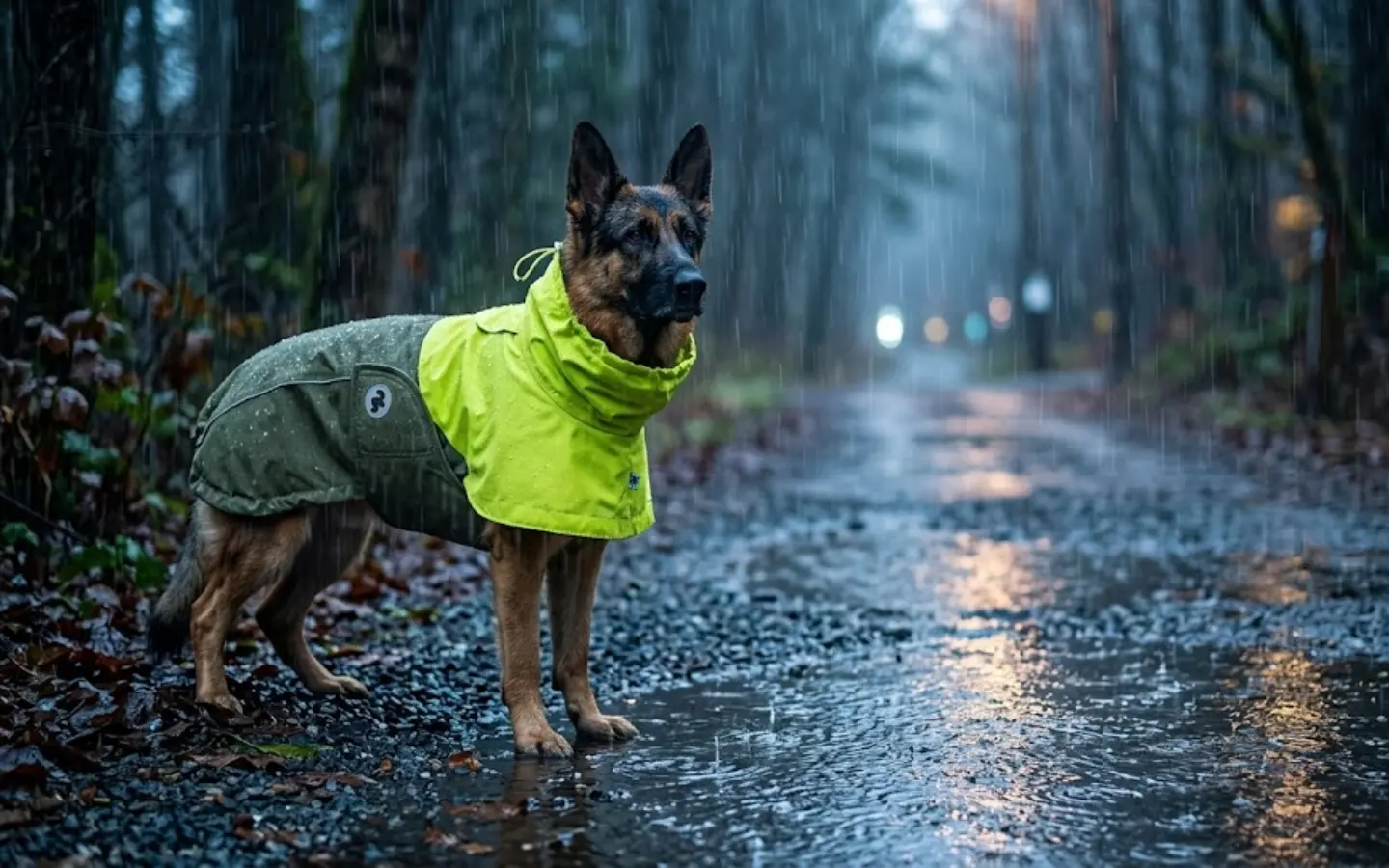
The fabric used for a windproof dog raincoat needs to balance water repellency, wind resistance, and pet comfort, since dogs move actively, brush against rough surfaces, and generate body heat even during short walks in rainy weather. A poorly chosen material can trap moisture against the skin, tear easily on underbrush, or fail to block cold gusts that make outdoor walks uncomfortable for pets. Understanding the core properties and common material structures helps you select options that hold up to real-world outdoor use.
Core performance requirements for functional dog raincoat fabrics
Every material designed for this use case must meet three non-negotiable standards before it can perform reliably in variable weather. First, it needs a water resistance rating high enough to shed steady rain without letting moisture seep through seams or the main body of the coat. Second, it must block cold air from passing through the fabric weave, so wind does not cut through and chill the dog even when temperatures drop during a walk. Third, it needs enough breathability to let excess body heat escape, preventing the dog from overheating or feeling damp from trapped perspiration after 15 to 20 minutes of active movement.
Common base material structures for windproof dog raincoats
One widely used structure relies on a tightly woven synthetic base with a thin, continuous waterproof layer bonded to its inner surface. This design keeps the outer face durable enough to resist snags from tree branches and rough pavement, while the inner laminated layer stops rain and wind from penetrating through the weave. Another popular option uses a stretchable soft shell construction, where the fabric weave itself is engineered to be dense enough to block wind while retaining natural flexibility that moves with the dog’s shoulders and legs during running, jumping, or playing. Lighter packable styles often use a fine, crease-resistant weave that can be folded down to a very small size without damaging the water-repellent treatment on the fabric surface.
Critical details that separate practical fabrics from low-performance alternatives
Surface water beading, often referred to as the lotus effect, only provides temporary surface water repellency and wears off quickly after repeated rubbing against grass, dirt, or dog fur. The actual long-lasting waterproof performance comes from the inner laminated layer, not the surface coating, so fabrics that maintain full water resistance even when the outer layer gets slightly damp are far more reliable for regular use. Seam sealing is another key detail, because even the highest quality fabric will leak if stitched holes are not fully covered with a thin waterproof tape that blocks moisture from seeping through the needle gaps. Fabrics certified free of harmful chemical additives avoid skin irritation, even for dogs with sensitive skin that spends extended periods wearing the raincoat during long, rainy hikes.
How fabric properties adapt to different dog activity levels
For working or highly active dogs that run through thick brush, a heavier tear-resistant weave with higher tearing strength prevents accidental rips that would render the coat useless halfway through a walk. For small, short-haired breeds that are more sensitive to cold wind, a slightly padded layered fabric structure adds extra insulation without sacrificing the core wind and water blocking performance. For dogs that swim or spend extended time in heavy rain, fabrics with higher water resistance ratings can withstand prolonged exposure without letting moisture reach the fur underneath.
Q: Why is inner lamination more reliable than surface water repellent coating?
A: Surface coatings wear off quickly from rubbing against fur, grass, and rough surfaces, while the inner laminated layer stays protected and maintains consistent waterproof performance for much longer.
Q: What makes a dog raincoat fabric breathable enough for active use?
A: A dense but non-occlusive weave structure allows warm, moist air from the dog’s body to escape, while still stopping liquid water and cold wind from passing through to the skin.