

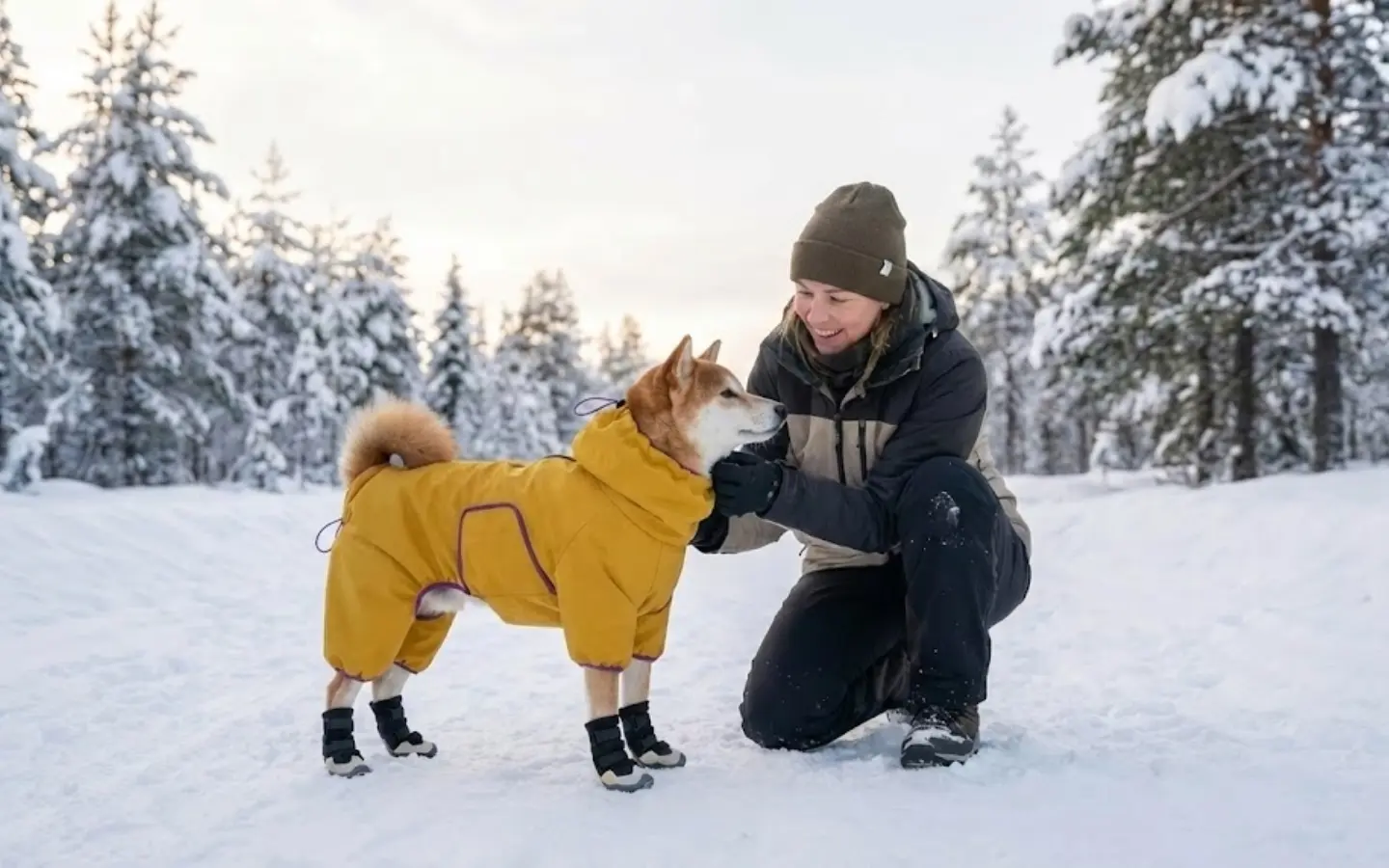
Lightweight dog raincoats need to balance reliable water protection with minimal bulk, so your dog stays dry without feeling weighed down or restricted during walks. The best materials for this are thin, flexible, and quick-drying, offering enough durability for regular use while folding up small for easy storage in a backpack or pocket when the rain stops.
Ultra-Light Waterproof Laminates
Polyurethane laminated to a thin nylon or polyester shell creates a fully waterproof barrier without adding noticeable weight or stiffness to the raincoat. This material drapes softly over your dog’s back and moves easily with their body, so it does not rustle loudly or restrict their natural stride even when they run or jump. The inner surface is smooth against their skin, which helps prevent chafing during longer walks, and the laminate itself is flexible enough to pack down into a small bundle that fits easily into a leash bag or your jacket pocket.
Some laminates use a micro-porous membrane that blocks outside rain while letting small amounts of sweat vapor escape from inside the coat. This subtle breathability stops your dog from overheating during active walks, which is especially useful for high-energy breeds that generate a lot of body heat even on cool, wet days. The membrane is protected by the outer fabric, so it stays effective through many uses, and the whole raincoat can be rinsed clean under running water and hung to dry quickly between outings.
For the lightest possible feel, look for laminates applied to ripstop nylon, which uses a reinforced grid weave to prevent small tears from spreading without adding extra thickness. This combination gives you durability and waterproofing in a fabric that feels almost like regular clothing, so even small or sensitive dogs barely notice they are wearing it. The ripstop weave also dries exceptionally fast, so if the raincoat does get wet, it will be ready to use again after a short shake and a few minutes of air drying.
Lightweight Water-Repellent Fabrics
Silicone-coated nylon offers a flexible, water-shedding layer that is lighter than traditional waterproof coatings. The silicone treatment causes water to bead up and roll off the surface, keeping your dog dry in light to moderate rain without the need for a heavy, fully sealed laminate. This material has a slight natural stretch, so it moves with your dog’s body without pulling tight across their shoulders or back, and it folds down into a compact size that takes up very little space in a daypack.
Polyester treated with a durable water repellent finish is another lightweight option that works well for quick walks in drizzly conditions. The DWR finish makes the fabric resist water absorption, so light rain slides off instead of soaking through, and the polyester itself dries quickly if it does get damp. This material is often woven into a tight, smooth texture that feels soft against your dog’s fur and does not make distracting rustling sounds that could startle nervous dogs during windy weather.
Microfiber polyester with a hydrophobic treatment takes lightweight water resistance a step further by using an extremely tight weave that naturally blocks moisture, paired with a chemical treatment that enhances that effect. The result is a fabric that feels almost like a light jacket, with enough water resistance to handle sudden showers, but without the weight or stiffness of a fully waterproof shell. This material is easy to wipe clean with a damp cloth, and it air-dries so quickly that you can often use it again within an hour after a walk.
Design Features That Enhance Lightweight Performance
Seam construction plays a big role in keeping a lightweight raincoat effective. Look for seams that are either welded with heat or sealed with a thin, flexible tape, because these methods prevent water from leaking through the stitch holes without adding bulk or stiffness to the seams. Welded seams are especially good for ultra-light raincoats, as they create a smooth, flat join that does not rub against your dog’s skin or create pressure points during movement.
Closure systems should be minimal and low-profile to keep the overall weight down. Magnetic snaps or small, lightweight plastic buckles add secure fastening without heavy metal parts, and they are less likely to clink together and distract your dog as they walk. Hook-and-loop closures work well if they are covered by a thin fabric flap to keep rain out, but make sure the hook side is not so abrasive that it catches on your dog’s fur when you are putting the raincoat on or taking it off.
The lining in a lightweight raincoat should be made from a breathable, quick-dry material like mesh or smooth polyester, which wicks away any slight moisture from your dog’s body without adding insulation that could make them overheat. A removable lining is useful because it lets you wash away dirt and odors without having to clean the entire waterproof shell every time, which helps maintain the water-repellent treatments on the outer fabric. Some linings are treated with an anti-microbial finish to prevent odors from building up during storage, which is helpful if you pack the raincoat away damp after a walk.