

Key Considerations When Buying a Raincoat for Dog Walking
Sizing and Fit Precision
Accurate Body Measurements
Before purchasing a dog – walking raincoat, taking precise body measurements of your dog is of utmost importance. Start by measuring the length from the base of the neck to the base of the tail. This ensures that the raincoat will cover the entire back of your dog, providing full protection from the rain. For example, if you have a medium – sized dog, an incorrect length measurement could result in a raincoat that is either too short, leaving the lower back exposed, or too long, getting in the way of the dog’s legs during movement.
Next, measure the chest girth. This is the widest part around the dog’s chest, just behind the front legs. A well – fitting raincoat should have enough room around the chest so that the dog can breathe comfortably without feeling restricted. If the chest measurement is inaccurate, the raincoat may be too tight, causing discomfort, or too loose, allowing rain to seep in.
Leg and Neck Coverage
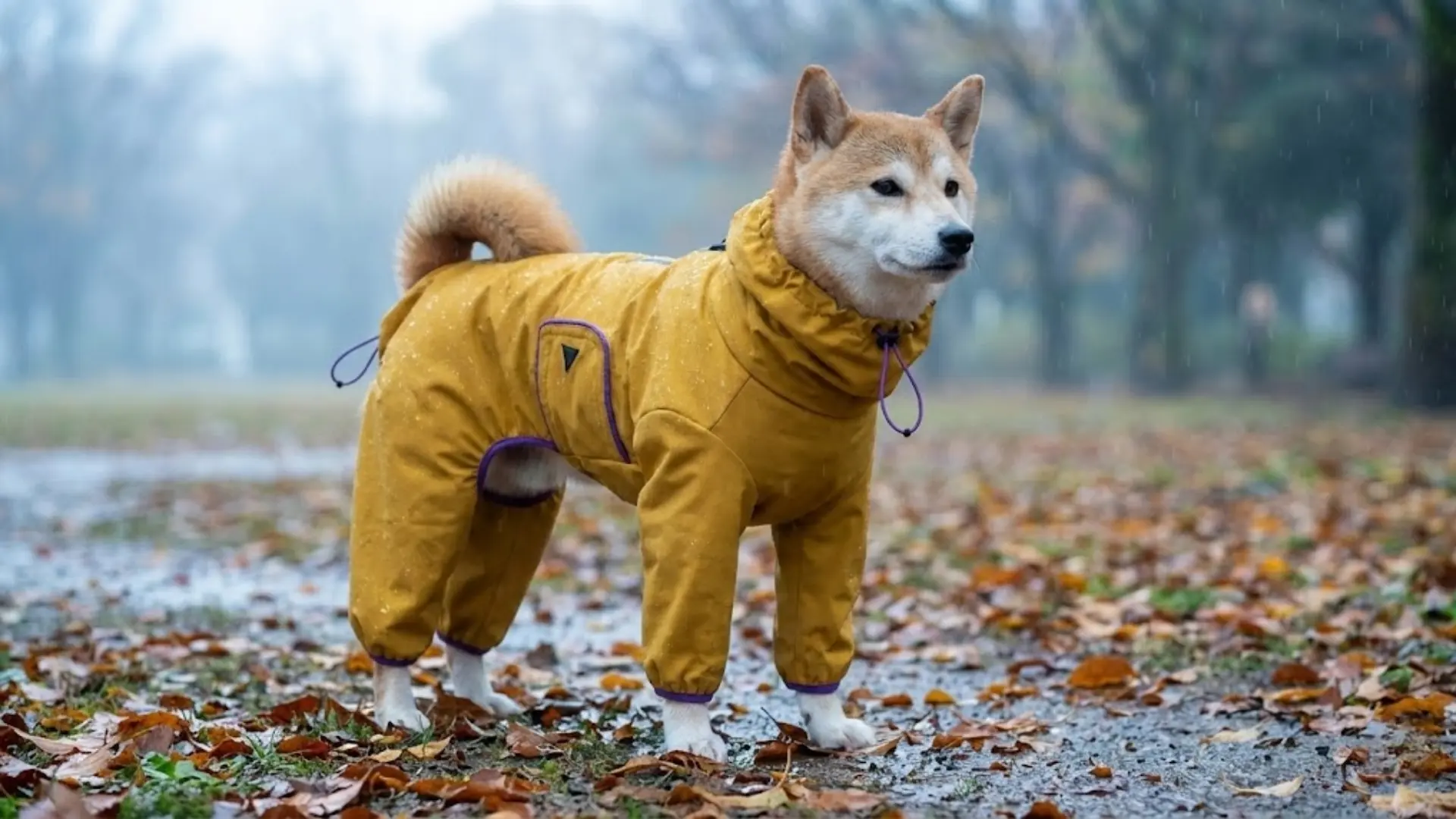
In addition to the body length and chest girth, consider the coverage of the legs and neck. Some raincoats come with leggings or extended sleeves that can cover the dog’s legs up to a certain point. This is especially useful for keeping the legs dry, as dogs often step in puddles during walks. The length of the leg coverage should be appropriate for your dog’s breed and size. For instance, a Dachshund has short legs, so a raincoat with relatively short leggings would be more suitable.
The neck area also needs proper coverage. A raincoat with a high – collar design or an adjustable neck strap can prevent rain from entering through the neck opening. This is crucial for keeping the dog’s neck and upper chest dry, especially in heavy rain.
Material Selection for Optimal Performance
Waterproof Capability
The primary function of a dog – walking raincoat is to keep the dog dry, so waterproof material is a non – negotiable feature. Look for raincoats made from materials such as nylon or polyester with a waterproof coating. These materials form a barrier that prevents water from penetrating through to the dog’s fur and skin.
To test the waterproofness, you can look for product descriptions that mention a high water – repellent rating. Some materials are designed to make water bead up and roll off the surface, which is an indication of good waterproof performance. This feature is essential for keeping your dog comfortable during long walks in the rain, as wet fur can become heavy and cause the dog to feel cold.
Breathability and Comfort
While waterproofing is important, the raincoat should also be breathable. Dogs can get warm during physical activity, even in the rain. Breathable materials allow air to circulate, preventing the build – up of heat and moisture inside the raincoat. This helps to regulate the dog’s body temperature and keep it comfortable throughout the walk.
Look for raincoats with mesh panels or small pores in the fabric. These features enable air to flow through the raincoat, allowing heat to escape. For example, a raincoat with mesh under the arms can provide better ventilation, especially for an active dog that is running and playing during the walk.
Durability and Longevity
Dog – walking raincoats are likely to be exposed to various elements, including rough terrain, branches, and other outdoor hazards. Therefore, the material should be durable enough to withstand wear and tear. Thick nylon or reinforced polyester are good options as they are less likely to tear or get damaged easily.
Check the stitching on the raincoat as well. Double – stitched seams are more durable and less likely to come apart, ensuring that the raincoat can last for multiple rainy seasons. A durable raincoat will provide reliable protection for your dog without needing frequent replacements.
Design Features for Convenience and Safety
Easy – to – Use Fastenings
When it comes to putting on and taking off the raincoat, easy – to – use fastenings are a must. Dogs can be impatient, especially when they are eager to go for a walk. Look for raincoats with simple fastening systems such as wide Velcro straps or large snap buttons. These fastenings can be quickly and easily adjusted, even if the dog is moving around.
Avoid raincoats with complicated zippers or multiple fastenings that can be difficult to operate. A well – designed raincoat with easy – to – use fastenings will make the dressing process much smoother and less stressful for both you and your dog.
Reflective Elements for Visibility
If you often walk your dog during low – light conditions, such as early in the morning or late at night, reflective elements on the raincoat are essential for safety. Reflective strips or patches on the raincoat make your dog more visible to drivers and other pedestrians, reducing the risk of accidents.
Place the reflective elements strategically around the body, such as on the back, sides, and legs. This ensures that your dog is visible from different angles. Some raincoats may even have glow – in – the – dark features, which can provide additional visibility in extremely dark environments, enhancing the safety of your dog during walks in the rain.
Adjustable Features for a Custom Fit
Dogs come in various shapes and sizes, even within the same breed. Look for raincoats with adjustable features, such as adjustable neck and chest straps. These straps allow you to customize the fit of the raincoat according to your dog’s specific body proportions.
For example, if your dog has a broad chest but a relatively narrow waist, adjustable chest and belly straps can help achieve a more tailored fit, preventing the raincoat from sliding around during movement. This ensures that the raincoat provides maximum protection and comfort for your dog during walks in the rain.