

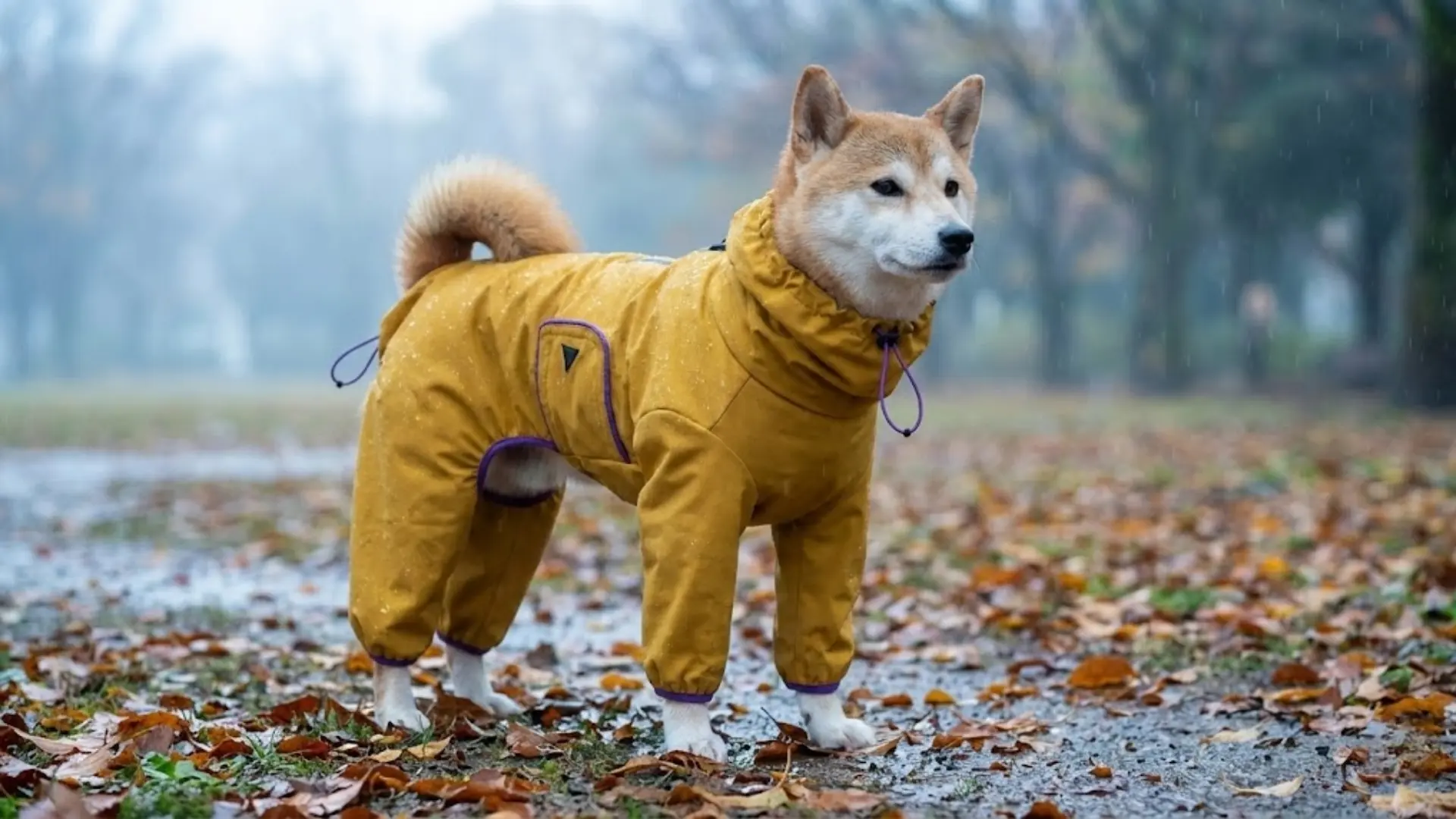
Picking the right waterproof material for your dog’s raincoat is not just about stopping rain from soaking through, it is about balancing protection, comfort, and durability so your dog can stay dry without feeling trapped in a stiff, heavy shell that slows them down on walks. Different materials handle water, wind, and wear in unique ways, and understanding those differences helps you match the fabric to your dog’s activity level, local weather patterns, and personal comfort needs.
Water-Resistant Coatings and Outer Layers
- Polyurethane Laminated Fabrics
Polyurethane layers are often bonded to the inside of a lightweight outer fabric, creating a smooth, continuous waterproof barrier that stops rain from seeping through to your dog’s fur. These laminates stay flexible in cold weather, so the raincoat does not get stiff and crinkly when the temperature drops, which keeps your dog comfortable on chilly, wet walks. The inner surface feels soft against your dog’s skin, with no rough edges or loose threads that could cause chafing during long hours of wear. - Polyester with PVC Coating
Polyester fabric treated with a polyvinyl chloride coating creates a thicker, more rugged waterproof layer that stands up to heavy rain, strong winds, and rough outdoor conditions. This material feels slightly heavier and stiffer than laminated fabrics, but it resists punctures from sharp branches or thorns, making it a solid pick for dogs that love to crash through dense brush on off-trail hikes. The outer surface wipes clean easily with a damp cloth, so you can quickly remove mud, dirt, or sticky debris without having to run the whole raincoat through a washing machine after every walk. - Nylon with Silicone Coating
Nylon coated with silicone creates a lightweight, flexible waterproof layer that dries fast after heavy rain, so the raincoat does not stay damp and heavy between walks. This material is often used in raincoats designed for active, high-energy dogs that need to move freely without feeling weighed down by thick, bulky fabric. The silicone coating adds a slight stretch to the outer layer, so the raincoat moves with your dog’s body as they run, jump, and twist around without pulling tight across their shoulders or back.
Breathable and Quick-Dry Materials
- Polyester with Waterproof Membrane
Some raincoats use a polyester outer layer paired with a waterproof, breathable membrane that lets sweat vapor escape from inside the coat while blocking rain from the outside. This material works well for dogs that run hard and generate a lot of body heat, because it stops them from overheating and getting damp from their own sweat under the raincoat. The membrane is usually sandwiched between the outer fabric and a soft inner lining, which protects it from dirt and abrasion so it keeps working through many seasons of regular use. - Ripstop Nylon with DWR Finish
Ripstop nylon is woven with a special reinforced grid pattern that stops small tears from spreading, making it a durable pick for dogs that love to scramble over rocky trails or push through thorny undergrowth. A durable water repellent finish applied to the outer surface makes water bead up and roll off the fabric instead of soaking in, which keeps the raincoat lightweight and quick to dry between showers. This material is often paired with sealed seams to stop water from seeping in through the stitching holes, adding an extra layer of protection during long, steady rain. - Microfiber Polyester with Hydrophobic Treatment
Microfiber polyester has a tight, smooth weave that naturally resists water, and a hydrophobic treatment applied to the surface pushes water away even more effectively. This material feels soft and quiet against your dog’s fur, with no stiff rustling sounds that could spook nervous dogs during windy, rainy walks. The tight weave also blocks light wind, which helps your dog stay warm on cold, damp days without needing an extra insulating layer under the raincoat.
Seam and Stitching Construction Details
Waterproof materials alone are not enough to keep your dog dry, because water can seep through the tiny needle holes left by regular stitching along the seams. Look for raincoats with sealed or taped seams, where a waterproof tape is heat-bonded over the stitched seam to block water from leaking through those weak points. This is especially important along the back, shoulders, and hood edges, where rain tends to pool and drip down during heavy showers.
The zippers, snaps, and fasteners on a raincoat also need waterproof protection to stop leaks along the closure points. Zippers covered by a fabric storm flap keep rain from blowing directly into the opening, while snap closures with waterproof backing gaskets seal tightly to block moisture from seeping through the small gaps around each snap. Hook-and-loop closures work best when they are covered by an overlapping fabric flap, so rain does not get trapped in the loops and slowly soak through to the inner lining.
The inner lining of a waterproof raincoat should be made from a soft, quick-dry material that feels comfortable against your dog’s skin and pulls moisture away from their fur if they do get a little damp from sweat or condensation. Mesh linings add extra breathability for high-energy dogs, while smooth polyester linings reduce friction and stop the raincoat from rubbing against sensitive spots during long walks. A fully removable lining makes it easy to wash away dirt and odors without damaging the waterproof outer layer, which extends the life of the raincoat through many seasons of regular use.