

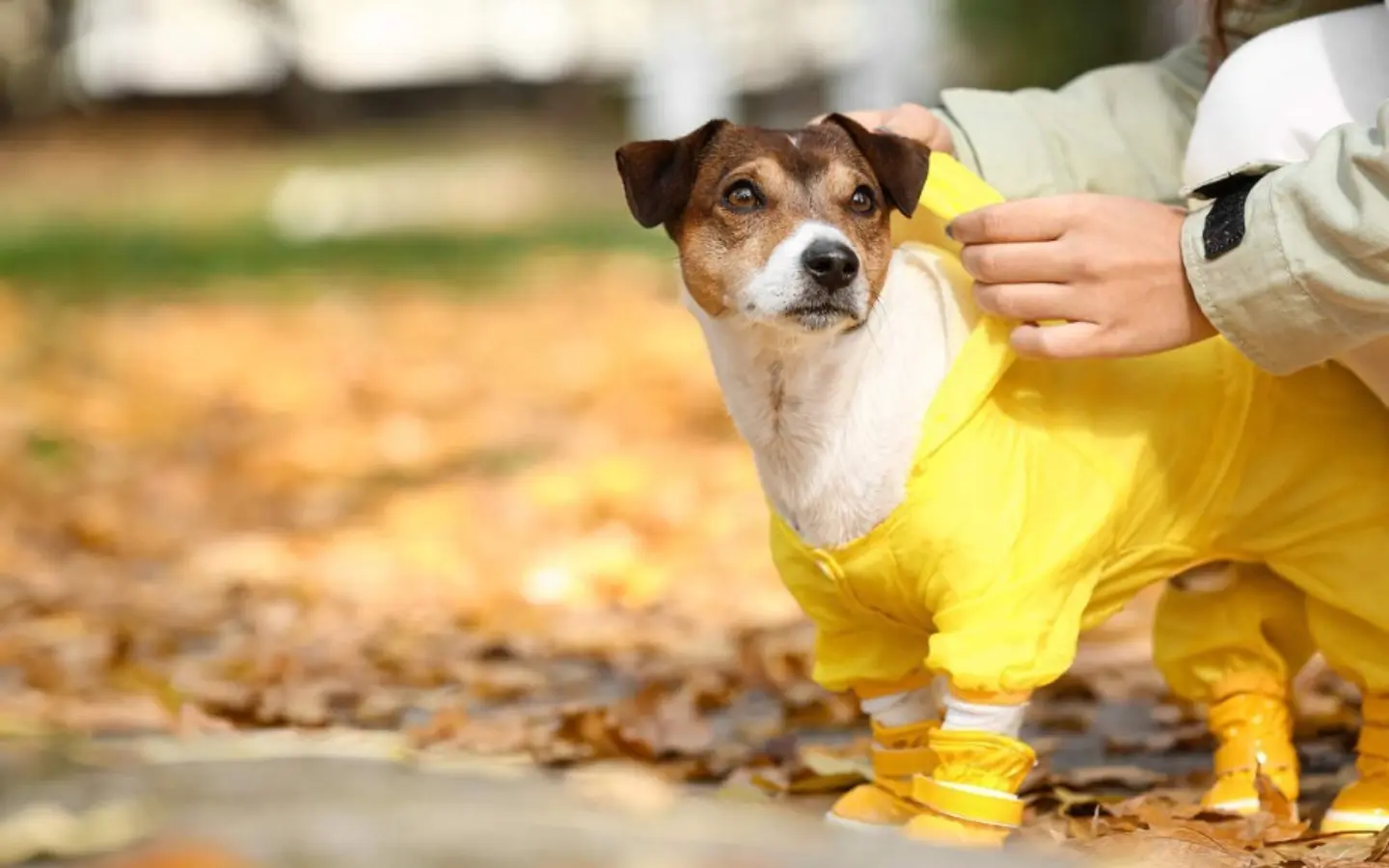
After a dog wears a raincoat, its defecation and urination may be hindered due to physiological limitations, psychological stress or design flaws. It is necessary to ensure its normal excretion through raincoat design optimization, training guidance and daily observation. The following is the specific analysis and solution:
First, an analysis of the impact of wearing raincoats on dogs’ urination and defecation
Physiological limitation
Limited limb movement: Raincoats may bind the hind legs or cover the buttocks, preventing dogs from lifting their legs normally (for male dogs) or squatting (for female dogs).
Drainage outlet obstruction: Some raincoats are designed without a reserved drainage outlet or the opening position is unreasonable, resulting in urine or feces contaminating the raincoat.
For example, when short-legged dogs (such as Corgis) wear long raincoats, their hind legs may be wrapped by the raincoats, making it impossible for them to squat and defecate normally.
Psychological stress
Spatial oppression: Raincoats may make dogs feel restricted, especially when defecating, and they may refuse to defecate due to nervousness.
Odor sensitivity: Some dogs are sensitive to the smell of raincoat materials and may reduce their excretion frequency due to discomfort.
Environmental interference
On rainy days, the ground is slippery: Dogs may reduce the frequency of defecation for fear of slipping, or their excrement may get contaminated due to the raincoat dragging on the ground.
Sound interference: The sound of a raincoat rubbing against the ground may make a dog feel uneasy and affect its excretion behavior.
Second, training and adaptation suggestions
Gradually adapt to the training
Let the dog wear a raincoat indoors for a short period of time to adapt, and then gradually extend it to the outdoor excretion time.
Take off the raincoat before defecating and put it on immediately after defecation, establishing the association that “defecation = taking off clothes”.
Positive motivation
After a dog successfully defecates in a raincoat, give it a snack or a toy as a reward to reinforce its positive behavior.
Avoid punishing the dog for excretion problems to prevent increasing its psychological pressure.
Observation and Adjustment
Record the frequency and habits of your dog’s excretion. If you notice any abnormalities (such as holding urine or constipation), consult a veterinarian promptly.
Regularly check the wear and tear of the raincoat to ensure that the discharge port functions properly.
Third, Summary
Core principle: Prioritize the physiological needs and comfort of the dog to avoid excretion problems caused by improper design or operation of the raincoat.
Purchasing suggestions: Give priority to choosing a two-piece raincoat with a loose bottom and an exhaust port design. Make targeted adjustments based on the characteristics of the dog breed (such as male/female dogs, short-legged dogs).
Usage suggestions:
Take off your raincoat before defecating or choose a style that is easy to put on and take off.
Clean the raincoat in time after excretion to prevent bacterial growth.
Reduce the psychological stress of dogs through positive training.
By scientifically choosing raincoats and conducting reasonable training, it is possible to effectively ensure the normal excretion of dogs after wearing raincoats and avoid health risks caused by excretion problems.