

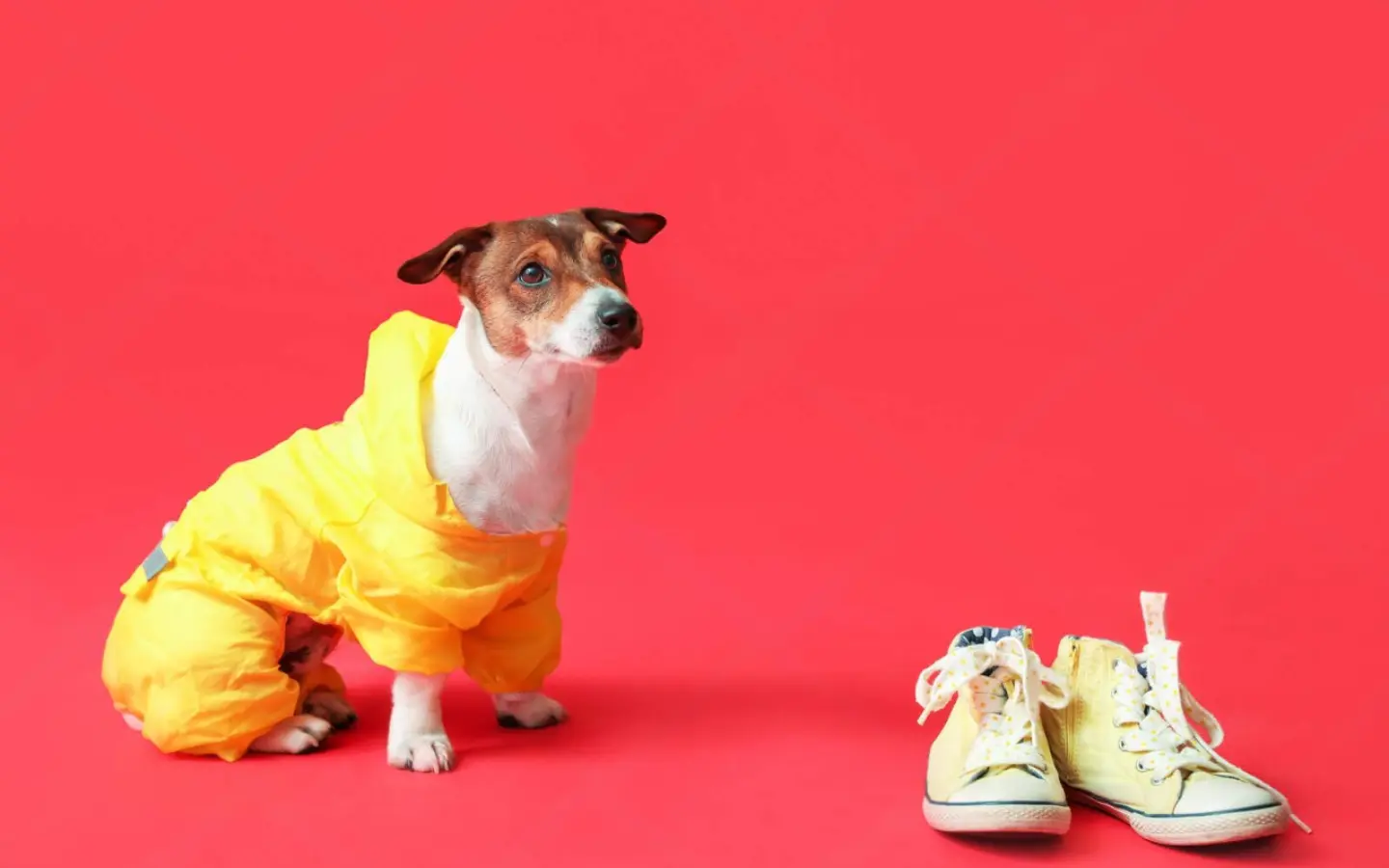
When choosing a raincoat for your dog, you can consider the following tips:
First, measure the dimensions to ensure a good fit
Accurate measurement
Neck circumference: Measure around the dog’s neck. Be careful not to pull it too tight and leave enough space so that two fingers can be easily inserted.
Chest circumference: Measure the chest circumference at the thickest part of the dog’s front leg base. Make sure the chest circumference of the raincoat is about 2 centimeters larger than the dog’s actual chest circumference to avoid tightness.
Length: Measure from the bottom of the dog’s neck to the bottom of its tail to obtain the back length dimension, so as to select the appropriate length of the raincoat.
Reference size:
According to the measured dimensions, make your purchase by referring to the size chart on the raincoat product detail page.
Please note that the sizes of raincoats from different brands and styles may vary. It is best to refer to the size chart of the specific product.
Second, pay attention to the material and water resistance
Waterproof fabric
Choose a raincoat with a high waterproof index (such as over 5000mm) to ensure that rainwater does not seep into the interior of the raincoat.
High-quality fabrics such as lotus leaf waterproof fabric and nanofiber materials have better waterproof performance and breathability.
Avoid inferior coatings:
Poor-quality coated raincoats may have poor waterproof performance and are prone to peeling off, which affects their service life.
Polyester raincoats will become heavier the more they get wet and are not suitable for long-term use.
Third, pay attention to detailed design
Hooded design
There should be no gap at the connection between the hat and the coat of the raincoat. It is best to have a design where the hat can completely cover the neck joint to prevent rainwater from seeping in through the gap.
The hat should not block the dog’s view. It is best to choose a transparent wide-brimmed style to ensure that the dog’s view is not obstructed.
Easy to put on and take off
Choose a raincoat style that is easy to put on and take off, such as a cape-style raincoat. It is simple to put on and take off and is suitable for short-haired dogs or scenarios that require intense exercise.
The four-legged raincoat has strong wrapping power, but it may be relatively complicated to put on and take off. It is suitable for long-haired dogs or scenarios that require better wind and rain protection.
Velcro or press button:
Choose a raincoat with Velcro or press buttons for easy adjustment of tightness and to suit dogs of different body sizes.
Avoid choosing raincoats with zippers to prevent the zippers from getting stuck in your dog’s fur, which could pose a safety hazard.
Abdominal design
Choosing a raincoat with a fully enclosed abdomen may cause the dog to wet its urine. A raincoat with Velcro openings is more practical.
Some raincoats are designed with pads or adjustable buckles on the abdomen to enhance the fit and prevent water from getting in.
Fourth, consider the season and activity requirements
Seasonal factors:
In summer, you can choose light and thin raincoats, such as those made of windbreakers, which are both comfortable and lightweight.
In autumn and winter, you can choose a slightly thicker raincoat, but it doesn’t have to be too thick to ensure your dog can move freely.
Activity Requirements:
If your dog often engages in outdoor activities such as hiking and mountain climbing, you can choose a four-legged raincoat that offers better protection against wind, rain and dirt.
If the dog mainly takes walks in the community or park, a cape-style raincoat might be more convenient.
Fifth, brand and price
Choose well-known brands:
Well-known brands usually focus on product quality and user experience. Choosing raincoats from well-known brands is more reliable.
Reasonable price range:
Choose a suitable price range for raincoats based on your budget and needs.
Be careful to avoid purchasing “three-no” products with low prices and no quality guarantee.
Sixth, other suggestions
Adaptation process:
When putting a raincoat on your dog for the first time, it may not be used to it. You can give it some snacks or toys as rewards to help it adapt to the new raincoat.
Daily maintenance:
Choose raincoat materials that are easy to clean and maintain for convenient daily maintenance and care.
To sum up, when choosing a raincoat for a dog, multiple aspects such as size, material, design, season and activity requirements, brand and price need to be comprehensively considered. Through reasonable selection and matching, comfortable and practical raincoats can be provided for dogs, allowing them to travel happily even in rainy days.