

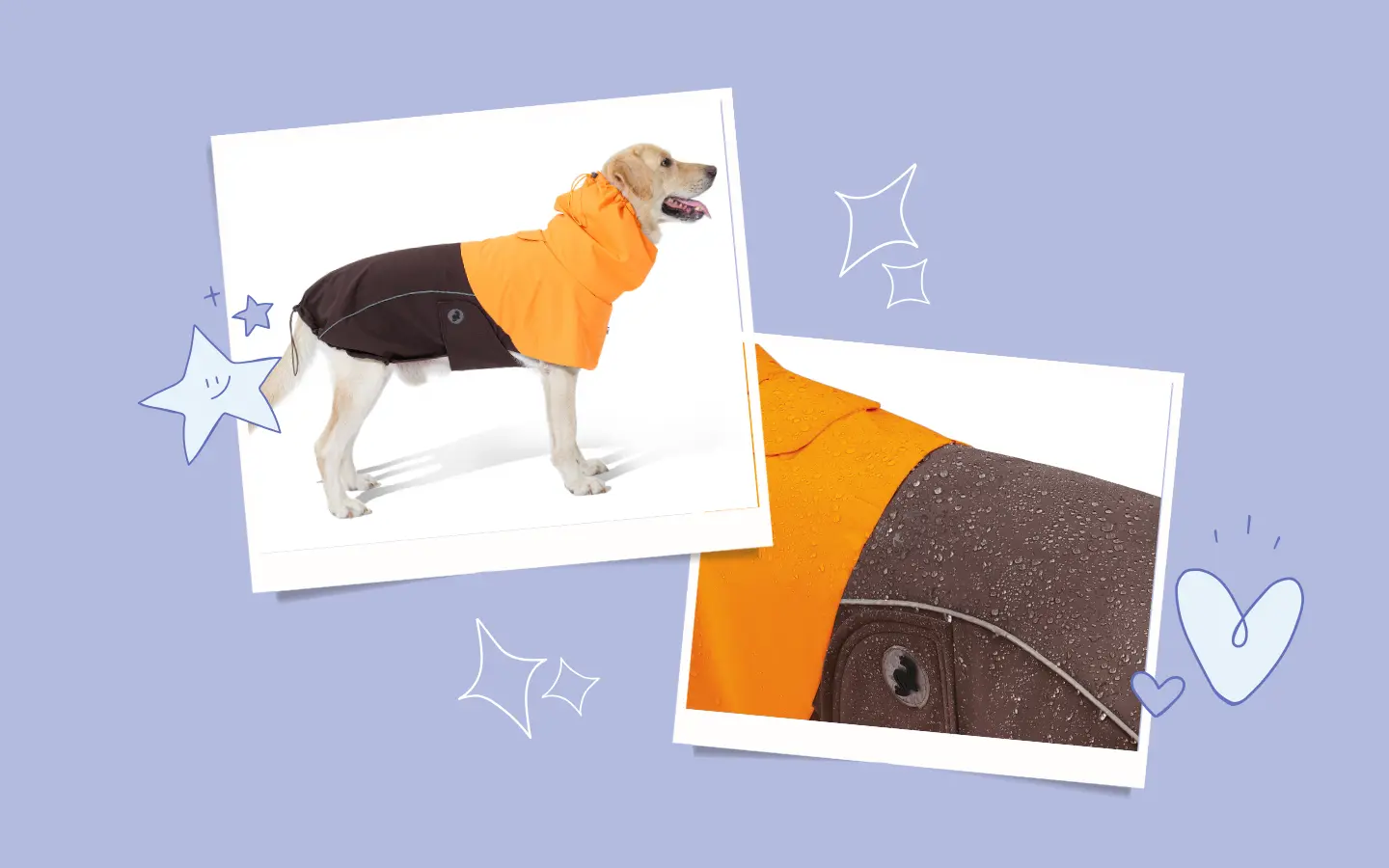
The multi-pocket design of the dog raincoat significantly enhances its practicality in outdoor scenarios through functional zoning and storage optimization, making it particularly suitable for situations where dog items or human assistive tools need to be carried. The following analysis is carried out from three aspects: core functions, design details and user scenarios:
First, core functional value
Item classification and quick access
Main pocket: It can hold large-sized items such as folding umbrellas, mobile phones, and portable water bottles.
Secondary pocket: It is used to store small items such as toilet bags, disinfectant wipes, and dog snacks, to prevent the main pocket from being messy.
Special pockets: Some raincoats are designed with waterproof inner pockets or mesh breathable bags, which can be used to store wet towels or electronic devices separately.
When walking the dog in the rain, put a folding umbrella in the main pocket and a toilet bag in the secondary pocket. There is no need to frequently open the bag, making the operation more efficient.
Reduce the burden on the master
The multi-pocket design distributes items across different areas of the raincoat, avoiding the problem of weight concentration caused by single-shoulder bags or handbags. It is especially suitable for long-distance hiking or cycling in the rain.
Some raincoats have pockets on the back or waist, which can balance the weight of the front and back and reduce the pressure on the shoulders and neck.
Response to emergency Situations
Emergency pocket: Some raincoats are designed with hidden pockets on the chest side or shoulder, which can store dog first aid kits, emergency contact cards, etc., making them easy to access quickly.
Reflective strip linkage: Reflective strips are set at the edge of the pocket or the zipper to enhance night safety and facilitate the positioning of the pocket.
Second, optimization of design details
Pocket layout and ergonomics
Chest pocket: Suitable for holding frequently used items (such as mobile phones), and convenient for one-handed operation.
Waist pocket: It can store dog leashes, folding bowls, etc., avoiding bending over to retrieve items.
Back pocket: Suitable for storing heavy items (such as portable water bottles) to balance the weight distribution.
Water resistance and durability
Waterproof zipper: The main pocket is designed with a waterproof zipper to prevent rainwater from seeping in.
Reinforced stitching: The edges of the pockets are sewn with double threads to prevent the items from being too heavy and causing tearing.
Wear-resistant material: The bottom of the pocket is made of wear-resistant fabric, which is suitable for complex terrains (such as gravel roads and shrublands).
Personalized adaptation
Adjustable pockets: The pockets of some raincoats are designed with Velcro or elastic LACES, allowing for adjustable capacity to suit different items.
Modular design: Some brands offer detachable pocket components, allowing users to increase or decrease the number of pockets according to their needs.
Third, user scenarios and applicability
Daily dog walking
Short-distance scenarios: The lightweight raincoat is equipped with 2-3 pockets, which can store basic items such as toilet bags, snacks, and mobile phones.
Long-distance scenario: The professional raincoat is equipped with more than 5 pockets, allowing you to carry an additional folding water bottle, dog towel, first aid kit, etc.
Outdoor training and adventure
Mountain hiking: The large-capacity pocket on the back can store dog leashes, folding bowls, emergency food, etc., freeing up your hands.
Night search and rescue: The reflective strip pocket is linked with built-in lighting devices (such as headlamps) to enhance operational convenience.
Special needs dogs
Service dogs: The multi-pocket design allows for the classified storage of canine task equipment (such as guide saddles, sniffing tools, etc.).
For elderly dogs: A portable seat cushion or medicine can be placed in the pocket for easy access at any time.