

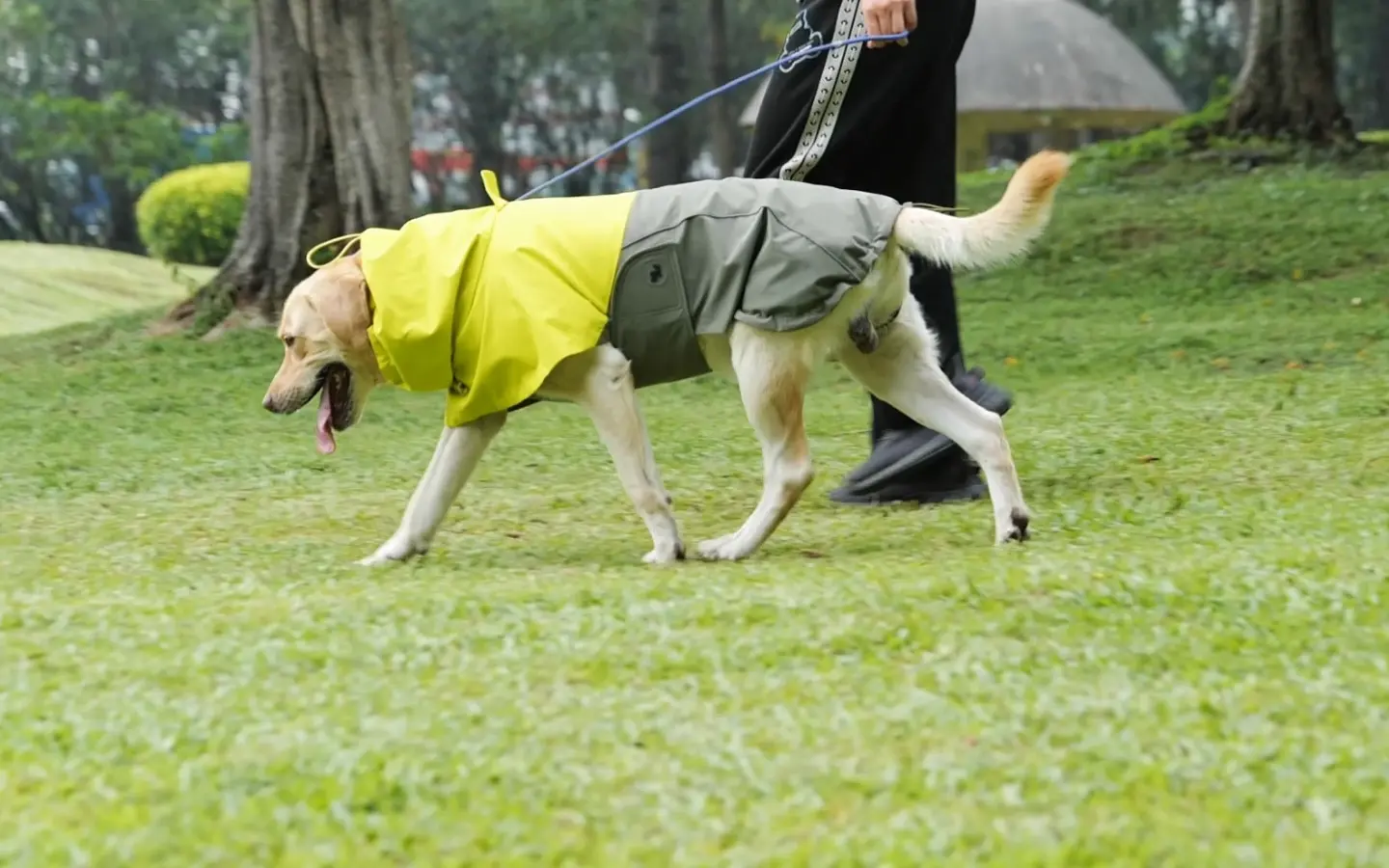
The importance and selection of dog raincoats with abdominal protection designs
First, the importance of abdominal protection design
Prevent the abdomen from getting wet by rain
Short-legged dog breeds (such as Corgis and Dachshunds) have bellies that are prone to contact with wet grass or waterlogged ground. Raincoats without abdominal protection can expose the abdominal hair and skin directly to the rain, increasing the risk of skin diseases. The abdominal protection design can effectively block mud and sewage and keep the abdomen dry.
Improve the heat preservation performance
In cold or windy weather, the abdomen is a part of a dog that is prone to hypothermia. The abdominal protection design can reduce heat loss and play a role in wind protection and warmth preservation, especially suitable for puppies, elderly dogs or short-haired dogs.
Reduce the burden of cleaning
The abdominal protection design can prevent dogs from having their bellies covered with mud and water when playing in the rain, reduce the workload of cleaning and drying after returning home, and also lower the risk of skin diseases caused by dampness.
Improve the comfort of activities on rainy days
The abdominal protection design is usually combined with an adjustable waistline to ensure that the raincoat fits the dog’s body curves, avoiding discomfort caused by the raincoat being too loose or too tight, allowing the dog to move freely even in the rain.
Second, the key points for choosing an abdominal protection design for a dog raincoat
Coverage area
Full abdominal protection: The raincoat should cover the entire abdominal area from the chest to the base of the tail to avoid leaving any gaps.
Hem length: For short-legged dog breeds, the hem of the raincoat should not be too long to avoid water accumulation on the ground. For long-legged dog breeds, the hem should be long enough to cover the abdomen.
Material and water resistance
Waterproof fabric: Prioritize polyester fiber fabric with a waterproof coating (such as PU or TPU) to ensure waterproof performance.
Joint treatment: The joints should be treated with adhesive to prevent rainwater from seeping in through the gaps.
Breathability: Choose a raincoat with breathable mesh or underarm ventilation design to avoid stuffiness.
Adjustment and fixation design
Adjustable waistline: The abdominal protection part should be combined with the waistline adjustment design to ensure that the raincoat fits the dog’s body.
Fixation method: Use Velcro, clips or elastic elastic bands to fix the abdomen to prevent the raincoat from shifting or sucking urine.
Detail design
Reflective strips: When going out at night, there should be reflective strips in the protective area of the dog’s abdomen to enhance its visibility.
Anti-urine design: To prevent the abdominal protective part from being too loose, which could cause urine to splash onto the inner side of the raincoat when the dog urinates.
Third, user feedback and evaluation
Comfort: Users generally report that the raincoat with a well-designed abdominal protection does not restrict the dog’s movement, and the dog can move freely after wearing it.
Waterproof performance: High-quality waterproof fabric and meticulous workmanship ensure the waterproof performance of the raincoat, allowing the dog to stay dry even in the rain.
Convenience: The adjustable waist circumference and abdominal fixation design make it easy to put on and take off, suitable for dogs of different body sizes.