

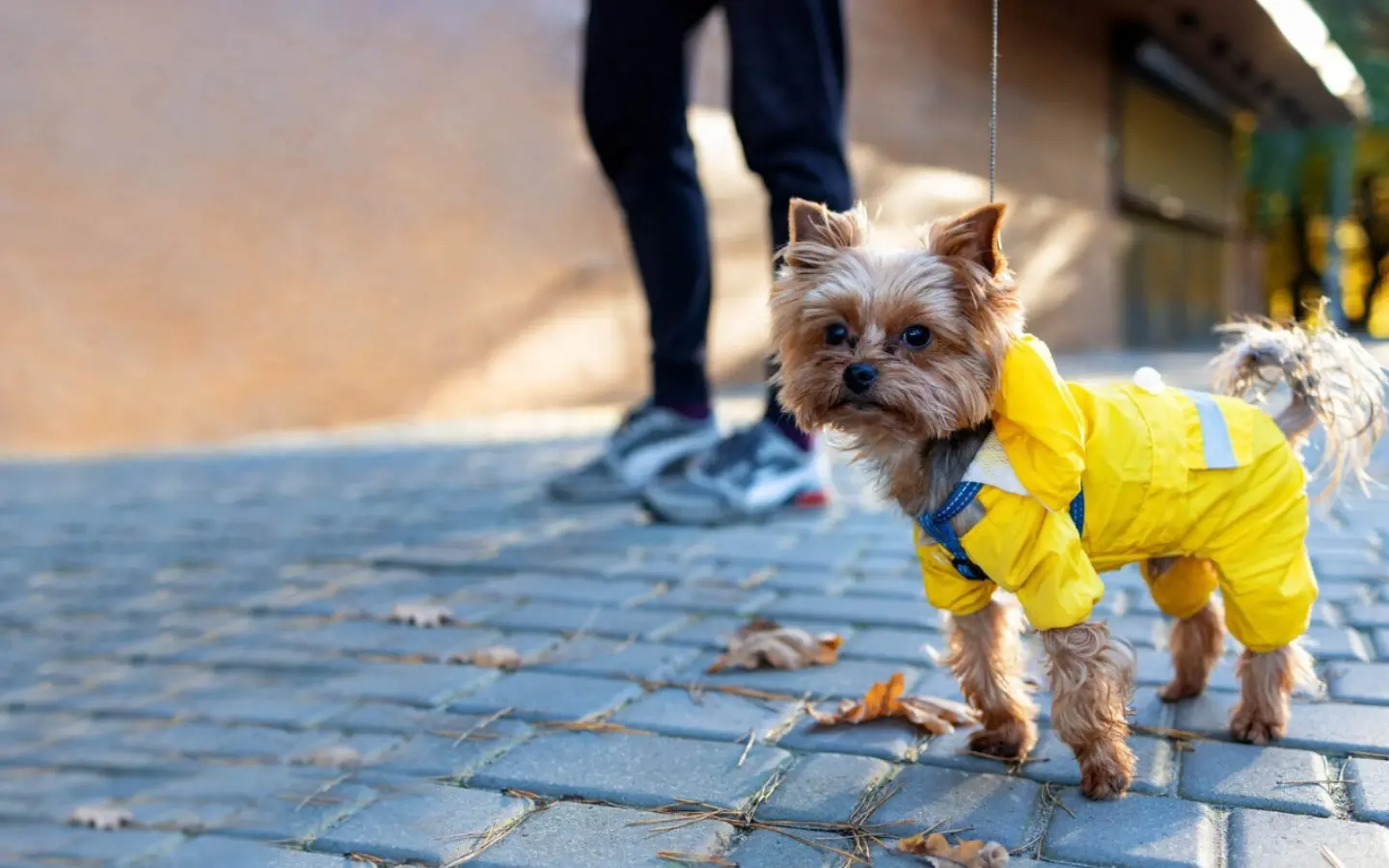
In hot weather, dogs wearing raincoats face challenges in regulating their heat dissipation, as raincoats may impede their natural heat dissipation mechanism. The following provides targeted solutions from three aspects: heat dissipation principle, the influence of raincoats, and adjustment strategies:
First, the natural heat dissipation mechanism of dogs and the obstruction of raincoats
Dogs mainly regulate their body temperature by breathing to dissipate heat (panting), licking to cool down, sweating on their paw pads, and dilating blood vessels. However, the coverage of raincoats can significantly affect these mechanisms:
Breathing and heat dissipation are blocked: Raincoats may restrict air circulation, resulting in a decrease in the efficiency of breathing and heat dissipation.
The heat dissipation of the foot pads is limited: If the hem of a raincoat is covered with a foot pad, it will prevent the foot pad from sweating.
Licking to cool down is blocked: The surface of the raincoat may make it difficult for dogs to lick their bodies to cool down.
Vascular dilation failure: The heat insulation of raincoats may prevent heat from dissipating from the skin surface.
Second, the heat dissipation adjustment strategies for dogs wearing raincoats in hot weather
1. Raincoat selection and usage
Material selection: Prioritize the use of light, thin and breathable raincoats, and avoid heavy and non-breathable materials.
Design optimization: Choose a raincoat with a shorter hem and a looser neckline to ensure that the foot pads and neck are not restricted.
Usage time: Only wear the raincoat when necessary (such as sudden heavy rain), and try to keep the dog without a raincoat during hot periods.
2. Auxiliary heat dissipation measures
Provide adequate drinking water: Ensure that the dog can always have access to fresh and cool water to help it regulate its body temperature through drinking.
Find a shady spot: Let the dog rest in a shady place such as under the shade of a tree or indoors, and avoid direct sunlight.
Use cooling pads or ice pads: Place cooling pads or ice pads in the area where your dog rests to help lower its body temperature.
Trim the fur moderately: For long-haired dogs, you can trim the fur on the abdomen and soles of the feet appropriately to enhance ventilation and breathability, but avoid shaving it all off to prevent sunburn.
Wet towel wiping: Gently wipe the dog’s paw pads, abdomen, inner side of the ears and other parts with a wet towel to remove heat through the evaporation of water.
3. Behavior Management
Avoid vigorous exercise: During hot periods, reduce your dog’s vigorous exercise to prevent its body temperature from getting too high.
Adjust the time for walking the dog: Choose to walk the dog in the early morning or evening when the temperature is lower, and avoid going out during the hot midday.
Carry a water bottle: Take a water bottle with you when going out and give your dog water regularly to replenish its fluids.
4. Removal and inspection of raincoats
Remove the raincoat in time: If the dog shows signs of heatstroke such as aggravated wheezing and drooling, remove the raincoat immediately.
Physical examination: Check if the dog’s skin shows any abnormalities such as redness, swelling, or burns, and deal with them promptly.
Third, emergency treatment for heatstroke
If a dog shows symptoms of heatstroke (such as severe wheezing, salivation, red/purple gums, vomiting, paralysis, etc.), the following measures should be taken immediately:
Move to a shady place: Move the dog to a cool and well-ventilated area.
Physical cooling: Wipe the dog’s body with a damp towel, especially the paw pads, abdomen and other parts. Fans can be used to assist in cooling down, but avoid direct blowing.
Replenish water: Give the dog a small amount of warm water to avoid feeding too much at one time, which may cause vomiting.
Seek medical attention promptly: If the symptoms are severe, one should be sent to the hospital for treatment immediately.