

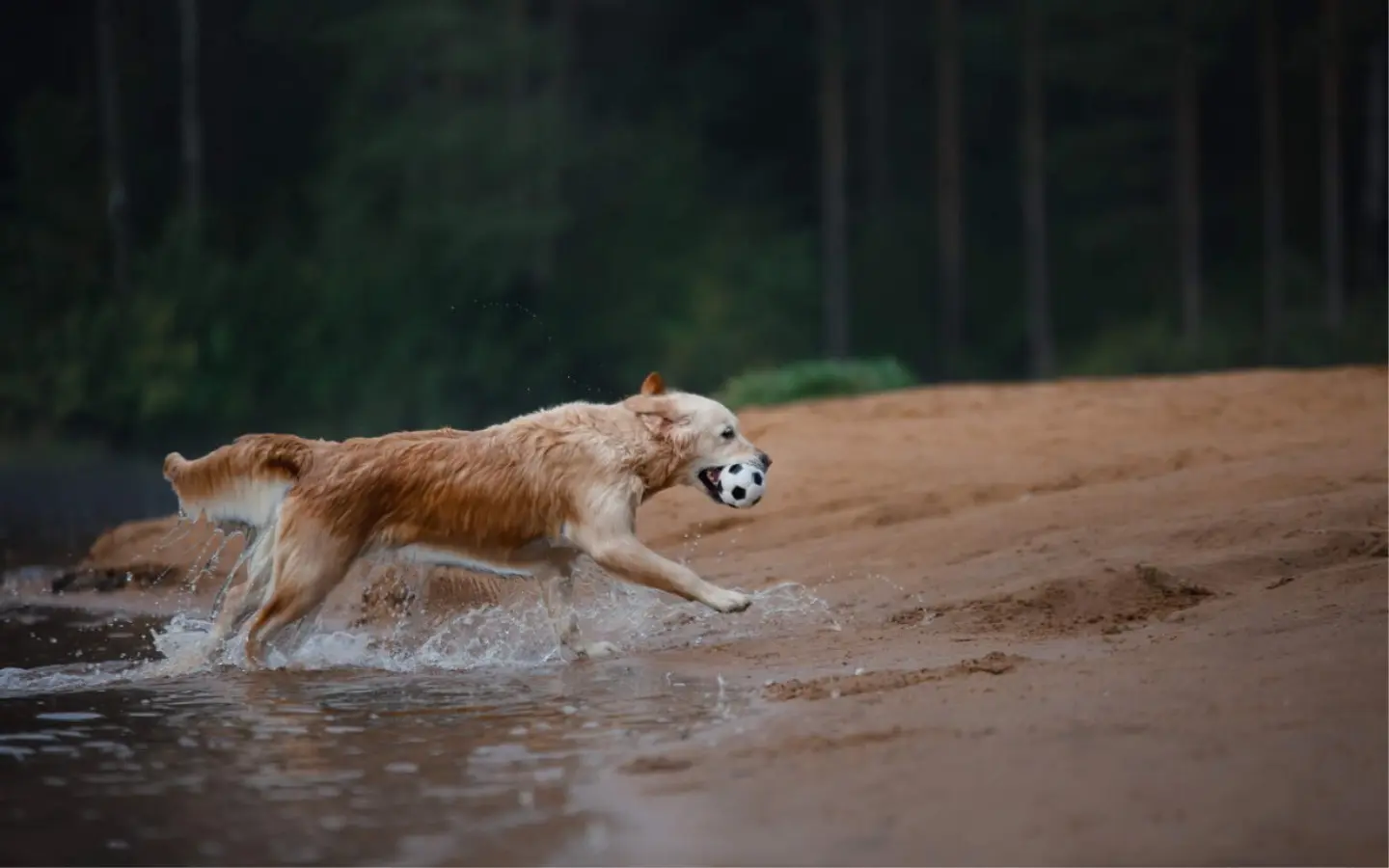
When a dog is running, the raincoat may shift due to large movement range, unreasonable design of the raincoat or improper wearing method, resulting in restricted movement, entanglement of the raincoat or skin friction. The following is an analysis of the causes of displacement, specific manifestations and targeted treatment plans, and provides product recommendations and preventive suggestions.
First, the main reason for raincoats shifting when running
Design flaws of raincoats
Ill-fitting size: A raincoat that is too large causes shaking during movement, while one that is too small limits the range of motion.
Insufficient fixation method: Only relying on Velcro or elastic bands for fixation, without anti-slip design (such as anti-slip silicone strips).
Unreasonable tailoring: The openings on the back, abdomen or legs are too large to fit the dog’s body shape.
Improper way of wearing
The Velcro, buttons or elastic bands of the raincoat were not adjusted, resulting in loose fixation.
Wearing raincoats in the wrong order (such as putting them on the limbs first and then covering the head) can result in some areas being too tight or too loose.
The movement characteristics of dogs
Large running range: When a dog is running, its limbs extend significantly, which can easily cause the raincoat to shift.
Body size differences: Short-legged dogs (such as Corgis) or long-haired dogs (such as golden Retrievers) have different movement characteristics and thus have higher requirements for the fit of raincoats.
Second, targeted treatment plans
Choose a raincoat with an anti-displacement design
Fixed mode optimization
Double fixation with Velcro and elastic bands: Set multiple Velcro and elastic bands on the neck, chest and abdomen to ensure that the raincoat fits well.
Anti-slip silicone strips: Add anti-slip silicone strips to the inner side of the raincoat (such as the back and abdomen) to reduce sliding during exercise.
Improvement of cutting design
Split design: The top and pants are split raincoats, reducing constraints on the limbs and enhancing the fit.
Elastic cuffs: The cuffs, legs and hem are designed with elastic cuffs to prevent the raincoat from rolling up or shifting.
Wear the raincoat correctly
Wearing sequence:
First, adjust the Velcro on the neck to ensure that the collar is loose and does not press on the trachea.
Adjust the Velcro or elastic bands on the chest and abdomen again to ensure that the raincoat fits but is not too tight.
Finally, adjust the cuffs and cuffs of the limbs to ensure they move freely.
Check and fix:
After putting it on, check whether all parts of the raincoat are fixed firmly, especially whether the Velcro and elastic bands fit well.
Let the dog walk or trot for a short distance and observe whether the raincoat shifts.
Temporary handling when running
Manual adjustment
If you find that the raincoat has shifted, stop running immediately and manually adjust the raincoat to the correct position.
Avoid forcibly pulling the raincoat to prevent the dog from being frightened or injured.
Use the traction rope for assistance
Add traction rope fixing points on the back or chest of the raincoat to reduce its shaking.
Example: Use a double-ended drawstring, with one end connected to the collar and the other to the raincoat fixing point to enhance stability.
Training and Adaptation
Gradually adapt to running:
Let the dog wear a raincoat for short-distance running training in a spacious area and gradually increase the intensity of the exercise.
Guide the dog with snacks or toys to reduce its resistance to raincoats.
Positive motivation
After a dog successfully runs in a raincoat, give it snacks or toys as rewards to reinforce its positive behavior.
Third, preventive measures
Check the raincoat regularly.
Check whether the Velcro, elastic bands and anti-slip silicone strips are worn or aged, and replace the damaged raincoat in time.
Avoid running for long periods
When dogs are wearing raincoats, avoid running for long periods at high intensity to reduce the risk of the raincoats shifting.
Choose the appropriate weather
When the wind is strong or the rain is heavy, reduce the dog’s outdoor running time to lower the possibility of the raincoat shifting.
Fourth, Summary
Core principle: Focus on the fit, fixation method and cutting design of the raincoat to reduce the risk of displacement during running.
Purchasing suggestions: Give priority to choosing a split raincoat with anti-slip design and double fixation, and make targeted adjustments according to the characteristics of the dog breed (such as short-legged dogs and long-haired dogs).
Usage suggestions:
Wear the raincoat correctly and make sure all parts are firmly fixed.
Observe the state of the raincoat while running and adjust the shifting part in time.
Reduce the dog’s resistance to raincoats through training and positive incentives.
By scientifically choosing raincoats and operating them reasonably, the problem of raincoats shifting when dogs run can be effectively reduced, ensuring their safety and comfort.