

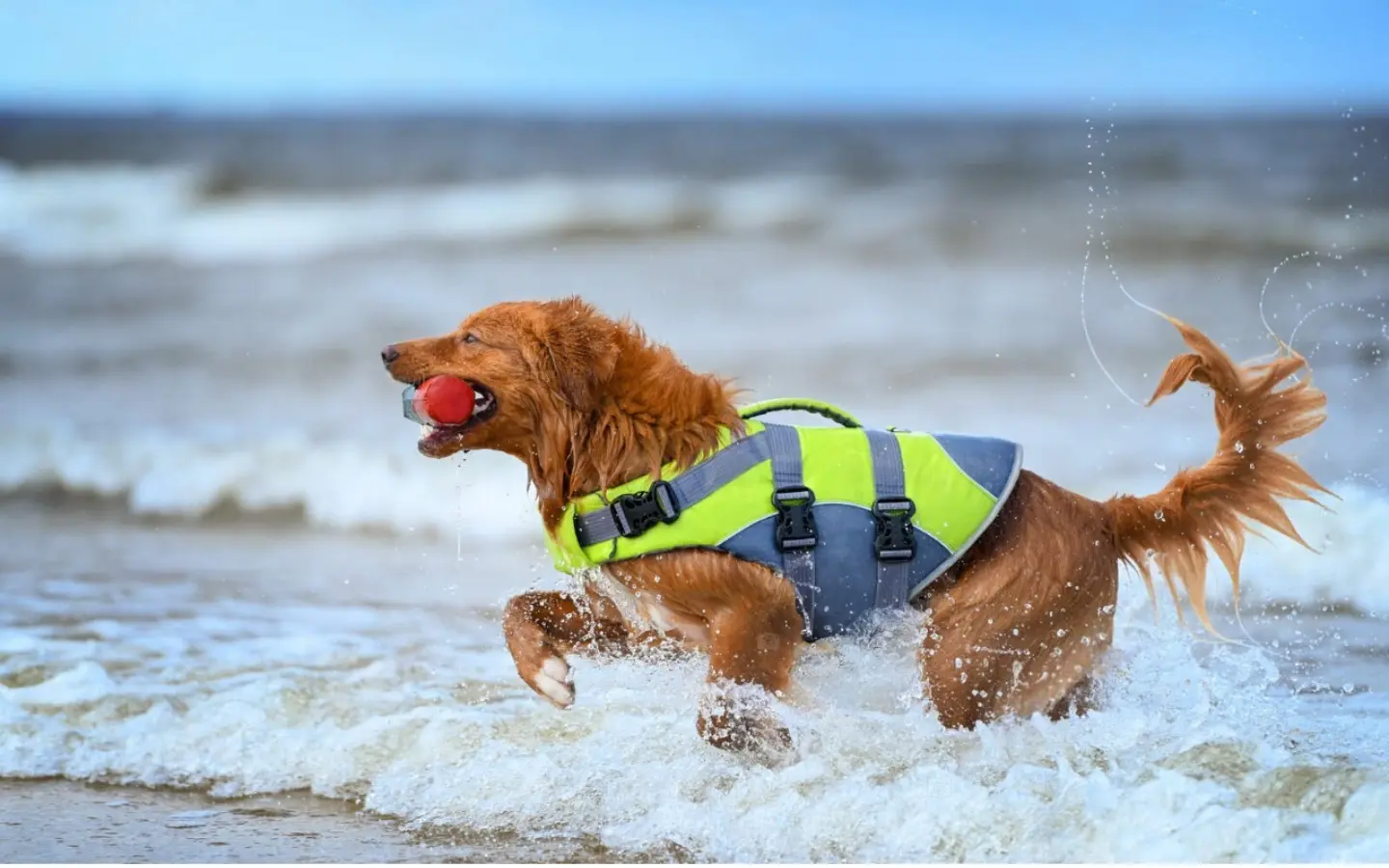
The feasibility of dogs swimming in raincoats is relatively low, and there are significant risks involved. It is not recommended.
First, feasibility analysis
Material limitations: Most dog raincoats are made of waterproof materials (such as nylon, PVC or nanofiber), which will increase resistance in water due to water absorption or sticking to the body, affecting the dog’s swimming movements.
Design flaw: Raincoats are usually designed to cover the entire body, which may restrict the movement of a dog’s limbs, limit its paddling actions, and increase the risk of drowning.
Weight issue: Even if quick-drying materials (such as nanofibers) are used, the raincoat may still become heavy due to water absorption, causing the dog to consume energy too quickly and making it difficult for it to swim for a long time.
Second, risk analysis
Drowning risk: Raincoats may trap a dog’s limbs or head, preventing it from floating to the surface to breathe normally, especially in areas with rapid currents or deep water.
Hypothermia: Although raincoats can be waterproof, they cannot provide sufficient warmth. After swimming for a long time, dogs may experience hypothermia due to low body temperature.
Skin irritation: The inner layer of the raincoat may rub against the dog’s skin due to moisture, causing redness, swelling, itching or allergic reactions.
Restricted movement: The restrictive feeling of the raincoat may make the dog feel uncomfortable, affecting its balance and coordination when swimming and increasing the risk of injury.
Third, suggestions for alternative solutions
Use professional life jackets:
Choose a life jacket that suits your dog’s body shape to ensure that its limbs and head can move freely.
Life jackets should be designed with buoyancy support and reflective strips to enhance safety at night or in low visibility conditions.
Select a safe water area:
Avoid swimming in deep water areas, rapids or waters with unclear water quality.
Give priority to choosing shallow water areas or pet-only swimming areas with lifeguards.
Step-by-step training
First, let the dog adapt to the water in the shallow water area, and then gradually increase the swimming distance and time.
Keep a close eye on your dog’s condition during swimming to prevent it from getting overly tired.
Fourth, Precautions
Post-swimming care:
Immediately after swimming, dry your dog’s fur with a dry towel, especially its ears and footpads, to prevent infection.
Check the skin for any scratches or redness and swelling. Apply antibacterial ointment if necessary.
Health monitoring
If a dog shows symptoms such as rapid breathing, trembling or listlessness, it should be taken to the hospital immediately.
Avoid allowing dogs with heart disease, arthritis or other chronic diseases to engage in vigorous exercise.