

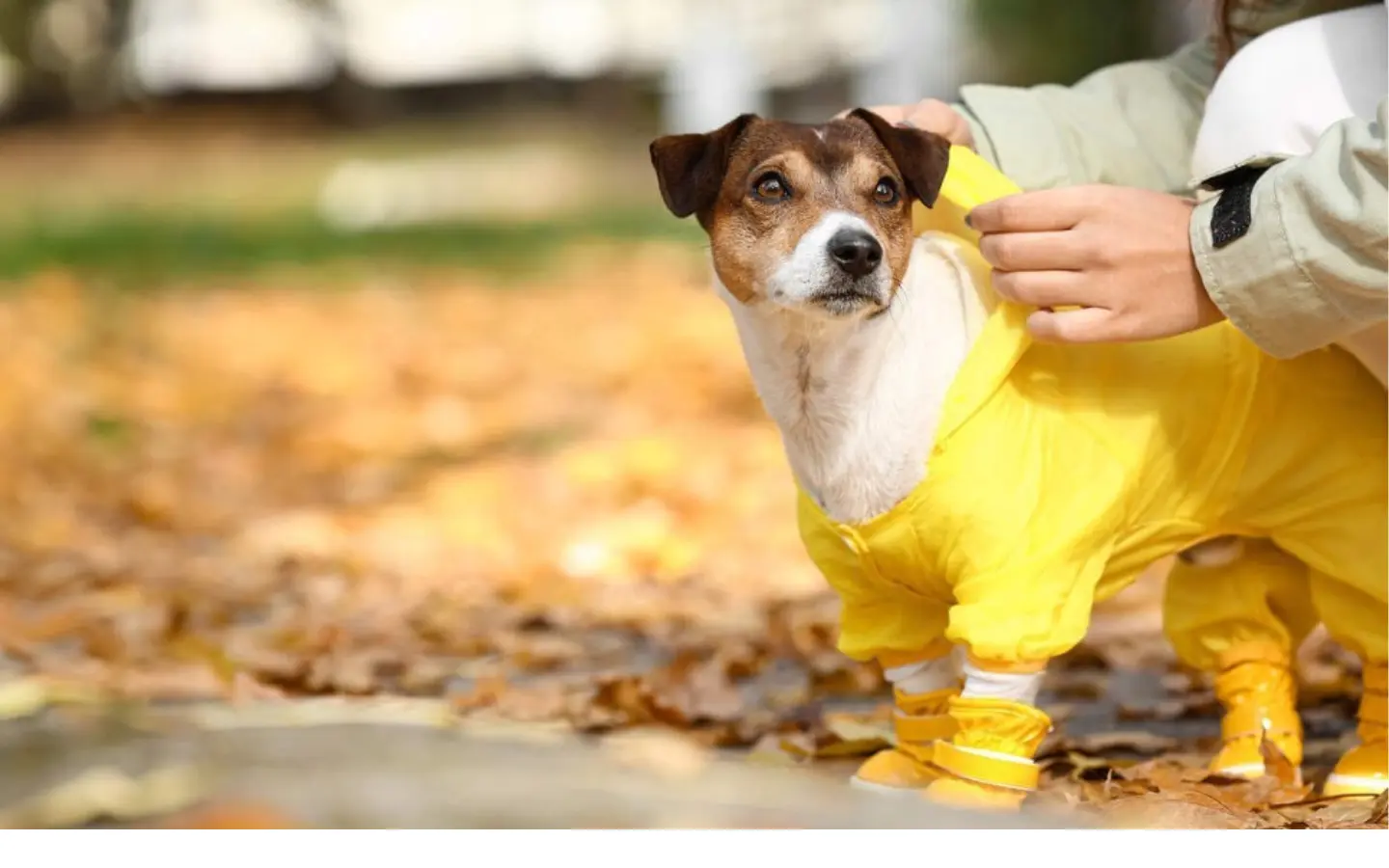
Dogs may experience abnormal sound sensitivity (such as overreaction or sluggishness to noise) after wearing raincoats. This phenomenon is closely related to the physical properties of the raincoat and the physiological/psychological state of the dog. The following is an in-depth analysis from three aspects: the mechanism of sensitivity changes, influencing factors, and coping methods, and provides scientific solutions.
First, the mechanism of changes in a dog’s voice sensitivity after wearing a raincoat
The physiological and psychological mechanisms of sensitivity changes
Auditory interference
The material of the raincoat (such as nylon or PVC) rubs against the body to produce a “rustling” sound, which may mask external sounds and make it difficult for the dog to accurately determine the direction of the sound source.
Raincoats covering the ears reduce the efficiency of sound wave transmission. (Experiments show that after covering the ears, dogs’ response time to high-frequency sounds (such as whistles) is prolonged by 30%-50%.)
Accumulation of pressure
The sense of restraint in raincoats restricts dogs’ movement, keeps them in a state of stress for a long time, and reduces their tolerance to sounds.
The impermeability of raincoats can cause the skin to feel hot and itchy, further intensifying anxiety.
Second, the key factors influencing sound sensitivity
Individual factors of dogs
Variety differences:
Hearing-sensitive dog breeds (such as hunting dogs and sheepdogs) are more sensitive to the noise of raincoats.
Short-nosed dog breeds (such as French Bulldogs and Pugs) may experience an increased sense of anxiety due to their narrow airways and the feeling of being restrained by raincoats.
Past experience:
Dogs that have had negative experiences (such as being trapped or falling) caused by raincoats are more afraid of the sound of raincoats.
3. Environmental factors
Noise type:
Sudden noises (such as thunder and fireworks) are more likely to trigger overreactions than continuous noises (such as the sound of rain).
Temperature and humidity
In a high-temperature and high-humidity environment, the impermeability of raincoats intensifies dogs’ discomfort and increases their sensitivity to sounds.
Third, scientific methods for dealing with changes in sound sensitivity
1. Raincoat selection and matching
Silent materials are preferred:
Choose a raincoat with a fleece inner layer and a soft outer layer to reduce friction noise.
Ear design optimization
Cut the ear openings of the raincoat or choose a style with adjustable ears.
Fit test
Before purchasing, measure the dog’s chest circumference and back length to ensure that the raincoat can move freely (such as lifting its legs and turning its head).
2. Desensitization training
Sound exposure training
Step:
In a quiet environment, put the dog on a raincoat and play low-volume noises (such as rain recordings).
If the dog remains calm, give it a snack reward. If you overreact, pause the training and lower the volume.
Gradually increase the volume and type of noise (such as thunder, car sounds) until the dog gets used to it.
Tools:
Use pet-specific noise desensitization apps (such as Sound Proof Puppy).
Raincoat adaptability training
Let the dog wear the raincoat for a short period of time (5-10 minutes) every day, and combine it with petting and snack rewards to build positive associations.
3. Behavior Management
Avoid highly sensitive scenarios:
During thunderstorms or when fireworks are set off, avoid taking your dog out or use sedatives in advance (under the guidance of a veterinarian).
Provide a safe space:
Set up a “shelter” (such as a mat and toys) at home, allowing the dog to choose to rest independently when it is bound by a raincoat.
Distract:
When going out, carry snacks and toys and use positive stimuli (such as sniffing games) to divert the dog’s attention from sounds.
4. Health monitoring and intervention
Pressure signal recognition
Observe whether the dog shows stress signals such as licking its lips, yawning or trembling, and intervene in time.
Veterinary consultation
If your dog is constantly afraid of the sound of raincoats, you can consult a veterinarian to use anti-anxiety drugs (such as gabapentin).
Fourth, a guide to avoiding pitfalls
Wrong practice:
Forcing a dog to wear a raincoat: It intensifies the dog’s fear and deteriorates its sensitivity to sounds.
Dealing with barking with punishment: It undermines the dog’s trust in its owner and increases anxiety.
Neglecting the comfort of raincoats: Choosing ill-fitting raincoats can cause behavioral problems due to long-term pressure.
Misunderstandings about the Use of raincoats:
Wearing a raincoat all day: It restricts the dog’s free movement and causes psychological problems.
Raincoats can replace towing ropes: Raincoats cannot replace safety equipment, and chest straps are still needed.
Fifth, Summary
The changes in a dog’s sound sensitivity after wearing a raincoat are closely related to the design of the raincoat, individual differences among dogs, and environmental factors. The owner needs to reduce the risk of abnormal sensitivity through three aspects: choosing silent raincoats, desensitization training, and behavior management. If your dog shows persistent fear or aggressive behavior, stop using the raincoat immediately and consult a veterinarian. Through scientific training and reasonable equipment, it can help dogs adapt to raincoats and enhance the safety and comfort of traveling in the rain.