

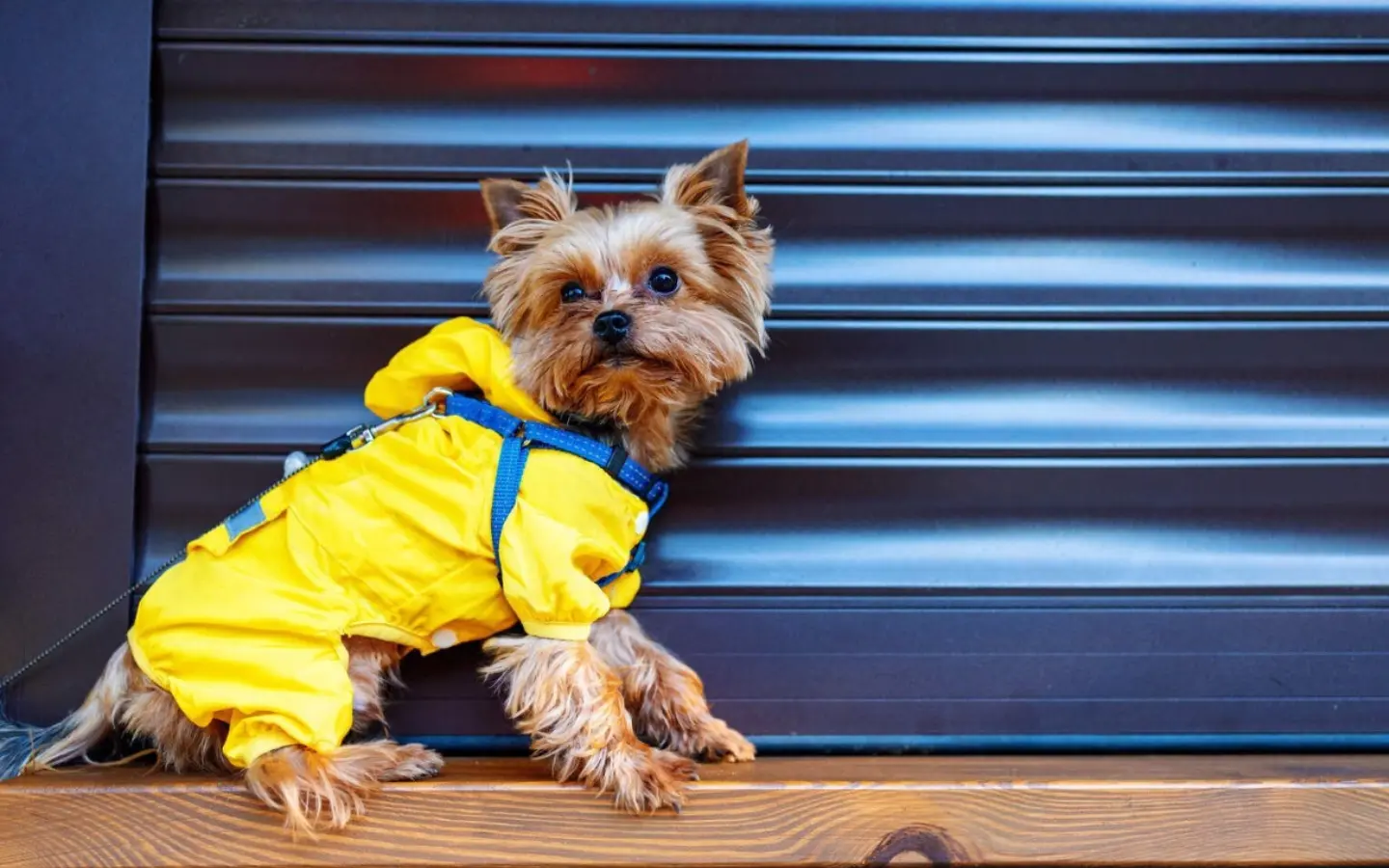
In crowded places (such as squares outside shopping malls, parks, pedestrian streets, etc.), dogs wearing raincoats may show restlessness or defensive behaviors due to factors such as the sense of restraint of the raincoats, noisy environments, and the approach of strangers. The following provides specific suggestions from three aspects: raincoat management, social etiquette, and risk avoidance to ensure the safe interaction of dogs with others.
First, the impact of raincoats on social behavior and how to deal with it
Optimization of Raincoat wearing
Choose a half-length raincoat: Prioritize a raincoat that only covers the back to avoid confining the forelimbs while leaving room for the abdomen to dissipate heat.
Adjust the tightness of the collar: The collar should be loose enough to allow 1-2 fingers to be inserted to avoid compressing the trachea and causing shortness of breath.
Take off the raincoat temporarily: If the dog shows obvious discomfort, you can take off the raincoat briefly and wrap your body with a towel to protect it from the rain.
Second, social etiquette and safety in crowded places
Take the initiative to manage your dog’s behavior
Maintain a safe distance: Keep a distance of 1-2 meters from others to prevent your dog from being stressed when a stranger suddenly approaches.
Use a leash + chest strap: Dual control can quickly stop behaviors such as pouncing and barking. It is recommended to use an explosion-proof chest strap.
Inform of the risks in advance: If your dog is sensitive to strangers, you can proactively say, “This dog is shy. Please do not touch it,” and politely refuse to be fed by others.
2. Train the dog’s social etiquette
Basic command reinforcement: Repeat commands such as “sit down” and “wait” in the crowd, and use snacks as rewards to stay calm.
Desensitization training: Simulate a crowd scene at home in advance (play noisy human voices and strangers walking around), and gradually increase the time the dog stays in the crowd.
Positive guidance interaction: If the dog actively sniffs others, brief contact can be allowed (such as when the other person reaches out for the dog to sniff lightly), but the attention should be immediately diverted with a snack.
3. Avoid high-risk interactions
Children are not allowed to touch alone: Children may scare dogs with sudden movements or loud cries. Parents must accompany and obtain the owner’s consent.
Refuse forced petting: If the dog shows signs of dodging or growling, immediately remove it from the scene to prevent the conflict from escalating.
Beware of food temptation: Feeding from strangers may trigger protective food behavior, so it is necessary to train in advance the “refuse to eat” command.
Third, risk avoidance and emergency response in crowded areas
Emergency response plan
Dog’s stress response: Immediately divert attention with snacks or toys. If the dog loses control of its emotions, take it to a quiet corner to soothe.
Damaged or fallen raincoat: Carry a spare raincoat or waterproof blanket with you to prevent your dog from catching a cold due to getting caught in the rain.
If a dog accidentally injures someone else, it should apologize proactively and exchange contact information. If necessary, accompany the dog to the hospital.
Fourth, long-term adaptability suggestions
Raincoat desensitization training
Wear a raincoat at home 2 to 3 times a week. With snack rewards, gradually increase the wearing time to more than 30 minutes.
Simulate a rainy day scene (such as spraying a small amount of water mist) to help the dog adapt to the connection between raincoats and damp environments.
Hierarchical training in social scenarios
Beginner: In an open park, let the dog observe the crowd and keep a distance of more than 5 meters.
Intermediate: Make a brief stop outside a pet-friendly cafe and allow the dog to come into contact with gentle strangers.
Advanced: Attend a pet gathering on rainy days and undergo desensitization training under the guidance of professional trainers.
Health monitoring and care
After walking the dog in the rain, check if there is any redness, swelling or hair loss on the skin (caused by the friction of the raincoat). Apply pet-specific moisturizing cream if necessary.
Observe the dog’s appetite and mental state. If it shows persistent tremors or refuses to eat, it is necessary to check whether the stress is caused by discomfort with the raincoat or environmental pressure.
Summary
When providing social support for dogs wearing raincoats in crowded places, safety and comfort should be at the core. By optimizing the design of raincoats, strengthening social training, and actively avoiding risks, help dogs adapt to complex environments. The owner needs to remain vigilant, promptly identify the dog’s stress signals, and ensure a smooth social process through positive guidance and emergency handling. Long-term adherence to desensitization training and hierarchical social interaction can significantly enhance a dog’s social skills and adaptability in rainy days.