

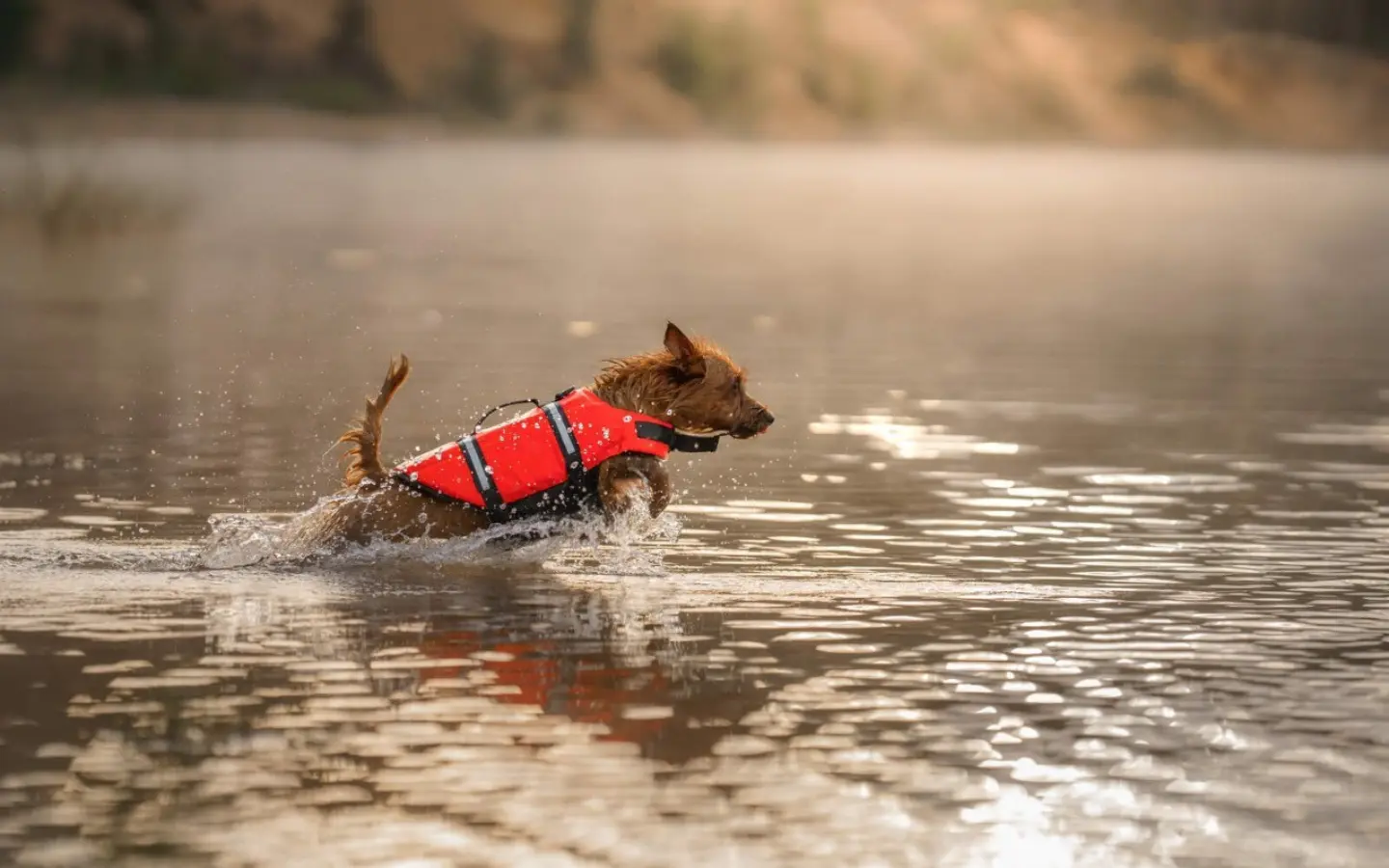
To provide safety precautions for dogs wearing raincoats in dangerous areas such as riverbanks, efforts should be made from four aspects: equipment selection, behavior guidance, environmental assessment, and emergency preparedness. The following are specific suggestions:
First, equipment selection
Choose the right raincoat: The raincoat should cover from the back to the base of the tail. It is best to choose a style with reflective strips. The neckline and cuffs should be neither too tight nor too loose to prevent rainwater from seeping in. At the same time, the raincoat should not interfere with the dog’s normal activities and ensure that it can move freely.
Equipped with a leash: In dangerous areas such as riverbanks, a leash must be used to control the dog’s movement to prevent it from approaching dangerous areas out of curiosity or chasing. Short leashes are superior to automatic retractable leashes, making it easier to control the dog’s movement in a timely manner on slippery roads.
Consider wearing rain boots: If the area by the river is muddy or slippery, you can consider putting rain boots on your dog to protect its paw pads and reduce the risk of slipping.
Second, behavioral guidance and adaptation training
Command training: In daily life, conduct command training for dogs, such as “come back” and “stop”, to help them develop the ability to respond quickly in dangerous environments.
Avoid being startled: Dogs rely on their sense of smell for navigation. Rain can dilute the smell of the ground, causing confusion in their sense of direction. At the same time, heavy rain may also bring various “uncertainties”, such as suddenly falling branches, car horns and lights, all of which may stimulate dogs and trigger panic running. Therefore, when walking a dog in dangerous areas such as by the river, one should pay special attention to observing the dog’s emotions and behaviors to prevent it from being frightened.
Third, environmental assessment and risk avoidance
Keep abreast of the weather in real time: Check the weather forecast before going out to avoid taking your dog to dangerous areas such as rivers in bad weather like heavy rain and thunderstorms.
Pay attention to road water accumulation and terrain: Be aware of the height of water accumulation on the road and avoid wading through it rashly. At the same time, pay attention to the terrain along the river and avoid dangerous areas such as steep slopes, undercurrents and whirlpools.
Stay away from power facilities: Keep away from street lamps, publicity boards, utility poles and other power facilities to prevent electric shock.
Fourth, emergency preparedness and health monitoring
Prepare emergency supplies: Carry a first aid kit, dry towels, spare towing ropes and other emergency items with you in case of unexpected needs.
Timely cleaning and drying: After walking the dog, promptly use a dry towel to absorb the moisture from the dog’s body and use a hair dryer to dry the fur, especially in hidden areas such as the footpads and armpits.
Health monitoring: Check if the dog’s footpads have any scratches or bruising. When grooming the dog’s fur, check for any abnormal conditions such as skin redness, swelling, or hair loss spots. If there are any abnormalities, medical treatment should be sought promptly.