

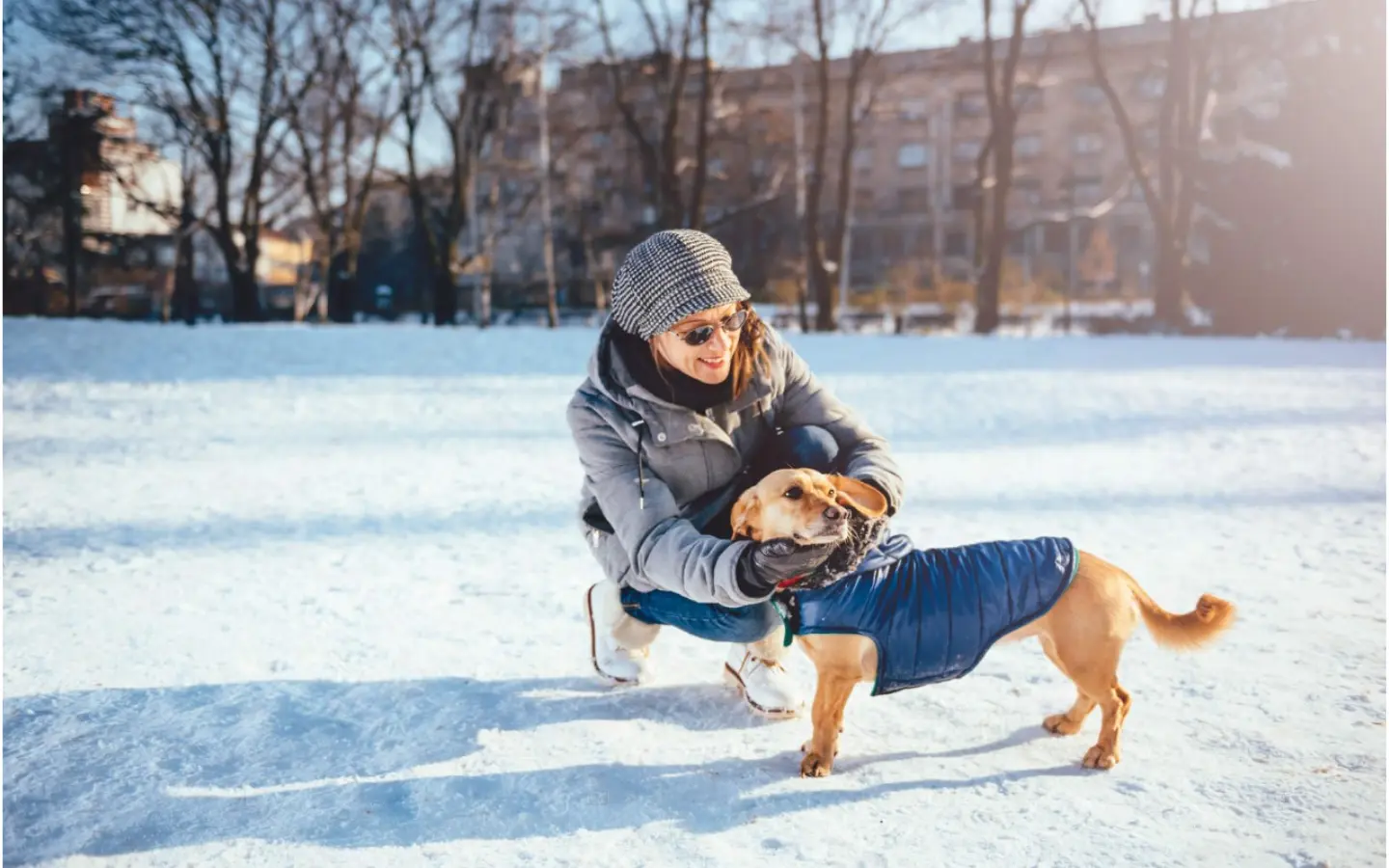
To identify the quality of a dog raincoat, a comprehensive consideration should be made from five major dimensions: water resistance, breathability, detailed design, durability and comfort. The following is a specific analysis:
First, water resistance
Fabric technology: High-quality raincoats need to use waterproof films (such as Gore-Tex, Anta film, etc.) rather than simple coatings. With a waterproof index of over 10k, it can withstand wind, rain and snow. During testing, it can simulate a 10,000mm drop in water for 24 hours, with no more than 3 drops of water seepage.
Joint treatment: Check whether waterproof sealant or inner lining sealing is used at the joints on the back, armpits, etc., to prevent rainwater from seeping in through the stitches.
Hat design: For hooded styles, ensure that the brim is wide and there is no gap between the brim and the neck to prevent rainwater from flowing in.
Second, breathability
Fabric selection: Use breathable membranes (such as ePTFE) or fabric for windbreakers, which can expel the water vapor formed by body sweat and prevent stuffiness.
Test method: Pour hot water into the raincoat and observe the degree of condensation of water vapor on the glass. The smaller the area of fog, the better the breathability.
Third, detailed design
Opening and closing method: Prioritize Velcro or snap fasteners to avoid the zipper getting stuck. The snap fasteners must ensure that the fabric surface is seamless, and the zippers should be waterproof or have a covering layer.
Reflective strip and leash exit: The reflective strip should be firm and in a reasonable position. The leash exit should be designed on the back or neck to avoid interfering with the dog’s movement.
Urine and stool design: For male dogs, an opening should be left on the abdomen. For female dogs, it is necessary to ensure that the buttocks are well-wrapped to prevent them from getting wet.
Fourth, durability
Abrasion resistance test: Use a branch to scratch or simulate a dog’s scratching to observe whether the fabric pails, tears or the coating peels off.
Zippers and Velcro: Repeatedly open and close the zipper to test its smoothness. For Velcro, check if the stickiness is long-lasting and there is no lint.
Inner lining quality: The inner lining should be soft and detachable, easy to clean and not affect breathability.
Fifth, Comfort level
Style and cut: Choose a one-piece four-legged style, a two-piece four-legged style or a cape style based on the dog’s size to ensure that the movement of its limbs is not restricted.
Tightness: The collar, cuffs and abdomen should be made of elastic materials, which are windproof and not tight.
Weight and friction: The raincoat should be lightweight to avoid heavy materials that increase the dog’s burden.