

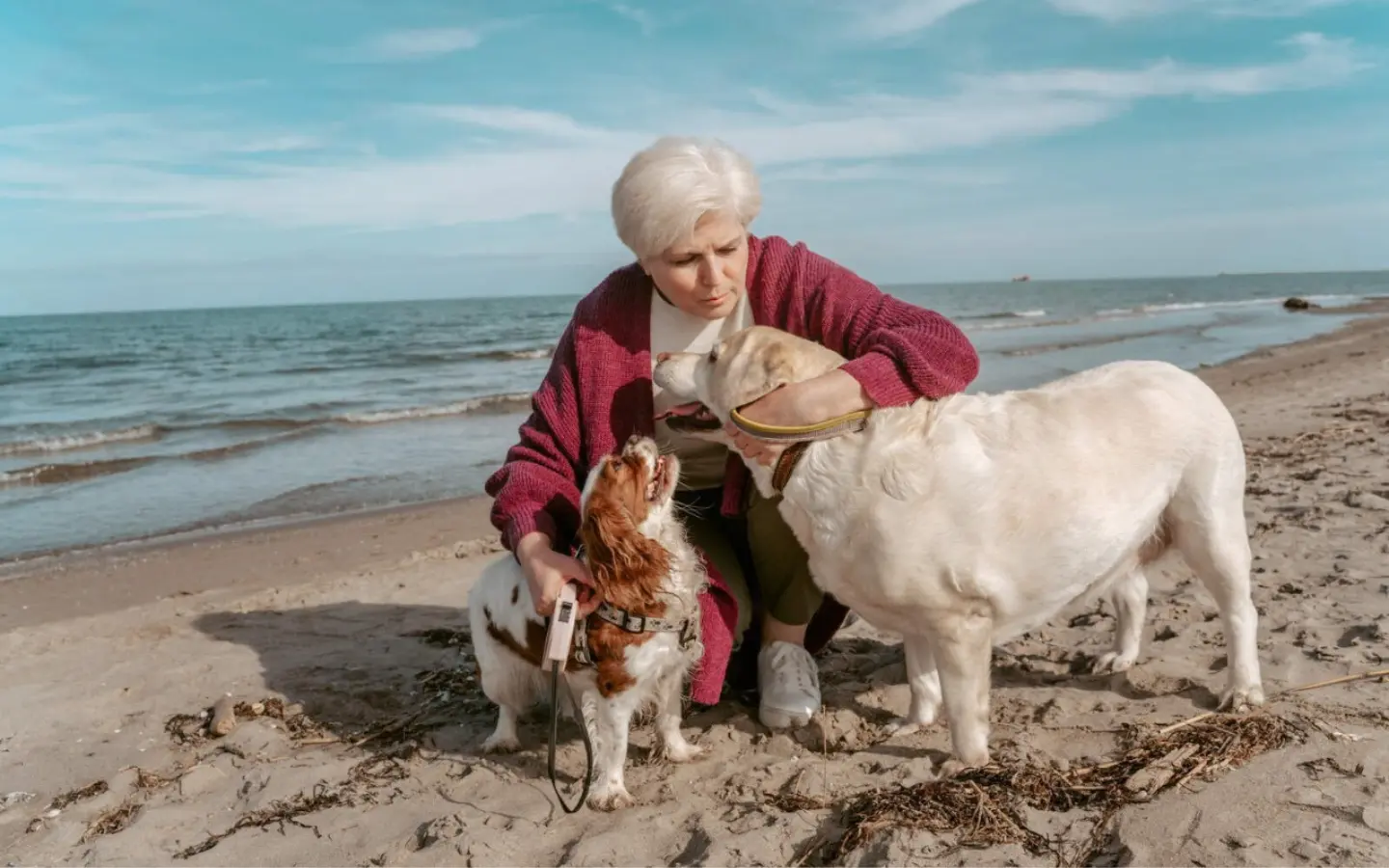
Keeping our cherished canine companions safe and comfortable on daily walks becomes most important as they grow older. One creative answer pet owners are more and more gravitating to is the hands-free dog leash. But for senior dogs on everyday walks, what makes a hands-free leash safer?
Benefits for Senior Dogs
Reduced Strain for Humans
One great benefit handsfree leashes offer is the decreased stress they put on the human body.By distributing the force away from the arms and shoulders, these leashes are particularly beneficial for pet owners who may face mobility or joint issues themselves. This ergonomic design makes walking less physically demanding, which is crucial when handling an older pet.
More Relaxed Walks
Hands-free leashes can transform the walking experience into one that is more relaxed and soothing for senior dogs. Without the constant grip on a traditional leash, there is a reduced likelihood of sudden jerking movements that could startle or injure an older dog (source). Senior dogs that flourish on consistency and peace will find this laid-back attitude perfect.
Freedom of Movement
Another benefit is the freedom of movement that hands-free leashes offer. Owners have both hands free, allowing them to maintain balance better, use a cane, or provide support to their dogs as needed (source). Walking in less predictable surroundings especially benefits this.
Safety issues
Perfect for calm, well-behaved canines
Although beneficial, hands-free leashes are recommended primarily for dogs that are well-behaved and calm. For senior dogs, known for their placid nature, hands-free leashes provide an ideal tool. But if a dog is prone to unexpected lunging—such as chasing after a squirrel—conventional leash techniques might provide more control and safety.
Proper Fit and Usage
The need of correct fit cannot be overstated. For enhanced stability and lower risk of tripping, the leash should be worn at the hip rather than the waist. Reducing dangers requires adjustable leashes that suit the dog’s size and the owner’s gait.
Active Supervision Required
Despite the advantages of hands-free leashes, active supervision remains crucial. Owners should stay alert, keep one hand near the leash for emergencies, and be adept at quickly releasing the mechanism if necessary. Further, leashes with reflective designs and robust clips enhance safety during low-light conditions.
When Not to Use Hands-Free Leashes
Hands-free leashes may not be suitable for all dogs. For larger, stronger dogs, or those untrained in proper walking etiquette, the risk of falls or injury to the owner remains high. It is recommended that behavior such as pulling and lunging be addressed through training before transitioning to a hands-free system (source).
Conclusion
All in all, handsfree leashes offer a safe and cozy choice for well-behaved, quiet senior dogs, relieving their owners considerably too. By lowering stress, providing movement freedom, and stopping abrupt jolts, they enable a more comfortable walk. But to guarantee safety, they call for correct usage and knowledge of both the dog’s and owner’s limits. The best option for circumstances when a conventional leash offers better control is still the traditional leash. Always give first attention to a technique that guarantees the most comfort and safety for your elderly dog.