

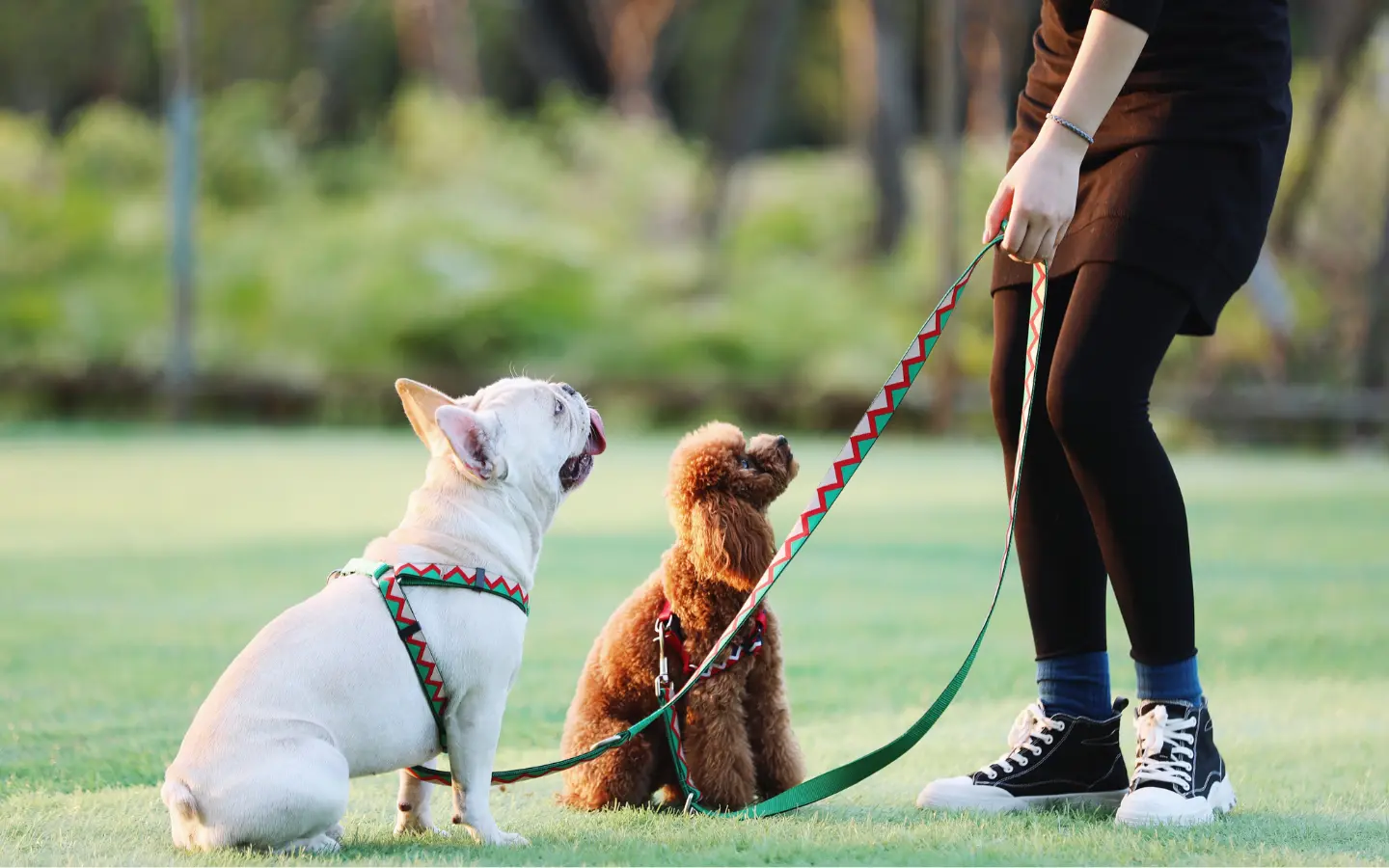
Choosing the perfect hands-free dog leash can greatly enhance your walking experience while ensuring the safety and comfort of both you and your dog. In this guide, we’ll explore how hands-free dog leashes work for different dog sizes and breeds, focusing on essential factors like leash length, width, and material strength.
Hands-free dog leashes have gained popularity among modern pet owners for their convenience and multitasking capabilities. These leashes allow you to keep your hands available for other tasks while maintaining control over your dog. However, understanding how these leashes work for different dog sizes and breeds is crucial for making an informed choice.
First,Considerations of leash length
Choosing the proper leash length is absolutely vital for guaranteeing both control and freedom. Most handsfree leashes have adjustable lengths, usually ranging from six to 11 feet. For medium to enormous breeds like Labradors or German Shepherds, longer lengths (about 11 feet) afford more room for discovery on walks or hikes. Conversely, shorter lengths are advisable for smaller breeds or urban environments, where control is a priority.
Second, Understanding Leash Width and Strength
The width and strength of a leash should correspond to your dog’s size and pulling strength. Smaller dogs, such as Chihuahuas or Yorkies, are better suited to narrower leashes, approximately ⅜-inch in width. These leashes are lightweight and manageable. Medium and large breeds, including Huskies or Labs, require sturdier leashes, ranging from ½-inch to 1-inch width, often constructed from durable materials like BioThane (source: BolderK9).
Third,Breed-Specific Recommendations
Knowing the particular features of several breeds will help you choose your leash:
- Toy/Small Breeds (Chihuahua, Yorkie): Opt for lightweight materials and a leash length of 6-7 feet with a ⅜-inch width.
- Medium Breeds (Cocker Spaniel, Beagle): Choose a standard width of ½-inch and adjustable length.
- Large Breeds (Lab, German Shepherd, Husky): Prioritize heavy-duty materials with shock absorption features and longer leash lengths of 7-11 feet.
Fourth,Usage Scenarios and Features
When choosing a hands-free leash, consider your typical activities. For active adventures such as hiking or running, select a leash offering dual attachments and shock-absorbing materials (source). A shorter leash with traffic handles gives quick restraint and control for urban walks.
Fifth,Adjustability and Versatility
Most hands-free leashes are designed for versatility, easily converting between hands-free and hand-held modes. Features like bungee sections help absorb sudden pulls, while reflective elements ensure visibility during nighttime strolls (source).
Finally
Choosing the right hands-free dog leash suited to your dog’s breed and size is crucial for a pleasant and safe walking experience. By thinking about things like leash length, width, and material durability, you can guarantee maximum freedom and control. Whether one is traversing metropolitan thoroughfares or investigating wilderness, the right leash improves the journey for dog and owner alike. Check sizing charts and product reviews for more direction to locate the ideal fit. Share your opinions and experiences in the comments below or investigate our other tutorials for more pet-related advice!
By understanding how different hands-free dog leashes work, you’re primed to make informed decisions, ensuring both you and your furry companion enjoy every walk to the fullest (source).