

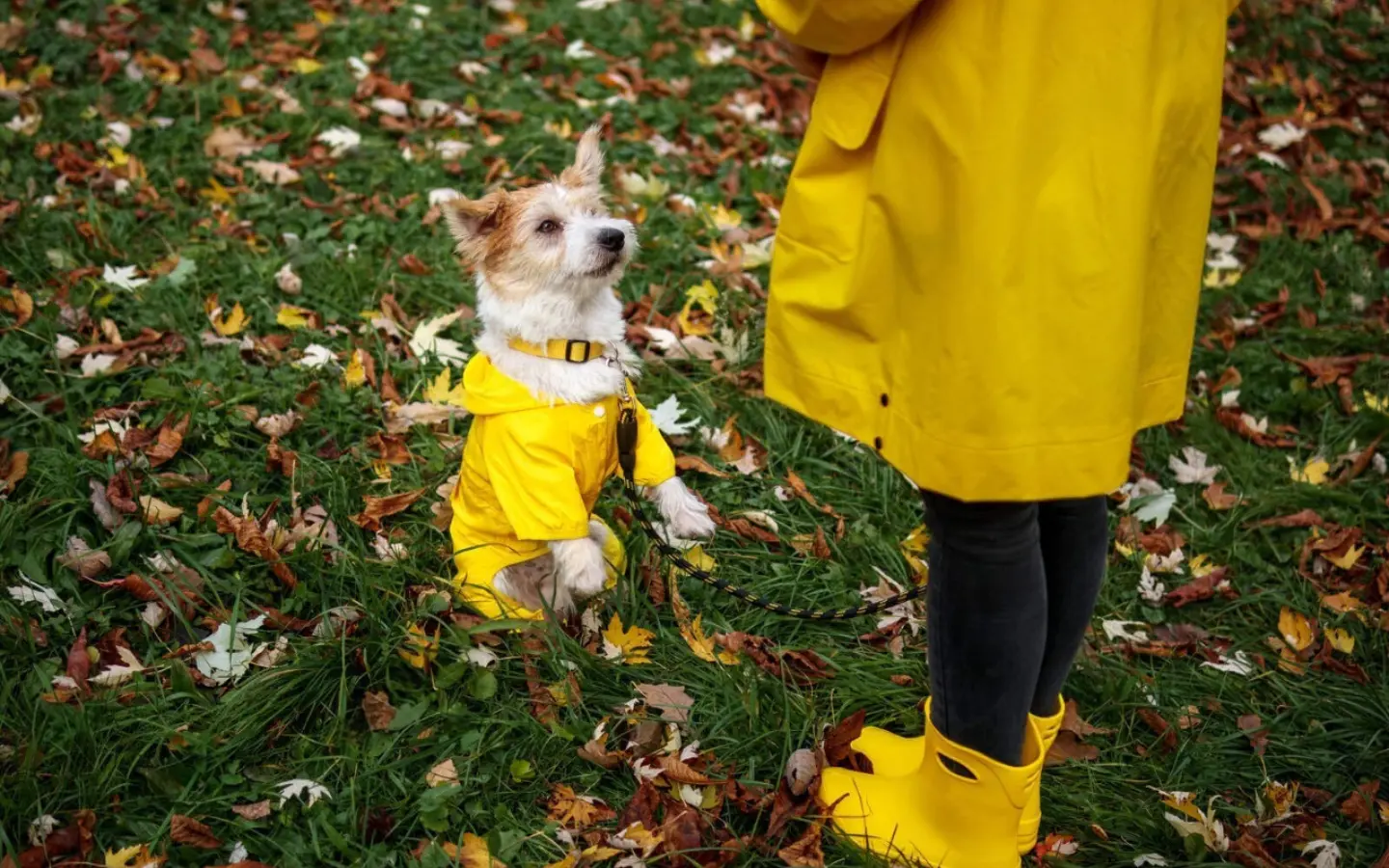
Guidelines for Dogs Wearing Raincoats in Public Spaces Like Parks
When visiting parks or other public areas with a dog in a raincoat, owners must navigate shared spaces while respecting others’ comfort and ensuring their pet’s safety. Raincoats can alter a dog’s behavior, mobility, and interactions, making it essential to adapt to these changes to maintain harmony in crowded or outdoor environments. Here’s how to promote responsible and courteous conduct in public settings.
Leash Etiquette and Control: Ensuring Safety for All
Even well-trained dogs may exhibit altered behavior in a raincoat due to sensory distractions (e.g., rustling fabric, restricted movement, or unfamiliar sounds). In public parks, this can lead to sudden lunges, pulling, or fixation on stimuli like other dogs, wildlife, or children. To prevent accidents, keep your dog on a leash at all times, even in designated off-leash zones if they seem distracted or reactive.
Use a harness instead of a collar to reduce neck strain if the dog pulls, and avoid retractable leashes, which can make it harder to control their proximity to others. If your dog becomes overly excited or anxious, step to the side of pathways to let others pass, and use verbal cues like “easy” or “wait” to regain their focus. Always ask permission before allowing your dog to greet strangers or other pets, and respect boundaries if others decline.
Social Interactions: Managing Encounters with Other Dogs and People
A raincoat can mask a dog’s body language, making it harder for others to gauge their mood. For example, a raised tail or relaxed posture might be hidden under a thick coat, leading to misunderstandings. Similarly, the coat’s noise or fit could make the dog appear more tense or reactive than usual, prompting defensive behavior from other animals.
To mitigate this, approach other dogs slowly and from the side, allowing both pets to sniff each other’s scents without direct face-to-face contact. If your dog shows signs of stress (e.g., lip licking, yawning, or freezing), politely excuse yourself and create distance. When interacting with people, especially children, ensure the dog feels secure. Avoid forcing them to be petted if they seem hesitant, and educate others (gently) about respecting the dog’s space.
Waste Management and Hygiene: Upholding Cleanliness Standards
Rainy weather can make waste cleanup more challenging, as mud or puddles may obscure droppings or make bags harder to open. However, it’s crucial to clean up after your dog promptly to prevent health hazards and maintain the park’s cleanliness. Carry extra waste bags and a small towel to dry your hands or the bag if needed.
If your dog’s raincoat becomes soiled during play, avoid shaking it off in public areas where debris could spread. Instead, find a discreet spot to remove excess dirt or water before rejoining pathways. Always dispose of used bags in designated trash cans or take them home if none are available.
Noise and Disturbance: Minimizing Disruptions
Raincoats, especially those with hoods or loose fabric, can create rustling or flapping sounds that startle other dogs or people. In quiet parks, these noises might amplify, causing distractions or anxiety. To reduce noise, opt for a raincoat made from quiet, lightweight material, and avoid layers that flap in the wind.
If your dog is sensitive to the coat’s sounds, practice wearing it at home to help them acclimate. During walks, use treats or toys to divert their attention from the noise and reinforce calm behavior. If others comment on the sound, apologize politely and explain that you’re working to minimize disruption.
Respect for Shared Spaces: Avoiding Overcrowding or Dominance
In popular parks, rainy days can lead to crowded pathways or limited dry areas for gathering. Dogs in raincoats may feel confined or overstimulated, leading to territorial behavior (e.g., marking, guarding, or resource-guarding). To prevent conflicts, avoid monopolizing benches, picnic tables, or sheltered spots. If your dog becomes possessive of a space, guide them away and redirect their attention with a game or treat.
Additionally, be mindful of muddy or wet zones. Keep your dog away from areas where they might splash pedestrians or track dirt onto sidewalks. If the park has designated wet-weather zones (e.g., paved paths or grassy areas with drainage), prioritize using them to reduce environmental impact.
Emergency Preparedness: Handling Unforeseen Situations
Rainy weather increases the risk of accidents, such as slips, falls, or sudden storms. Dogs in raincoats may also be more prone to overheating if the fabric isn’t breathable, or they may shiver if the coat isn’t waterproof. To stay prepared, carry a collapsible water bowl, a towel to dry your dog’s paws or belly, and a lightweight blanket for warmth if needed.
If your dog shows signs of distress (e.g., excessive panting, shivering, or refusal to walk), find shelter immediately and remove the raincoat if it’s causing discomfort. Familiarize yourself with the park’s emergency exits or nearby veterinary clinics in case of injuries.
Conclusion: Fostering Responsible Pet Ownership in Public
Navigating public spaces with a dog in a raincoat requires awareness, adaptability, and courtesy. By prioritizing leash control, respectful social interactions, cleanliness, noise management, and emergency preparedness, owners can ensure a positive experience for their pets and others. With proactive planning and empathy, rainy-day park visits can remain enjoyable, safe, and harmonious for all.