

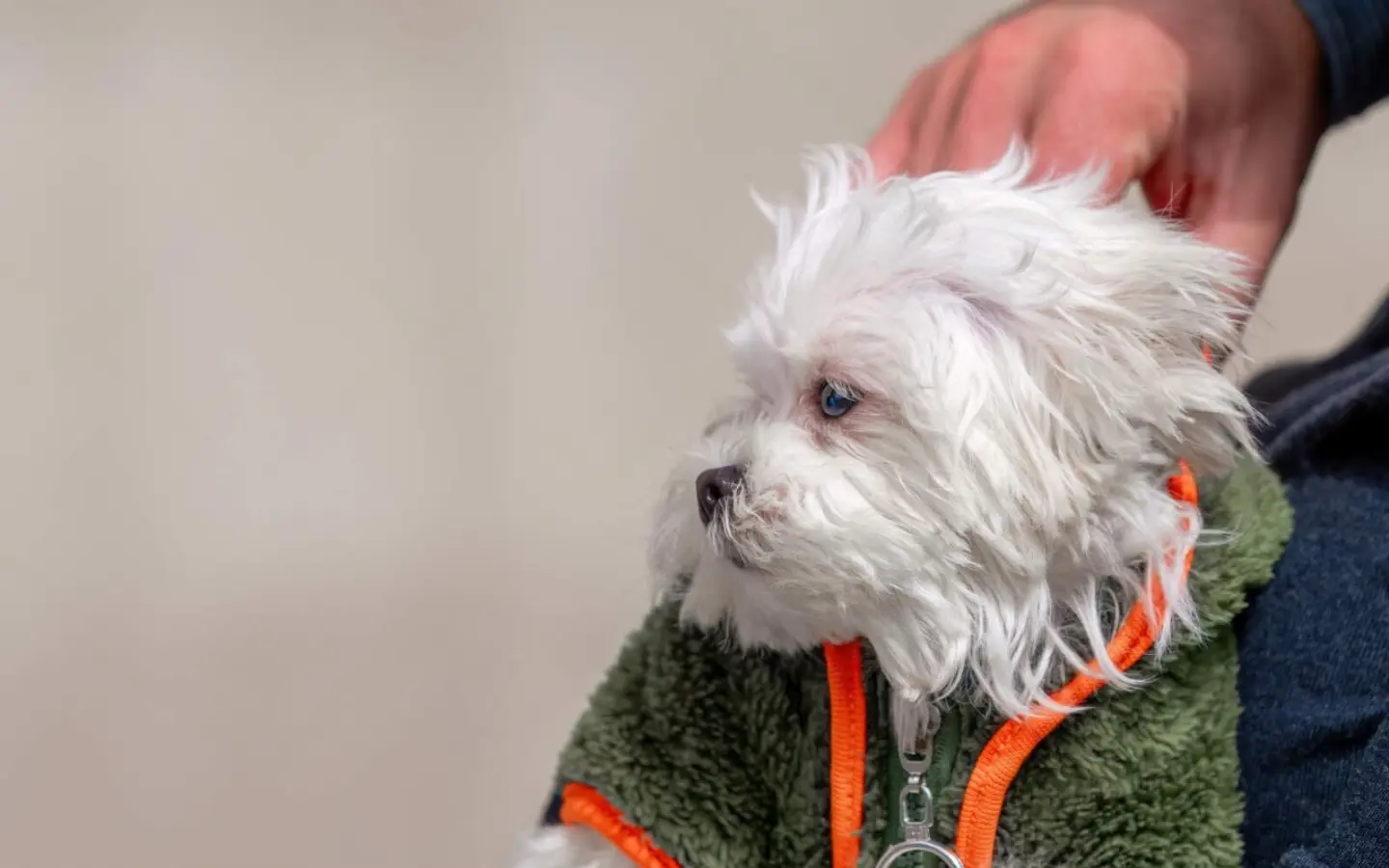
When dogs wear raincoats and enter narrow Spaces (such as corridors, elevators, furniture gaps, etc.), the design of the raincoat, space limitations, and behavioral characteristics of dogs need to be comprehensively considered. The following is a specific analysis and response suggestions:
First, the impact of narrow Spaces on dogs wearing raincoats
Limited movement
Physical collision: Raincoats may increase the width of a dog’s body, causing frequent collisions with walls or furniture in narrow Spaces.
Difficulty in turning: Raincoats may limit the flexibility of the shoulders and hip joints, causing the dog’s gait to be disordered when turning in narrow Spaces.
Psychological stress
Spatial anxiety: A narrow environment may intensify a dog’s resistance to raincoats, causing it to become tense and struggle.
Stress response: Some dog breeds may exhibit aggressive or fleeing behaviors due to restricted movement.
Potential safety hazards
Raincoat hooking: The decorations on the raincoat (such as zippers and buttons) may catch the door cracks or the edges of furniture, causing the dog to be pulled.
Trampling risk: The part of the raincoat that touches the ground may be stepped on by the dog itself, causing tripping or falling injuries.
Second, targeted precautions
Raincoat selection and adjustment
Cutting design
Avoid prolonged dragging on the ground: Choose a raincoat that just covers your back to prevent the back from being too long.
Split design: Prioritize the choice of a split raincoat for the top and pants to reduce constraints on the limbs and enhance flexibility.
Detail optimization
Elastic cuffs/leg cuffs: Prevent the raincoat from sagging and getting caught in narrow gaps.
Position of the reflective strip: Move the reflective strip to the edge or the upper back of the raincoat to avoid getting hooked.
Preparations before action
Adaptation training
Let the dog adapt to the raincoat in a spacious area and gradually increase the walking practice in a narrow space.
Guide the dog with snacks or toys to reduce its resistance to raincoats.
Size inspection
Make sure the raincoat is of the right size to avoid being too tight to prevent breathing difficulties or too loose to avoid the risk of catching.
Operating skills in narrow Spaces
Guiding method:
Use a leash to control the dog’s movement direction to prevent it from running around in panic.
The owner can walk in front of the dog, guiding it to follow and reducing its hesitation or wandering in narrow Spaces.
Environmental prediction
Before entering a narrow space, observe whether there are any obstacles or the risk of entanglement, and clear or adjust the route in advance.
For example, when walking in the corridor, you can let the dog walk along the wall side to reduce collisions with pedestrians coming from the opposite direction.
Precautions for special dog breeds
Short-nosed dog
Make sure the collar of the raincoat is loose to avoid pressing on the trachea and causing breathing difficulties.
Give priority to choosing raincoats with ventilation holes to reduce the feeling of stuffiness.
Short-legged dog
Choose a raincoat of moderate length to avoid the back hem dragging and tripping your feet.
In a narrow space, you can appropriately carry the dog through to reduce its movement burden.
Third, emergency situation handling
Raincoat hooking
If the raincoat gets hooked, do not pull it forcefully. First, soothe the dog’s emotions, and then carefully unhook the hooked part.
When the zipper of a raincoat hooks the door crack, you can try applying a lubricant (such as olive oil) to the hooked area to reduce friction.
The dog fell down.
If your dog trips over a raincoat, immediately check if its limbs and joints are injured. Contact a veterinarian if necessary.
Preventive measures: When walking in narrow Spaces, slow down to prevent the dog from falling due to sharp turns.
Fourth, Summary
Core principle: Prioritize the dog’s comfort, safety and freedom of movement to prevent accidents caused by improper design or operation of the raincoat.
Purchasing suggestions: Give priority to choosing a split raincoat with good breathability and humanized detail design, and make targeted adjustments according to the characteristics of the dog breed (such as short-nothed dogs and short-legged dogs).
Usage suggestions: When moving around in narrow Spaces, be patient, guide the dog to gradually adapt, and regularly check the wear and tear of the raincoat to ensure its normal function.
By scientifically choosing raincoats and operating them reasonably, the movement restrictions of dogs in narrow Spaces can be effectively reduced, ensuring their safety and comfort.