

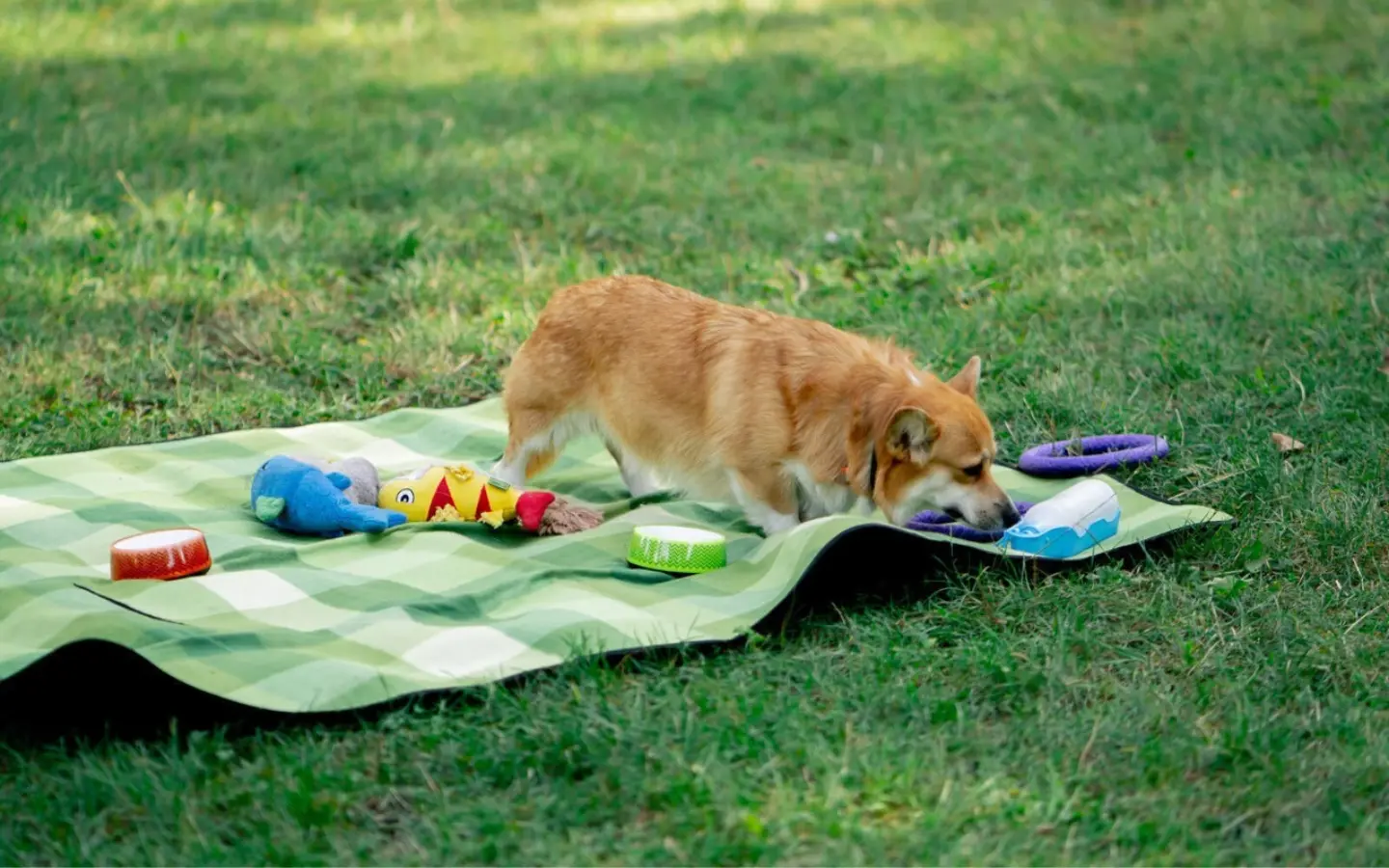
A toy adaptation guide for dogs playing in raincoats
When dogs play in raincoats, they may experience a decline in toy interaction efficiency due to restricted movement, sensory interference, and difficulty in grasping, which may even lead to frustration or safety hazards. The following provides a systematic solution from the aspects of toy selection criteria and safety precautions to ensure that dogs can still enjoy a high-quality play experience even when they are bound by raincoats.
First, the core challenges and adaptation principles of playing in raincoats
Core Challenge analysis
Limited movement
The cuffs and hems of raincoats restrict the range of motion of the limbs, making it difficult for dogs to run or jump normally. They also have difficulty grasping or throwing toys, resulting in a decline in play interest and insufficient exercise
Sensory interference
The friction sound of the raincoat and the texture of the material change the olfactory/auditory experience. The dog’s sensitivity to the smell and sound of the toy decreases, making it difficult to locate the toy and causing delays in interaction
Difficulty in grasping
The raincoat covers the PAWS to reduce friction, making it difficult for the dog to pick up and grasp the toys, which can easily cause the toys to slip and get damaged, and increase the dog’s sense of frustration
2. Four major Principles for Toy Compatibility
Lightweighting
The weight of the toy is no more than 5% of the dog’s body weight. Reduce the lifting burden under the restraint of raincoats
Easy to grasp
The surface is rough/with raised textures, or equipped with a handle to enhance the friction between the claws and the toy
High attractiveness
The strong smell (such as food residue) and the clear sound make up for the disturbance of the raincoat to the senses
Safety
There are no small parts and the edges are smooth, avoiding the risk of accidental ingestion if the toy is damaged due to the friction of the raincoat
Second, toy matching skills and precautions
1. Size and weight are compatible
Small dogs (≤5kg) :
Choose a light ball with a diameter of no more than 5cm (about the size of a tennis ball) to avoid entanglement at the hem of the raincoat.
Medium-sized dogs (5-15kg) :
Choose rubber toys with a diameter of 8-10cm (such as Kong Classic) to ensure they are easy to grasp.
Large dogs (≥15kg) :
Choose a buoyancy frisbee with a length of ≥20cm (such as Chuckit!) (Paraflight), adapted to large strides.
2. Material and surface treatment
Anti-slip design
Choose toys with raised particles or grooves on the surface (such as Goughnuts rubber rings) to increase the friction of the claws.
Easy to clean
Give priority to choosing washable materials (such as silicone and rubber) to avoid the accumulation of mud and water in the raincoat and the breeding of bacteria.
3. Safety risk avoidance
Avoid slender toys:
Raincoats may get entangled in thin ropes (such as ordinary frisbee ropes), posing a risk of suffocation.
Check for damage:
The friction of the raincoat may accelerate the wear and tear of the toy. After playing, check if there are any cracks or small parts falling off.
Limit high-risk toys
Avoid using sharp toys (such as hard plastic darts) under the restraint of raincoats to prevent accidental injury.
Third, the raincoat play scenario solution
1. Indoor scene
Recommended toys: Leaky ball, sniffing pad, knot toy
Technique:
Place the toys in a position that the dog can easily reach to avoid tripping over the hem of the raincoat.
Use snacks to guide the dog to interact with toys and make up for the amount of exercise limited by the raincoat.
2. Outdoor scenes
Recommended toys: Buoyancy frisbee, rubber handle ball, bite-resistant rubber ring
Technique:
Play in dry areas to avoid slipping due to the raincoat rubbing against the slippery ground.
Shorten the throwing distance and reduce the dog’s running range.
3. Scene of being alone on a rainy day
Recommended toys: Food-filled toys, jigsaw puzzles
Technique:
Stuff wet food (such as yogurt or canned food) into the toys in advance to extend the playing time.
Place the toys within the dog’s line of sight to reduce the anxiety caused by the raincoat’s restraint.
Fourth, a guide to avoiding pitfalls
Wrong practice:
Using overly heavy toys: increases the lifting burden on dogs and can cause joint injuries.
Choose toys with smooth surfaces: They are prone to slipping under raincoats, causing frustration for dogs.
Neglecting toy cleaning: The mud and water left in raincoats contaminate toys, causing skin diseases.
Misunderstandings in toy selection:
Ordinary plush toys: Raincoats are prone to damage due to friction, and the exposed filling poses a high risk of accidental ingestion.
String toys: There is a high risk of raincoat entanglement and a high risk of suffocation.
Fifth, Summary
When dogs play in raincoats, the toys should be adapted according to four major principles: lightweight, easy to hold, high appeal and safety. The owner needs to choose suitable toys based on the dog’s size and scene requirements, and pay attention to the size, material and safety risks. Through scientific adaptation, it can help dogs enjoy high-quality play even when they are bound by raincoats, while avoiding sports injuries and psychological stress. If the dog loses interest in toys, you can try changing the type or increasing the snack rewards to stimulate the desire for interaction.