

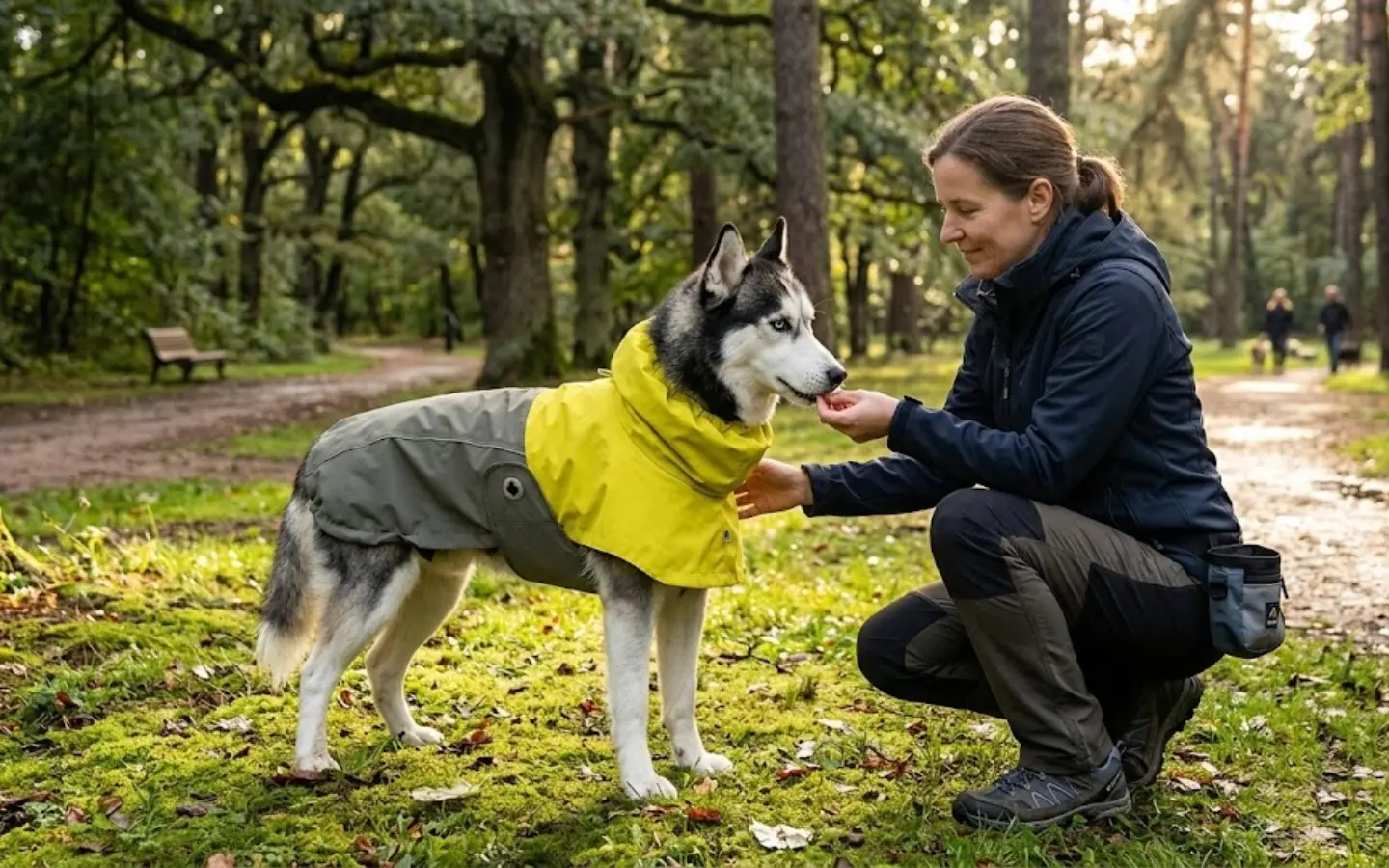
When picking a loose-fitting dog raincoat, many pet owners often focus only on their dog’s weight and end up with a piece that either slips off during walks or restricts natural movement. The key to getting the right loose size starts with taking accurate, dog-specific body measurements instead of relying on generic size charts that do not account for different breed body shapes.
Core Body Measurements You Must Take First
Start by letting your dog stand naturally on a flat surface, do not let them sit or curl up as this will make the measurement data inaccurate. Use a soft, flexible tailor tape to wrap around the widest part of their chest, which is usually located right behind their front legs, and add 2 to 3 inches of extra space on top of this number to leave enough room for their fur to puff out and for them to breathe easily after eating. Next, measure the length from the base of their neck, where their collar usually sits, all the way to the base of their tail, do not include the length of their tail in this number because a raincoat that covers the tail too tightly will pull and cause discomfort. Finally, wrap the tape around the thickest part of their neck, leave at least 1.5 inches of extra space so the raincoat neck opening will not rub against their skin when they turn their head quickly to chase a squirrel.
Adjust Looseness Based on Your Dog’s Fur Type
Short-haired dogs with sleek coats do not need as much extra room as long-haired double-coated breeds, but you still need to leave a small gap to avoid the raincoat sticking directly to their skin when they run. For dogs with thick, dense undercoats that fluff up a lot in cold weather, you should add an extra half inch to each of your core measurements to make sure their fur can move freely under the fabric without getting matted or tangled. If your dog is a breed with a deep chest and narrow waist, like a greyhound or a bulldog with a broad front, you can add a little more space around the chest area specifically instead of increasing the size of the whole raincoat, this will prevent the back part from being too long and dragging on the wet ground. Senior dogs with joint issues also benefit from a slightly looser cut around the shoulder and hip areas, this extra space lets them stretch their legs fully without the fabric pulling against their sore joints during morning walks.
Test the Fit Before Heading Out in Rain
After you put the loose raincoat on your dog, let them walk around the house for 5 to 10 minutes to see if they can move normally. Watch to make sure they can lift their front legs high enough to step over small curbs, and check that the fabric does not bunch up under their armpits when they trot. If you can slide two full flat hands between the raincoat fabric and your dog’s back without pressing down hard, that is a good sign the looseness level is appropriate. Check the leg openings too, make sure they sit high enough on their legs so the fabric does not drag in puddles, but not so tight that it leaves indentations on their skin after they wear the coat for an hour. If your dog often wears a thick harness under the raincoat for daily walks, put the harness on them first before you test the raincoat fit, this way you can make sure the loose cut still has enough space to accommodate the harness without squeezing their sides or blocking the harness buckles.